The Challenges Businesses Face When Measuring the Carbon Footprint of Events

As ESG expectations grow, businesses are under pressure to understand and report the true carbon footprint of their live event experiences.
Measuring this kind of carbon footprint data is complex because events rely on multiple suppliers, locations and short-term infrastructure.
Even with strong, sustainable event planning, gaps in data and unclear boundaries often make carbon reporting for events feel overwhelming.
With the right structure and specialist guidance, delivering a genuinely sustainable event becomes far more achievable and credible.
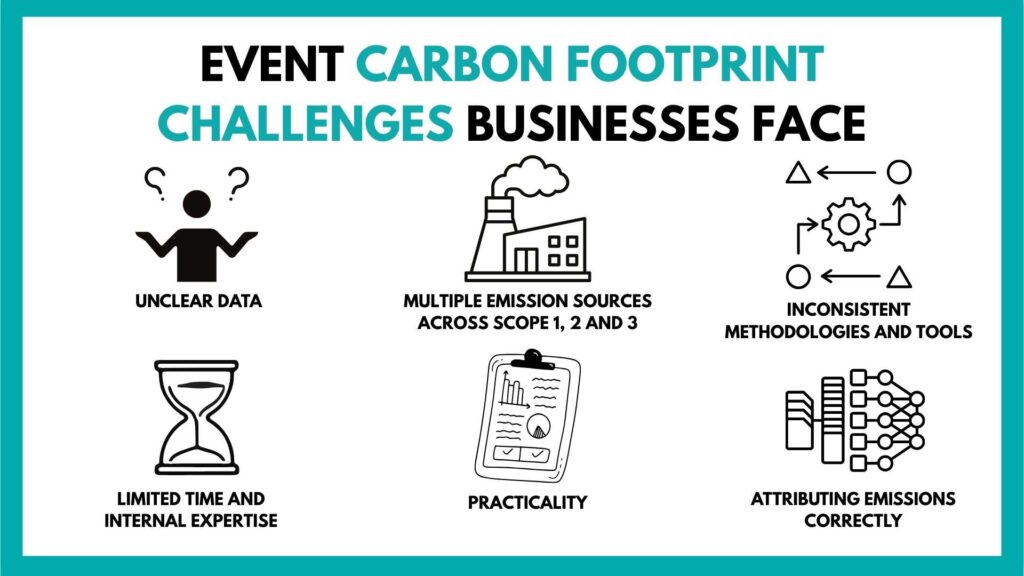
Lack of Clear Data Across Event Supply Chains
One of the biggest barriers to measuring event carbon footprint data is the lack of clear, consistent information across complex event supply chains.
Venues, AV teams, staging suppliers, caterers and logistics partners often track sustainability differently, making accurate true carbon footprint calculations difficult.
Without standardised data, your sustainable event planning can quickly struggle to produce reliable carbon reporting for events.
This is why delivering a truly sustainable event increasingly depends on structured data processes and sustainability support. That’s why carbon tracking software with benchmarked datasets is critical for filling event carbon data gaps.
This is how delivering a truly sustainable event becomes more achievable, with clearer processes and more dependable reporting.
Multiple Emission Sources Across Scope 1, 2 and 3
An event carbon footprint typically spans across Scope 1, 2 and 3 emissions, making measuring this data a lot more complicated than many businesses expect.
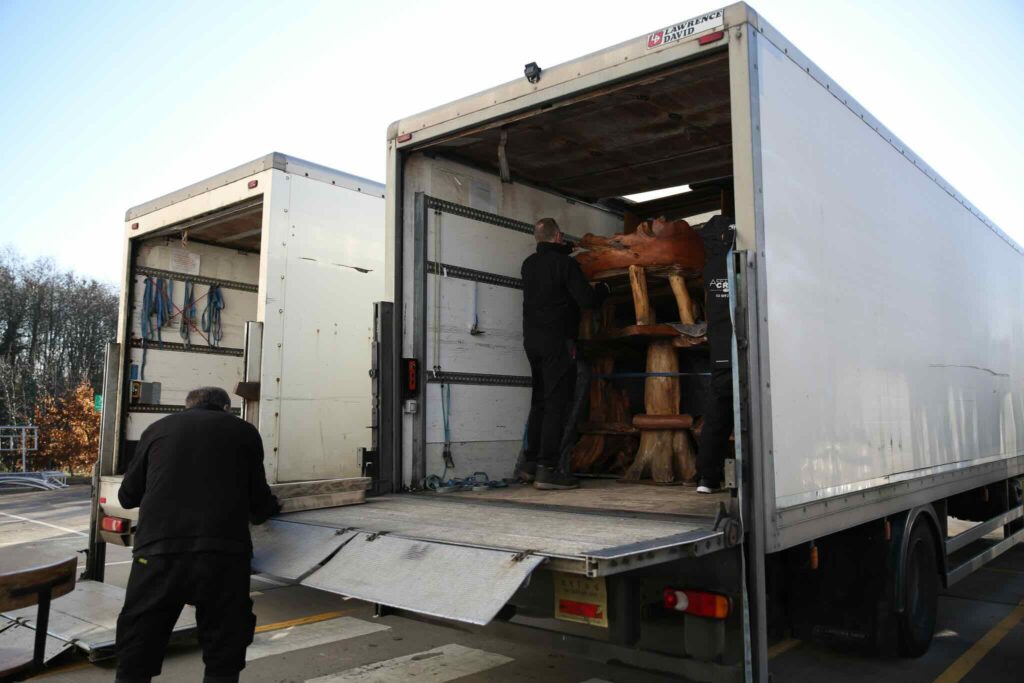
From on-site fuel use and venue electricity to delegate travel, freight, furniture, accommodation and supply chains, sustainable event planning involves emissions both within a company’s control and far beyond it.
This widespread responsibility often creates confusion around ownership, data collection and boundaries, complicating accurate carbon reporting for events.
Understanding how these scopes connect is essential for delivering a genuinely sustainable event with credible, defensible reporting.
However, for those just starting their sustainability journey, it can feel daunting and complex to understand, with many companies opting to use carbon tracking software like Scope Carbon Tracking.
Inconsistent Methodologies and Tools
Measuring event carbon footprint results can vary widely because different tools, calculators and frameworks use different assumptions and calculation methods.
This lack of consistency makes it difficult to compare data year on year or between events, even with strong, sustainable event planning in place.
Without a clear and consistent methodology, your carbon reporting can feel unreliable and hard to defend.
That’s why choosing aligned tools and agreed approaches is key to building trust in your carbon footprint data and delivering a truly sustainable event.
Limited Time and Internal Expertise
Measuring carbon footprint data often falls to busy event teams who are already working to tight deadlines.
Sustainability and carbon reporting typically sit outside core event planning expertise, making the process feel unfamiliar and technical.
Even with strong intentions, limited time and internal knowledge can make it hard to build a clear, accurate event carbon footprint.
Specialist support can help turn a complex sustainability challenge into a more manageable and credible sustainable event process.

Balancing Accuracy With Practicality
One of the biggest challenges is balancing accurate carbon measurement with what’s realistically achievable for busy teams and suppliers.
Collecting detailed sustainability data can quickly become time-consuming, especially when multiple partners are involved.
Without a practical approach, the process can feel overwhelming and discourage progress, even where there’s a strong commitment to sustainable event planning.
The goal is to gather meaningful information that improves decision-making, while keeping the journey towards a greener event manageable.
That’s why having a sustainable events agency to measure and reduce your event’s carbon footprint is essential.
Attribution Issues for Shared or Multi-Use Events
Attributing emissions becomes especially challenging when venues, infrastructure and services are shared with other events or organisers.
At festivals, exhibitions and multi-use venues, it can be really difficult to decide how energy use, waste and logistics should be fairly divided.
These grey areas often complicate measuring event carbon footprint data and can create uncertainty in carbon reporting for events.
Clear allocation methods and transparent assumptions are essential for credible, sustainable event planning and a defensible event strategy.
Translating Data Into Actionable Insights
Many organisations find that measuring event carbon footprint data is only the first step, and turning those numbers into clear actions is where the real challenge begins.
Raw figures alone do not always show which decisions will make the biggest difference, making it harder to prioritise changes in sustainable event planning.
Without the right interpretation, carbon reporting for events can become a box-ticking exercise rather than a driver of meaningful improvement.
The real value comes from using carbon insights to guide smarter choices and shape a more effective event strategy.
Sustainable Event Planning FAQ
Measuring an event’s carbon footprint is tricky because data comes from many sources, from travel to venues, suppliers to catering, making it often inconsistent or incomplete. Using a dedicated platform like scope. helps bring all of that information together in one place for clearer insights.
A comprehensive event carbon footprint should cover venue energy use, on-site fuel, guest travel, freight logistics, catering and waste. Sustainability tools can help guide you through capturing these across all emissions categories so your sustainable event planning is complete and defensible.
Accurate measurement needs activity data on travel, energy, materials and waste, as well as supplier inputs.
General calculators can give rough estimates, but dedicated tools built for events provide more consistent results. Using a platform with verified datasets and event-specific modules improves confidence in your event carbon footprint calculations.
Businesses can improve carbon reporting for events by centralising data collection, setting clear boundaries and using structured tools. Some sustainability tools offer automated reporting features that help turn sustainability data into clear reports.
Perfect Your Carbon Reporting For Events
Measuring an event’s carbon footprint is complex, but with the right approach, it’s entirely achievable.
Bringing together professional event management and sustainability expertise can simplify data collection, improve accuracy, and offer actionable strategies for real reduction.
With structured processes, sustainability tools and specialist support, sustainable event planning becomes not just possible, but effective.
Explore our sustainable event services or speak to an expert to make your next event both greener and more credible.

Related Blogs:
Get In Touch With Us Today.
With nearly 20 years of Event Management insight, working with world-renowned Clients we'll help you create your Dream Event.
Get in Touch