The Psychology of Brand Experiences: How to Create a Brand Reveal People Remember

Live events are climbing the UK marketing agenda, and budgets are following. In the IPA’s Q3 2026 Bellwether Report, every marketing category saw upward budget revisions, with PR and events leading.
A bigger budget doesn’t guarantee a stronger memory, though. Memorable brand experiences are not created by adding a logo to an impressive event.
They’re created by understanding what attracts attention, what generates an emotional response and what helps an audience connect the experience with the brand. This guide explores the psychology of brand experiences and turns each principle into a practical design decision.
At Julia Charles Event Management, we design and produce brand activations using event design, storytelling, entertainment, audience interaction and live production.
What Is the Psychology of Brand Experiences?
The psychology of brand experiences is the study of how people notice, react to and remember the moments a brand creates. It shifts the planning question from ‘What do we want to show?’ to ‘What do we want guests to take away?’
At a live event, many small decisions shape the answer. How guests arrive, what they see and hear, who they share the moment with and how the evening ends can all play a part.
That’s why it helps to treat brand experience design as a psychological task as well as a creative one. The sections below explore the key principles of brand activation psychology and how each can shape your next reveal.
How Does Emotion Affect Brand Recall?
Emotion affects brand recall because emotionally significant experiences tend to be remembered more strongly than neutral ones. In a 2013 review in the Proceedings of the National Academy of Sciences, memory researcher James McGaugh summarised decades of evidence that emotional arousal can help create lasting memories.
For brands, the key word is connection. A spectacular moment with no link to your product may be remembered without your name attached to it.
Start with the feeling you want guests to leave with, whether that’s pride, delight or excitement. Then choose formats, entertainment and design details that express that feeling and make your brand stand out.
Good experiential marketing psychology helps you understand your audience. It shouldn’t pressure them into a reaction.
Why Are Live Brand Experiences Memorable?
Live brand experiences are memorable because they can combine surprise, several senses and a story in one shared space. Much of the psychology behind brand activations comes down to giving guests a stronger reason to pay attention and remember.
Unexpected Moments Help Brand Activations Stand Out
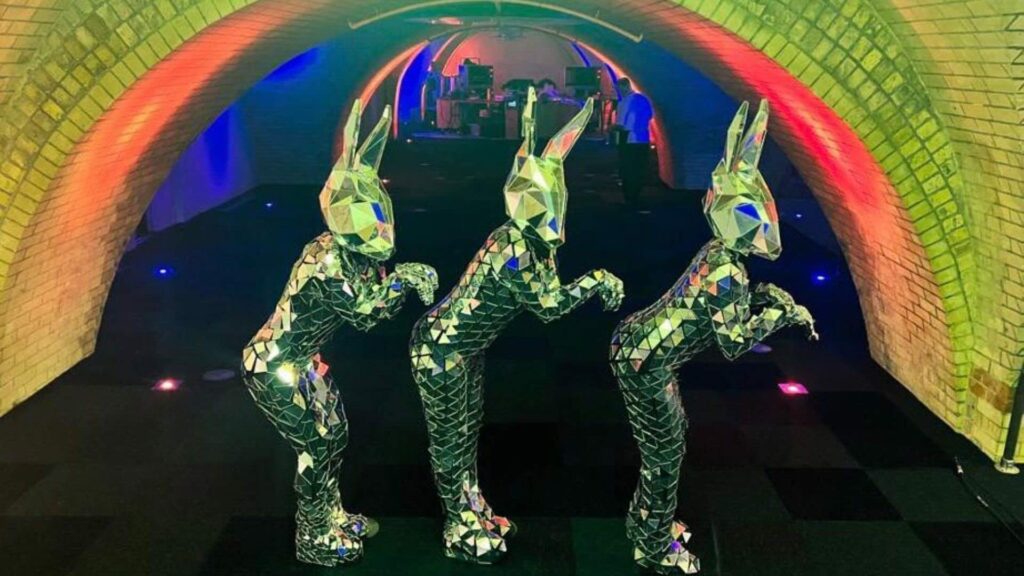
Distinctive moments tend to stick. A 1998 study in Memory & Cognition found that unusual information is generally recalled better than common information, an idea psychologists often link to the von Restorff effect.
At most events, guests quickly settle into a familiar rhythm of arrival, drinks and speeches. A surprising arrival activation, such as a walkabout act or robot entertainment, can interrupt that pattern before the programme even starts.
A surprising arrival activation, such as a walkabout act or robot entertainment, can interrupt that pattern before the programme even starts.
For L’Oréal’s launch of Diesel’s Only The Brave fragrance, we staged a flash mob of football freestylers in the duty-free zone at London Stansted Airport. Football freestyle suited a fragrance co-created by Neymar Jr., so the surprise still pointed back to the brand.
The venue itself can break the pattern too, as our creative event space ideas show.
Sensory Brand Experiences Draw Guests In
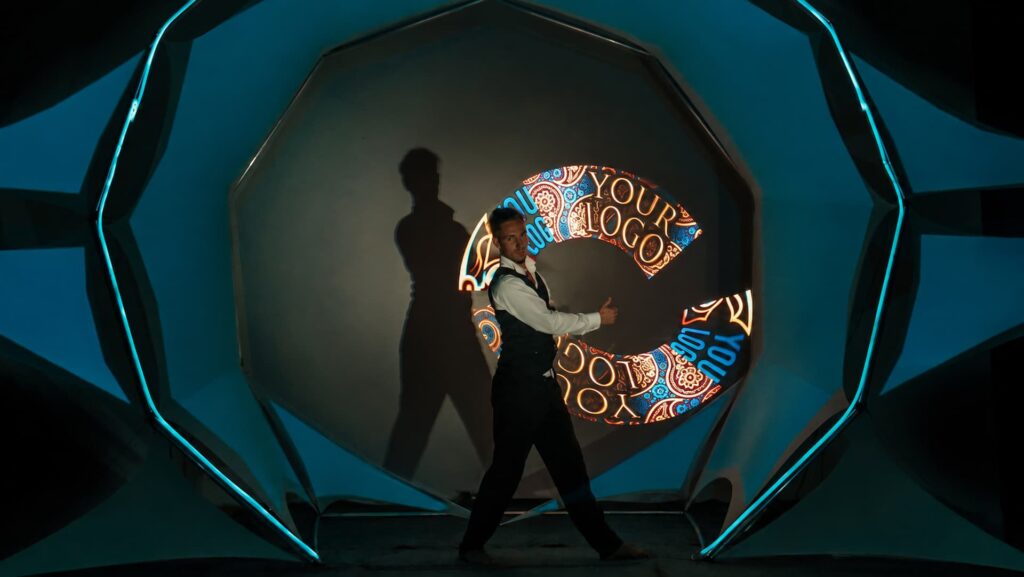
In a 2006 study by researchers at Boston University and UCLA, published in Current Biology, people who practised a visual task with a matching sound learned it faster than those who practised with visuals alone. The study used simple lab tasks rather than events, but it supports the idea that senses can reinforce each other when they fit together.
You don’t need to engage every sense at once. Choose two or three elements that express the same idea about your product, such as a signature sound cue, a lighting colour and a texture, taste or scent guests meet up close.
Then test them together in the venue before the event. If one element competes with the reveal or tells a different story, simplify it or leave it out.
Technology-led entertainment and tech-forward event spaces can bring those sensory elements together by building light, projection and interactivity into the room. Our immersive event ideas show other ways to wrap guests in your brand world, from themed environments to VR.
Be careful with colour, though. A 2015 review in Frontiers in Psychology suggests that how people respond to colour depends a lot on context, so the same shade may not make every guest feel the same way.
Our guide to picking a colour palette explains how to choose colours that suit your brand and venue.
Brand Storytelling Turns a Moment into Meaning
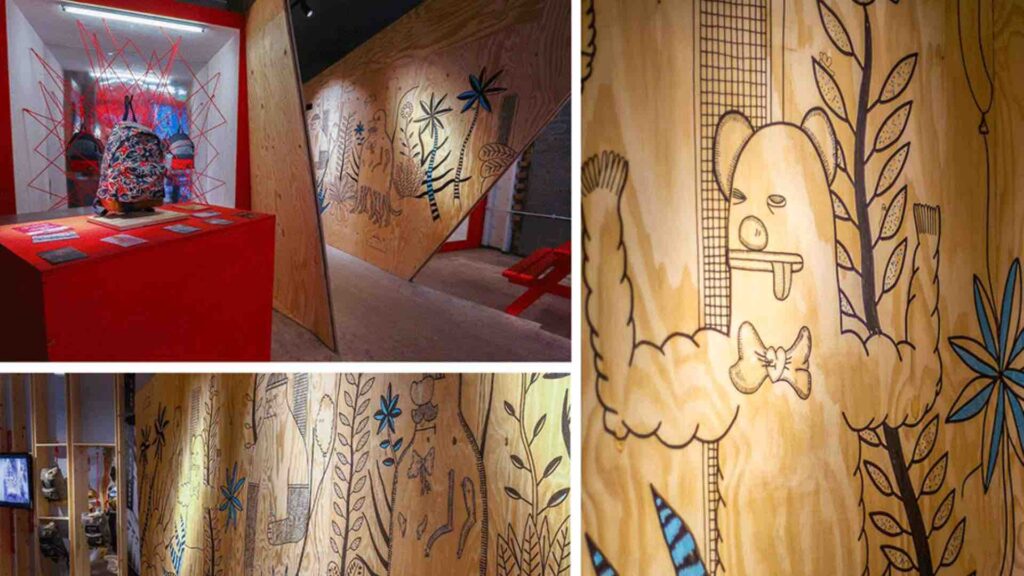
In a 2000 study in the Journal of Personality and Social Psychology, psychologists Melanie Green and Timothy Brock found that people who became more absorbed in a story were more likely to hold beliefs consistent with it. They called this narrative transportation.
A bespoke show can turn your brand message into that kind of story. A custom shadow show, for example, could trace your product’s journey scene by scene, so the message unfolds rather than being announced.
To connect the reveal to your message, start by writing the product’s key message in a single line. Then plan each stage around it: the build-up raises the question, the reveal answers it, and the moments afterwards let guests experience the proof.
If a scene, act or effect doesn’t move that message forward, it’s likely to distract from it.
Why Is Audience Participation Important in Brand Activations?
Audience participation is important in brand activations because it turns guests from spectators into contributors, which can make the experience feel more personal. Research on the IKEA effect by Harvard Business School’s Michael Norton, with Daniel Mochon and Dan Ariely, found that people placed a higher value on products they had assembled themselves.
That research is about building products rather than attending events, so it doesn’t prove that every interactive activation is more memorable. It does suggest that a meaningful role, rather than a token one, can increase how much guests care about the result.
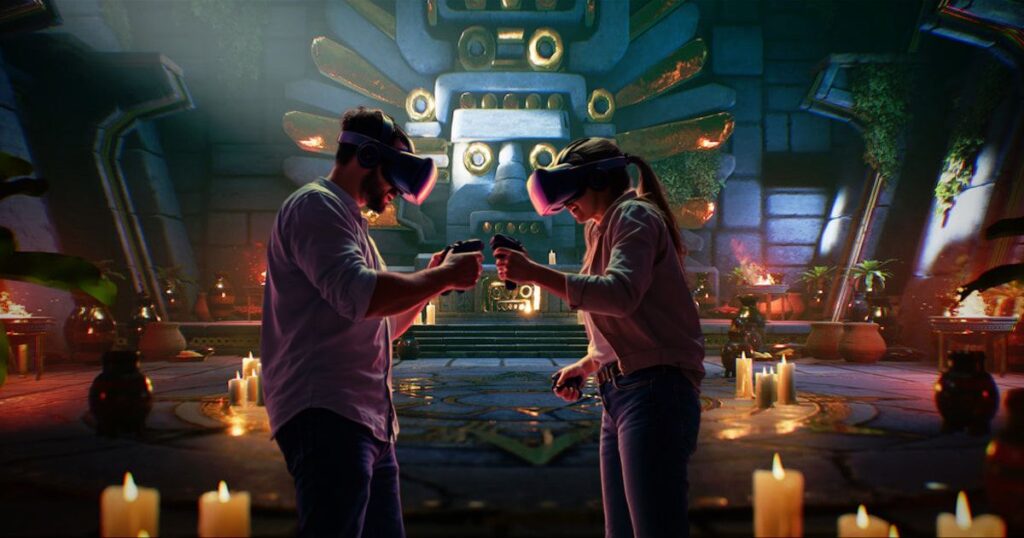
Interactive brand experiences can give audiences that role, whether at a launch party or through an exhibition activation. Customisable brand activation games, AI photo booths and other tech and AI ideas let guests shape what happens instead of simply watching.
At our Red Mix product launch for Al Fakher, guests could kick away digital smoke on an interactive floor to reveal the Red Mix logo. The reveal responded to what guests did.
Participation has a social side too. A 2014 study in Psychological Science by Yale researchers found that sharing an experience intensified it, even without conversation: pleasant chocolate tasted better and bitter chocolate tasted worse.
That cuts both ways at events. Shared frustrations can feel bigger too, so sightlines, queues and sound quality deserve as much attention as the creative concept.
How to Create a Memorable Brand Experience Around Your Reveal
To create a memorable brand experience around your reveal, design the whole arc: the build-up, the peak, the ending and what happens afterwards. Brand reveal psychology gives each of those stages a clear job.
Build Curiosity Before the Product Reveal Event
In a 2014 study published in Neuron, researchers at the University of California, Davis found that people remembered information better when they were curious about it. They also remembered unrelated faces they were shown while waiting for the answer.
The study used trivia questions rather than events, but it suggests the build-up can be part of the message. A covered product, a countdown or a dramatic performance from our brand reveal entertainment collection can hold attention while your key brand cues are in view.
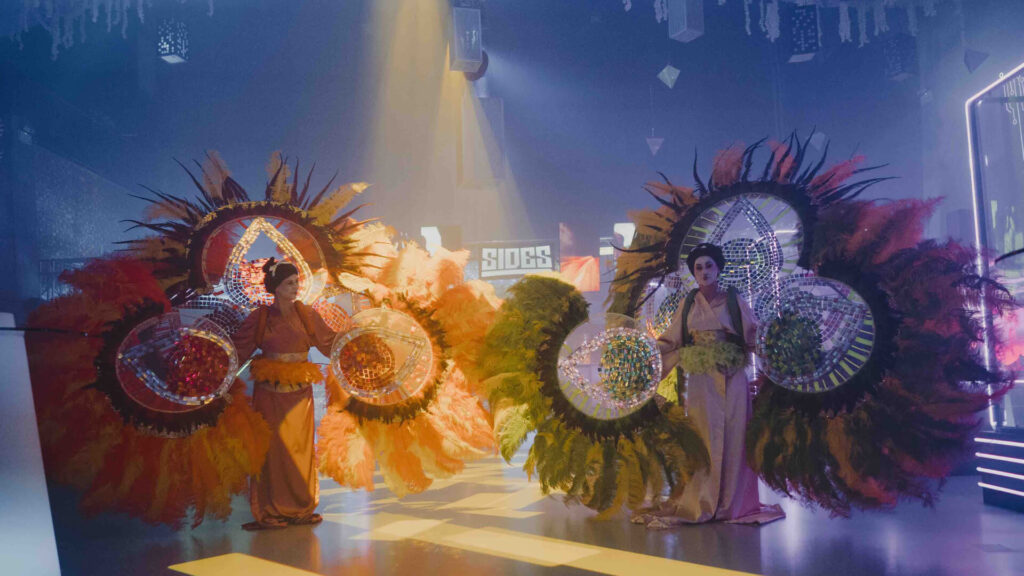
For the Sidemen’s XIX Vodka launch, we created a big reveal using a Kabuki drop for guests entering the event space. A Kabuki drop releases a fabric screen in an instant, so the space appears all at once.
Plan the Peak and Finale with Brand Recall in Mind
In a 1993 study published in Psychological Science, Daniel Kahneman and colleagues found that how an experience ended strongly shaped how people remembered it. Most participants chose to repeat a longer spell of cold-water discomfort because its final seconds were slightly less unpleasant.
This finding is part of what psychologists call the peak-end rule: people tend to judge an experience by its most intense moment and its ending. The study didn’t test events or brand recall, so it doesn’t prove that a dramatic finale will make your brand more memorable.
It’s still useful inspiration. Make your reveal the clear high point, then plan the final moments of your product reveal event with the same care.
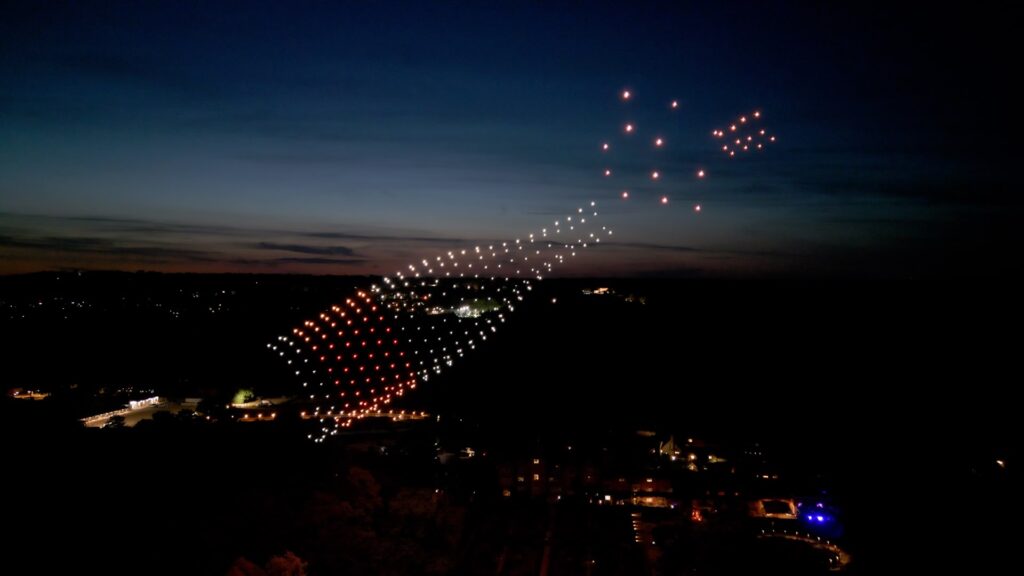
A memorable finale, such as a custom drone show, gives the evening a deliberate ending rather than letting it fade out.
Keep the Live Brand Experience Going After the Event
Research by psychologists Jeffrey Karpicke and Henry Roediger, published in Science in 2008, found that practising recall helps people remember information for longer than simply studying it again. Their research involved learning word pairs, so treat it as a guide: post-event content that invites guests to recall the moment may help your brand stay with them.
Photo moments can help too. A 2016 study in the Journal of Personality and Social Psychology found that taking photos usually increased enjoyment of positive experiences, but not when the camera got in the way.
Share guest photos, release a highlight film and give people a reason to talk about the reveal again. Any personal-data collection and subsequent marketing must be designed around the applicable UK data-protection and electronic-marketing requirements.
Put the Psychology of Brand Experiences to Work at Your Next Reveal
The psychology of brand experiences comes down to one idea: design for the people in the room, not just for the logo on the wall. If you’re working out how to create a memorable brand experience, start with these six principles:
- Start with the feeling: Decide what guests should feel, then design every detail towards it
- Earn attention: Use curiosity and surprise that point straight back to your brand
- Align the senses: Choose two or three sensory elements that carry one clear message
- Give guests a role: Make participation part of how the reveal unfolds
- Plan the peak and the finale: Make the reveal the high point and end on a strong note
- Extend the memory: Give guests reasons to revisit the moment after the event
For more ideas, explore our guides to immersive brand experiences and experiential brand activation ideas.
FAQs About Brand Experience Psychology
A brand experience is everything a person senses, feels, thinks and does in response to a brand. A brand activation is a campaign or event designed to create that experience live, so it’s one of the ways a brand experience is delivered.
Colour can influence how guests feel at a brand event, but the effect depends on context and the brand itself. Rather than relying on general colour rules, choose a palette that reflects your identity and test it under the venue’s lighting.
Using psychology in experiential marketing can be ethical when it helps you design a better experience rather than pressure people. Understanding attention, emotion and memory should lead to moments guests genuinely enjoy and freely choose to join.
You can tell whether a brand experience was memorable by asking guests what they recall after the event, ideally before prompting them with your brand. Social sharing, time spent at interactive features and post-event enquiries can add useful context.
Entertainment that works well for a product reveal is entertainment that supports the story behind the product. Kabuki drops, projection mapping, UV dance reveal shows and drone displays are all options to consider, depending on the venue and audience.
Plan Your Next Brand Reveal with JCEM
These principles shape how we plan brand experiences at Julia Charles Event Management. Our event design team shapes the concept and guest journey, while event production brings the staging, technology and entertainment together on the day.
Together, they help us create brand activations and product launches built around how audiences think, feel and remember.
Planning a launch or brand reveal? Talk to our team about creating a moment your audience can connect with your brand.

Related Services:
- Brand activation services
- Product launch services
- Event design
- Event production
- Set and stage design
- Event lighting and AV
Related Readings:
- How Can Exhibition Activations Generate Leads? 10 Ideas for 2027
- Trends in Immersive Brand Experiences for 2026
- 26 Immersive Event Ideas to Transform Your 2026 Events
- 10 Brand Activation Ideas to Make Your Event Branding Stand Out
- Top Experiential Brand Activation Ideas for 2026
- 5 Latest Tech and AI Exhibition Ideas for Elevating Brands
Get In Touch With Us Today.
With nearly 20 years of Event Management insight, working with world-renowned Clients we'll help you create your Dream Event.
Get in Touch