How To Create a Memorable Culinary Experience at Corporate Events

At large-scale corporate events, catering should never feel like a tick-box exercise.
As a creative events agency, we see corporate event catering as a key part of the overall experience – shaping delegate energy, encouraging connection and supporting a smooth transition from daytime conferences into evening hospitality and gala dinners.
When it’s done well, food becomes one of the most memorable elements of the event. It influences how delegates feel, where they gather, and how they engage with both the content and each other – which is why investing in the right event catering ideas is essential at scale.

This expands on our blog, Top 10 Questions To Ask Your Events Agency Before Booking a Conference.
We’ll explore how to plan your event catering, how to avoid common challenges at scale, and create a cohesive culinary journey that enhances both conference delivery and evening experiences.
Key takeaways:
- Corporate event catering should be planned as part of the overall event experience, not treated as a standalone logistics task
- Understanding delegate profiles helps tailor menus, service styles, and catering formats at scale
- Well-timed catering supports energy levels, engagement, and networking throughout the conference day
- Catering should evolve seamlessly from daytime sessions into evening receptions or gala dinners
- Clear planning for dietary requirements is essential for inclusive, large-scale corporate events
- Sustainable catering choices and well-designed breakout spaces enhance both delegate experience and brand perception
Table of contents:
- Understanding Your Audience
- Types of Catering Options (Day to Night)
- Breakfast catering: setting the tone for the day
- Morning and afternoon breaks: fuelling focus and productivity
- Lunch options: balancing efficiency and experience
- Evening networking and hospitality: creating moments that connect
- Linking catering to conference themes and gala transitions
- Real-world inspiration: Silbury House
- Timing food service with session breaks
- Handling Dietary Requirements
- Integrating Catering into Your Agenda
- Sustainability and Style
- Book an Event With Julia Charles Event Management
Understanding Your Audience
Understanding your audience is essential to executing catering successfully for a corporate event, particularly when delivering professional catering for conferences where expectations, timing and service consistency are critical.
Furthermore, delegate profiles can be used to inform your catering decisions, from service style and menus to demand planning.
The impact of demand is especially important to consider for large-scale corporate events – particularly conferences and gala dinners – where your catering decisions will need to be multiplied to support potentially hundreds or even thousands of attendees.
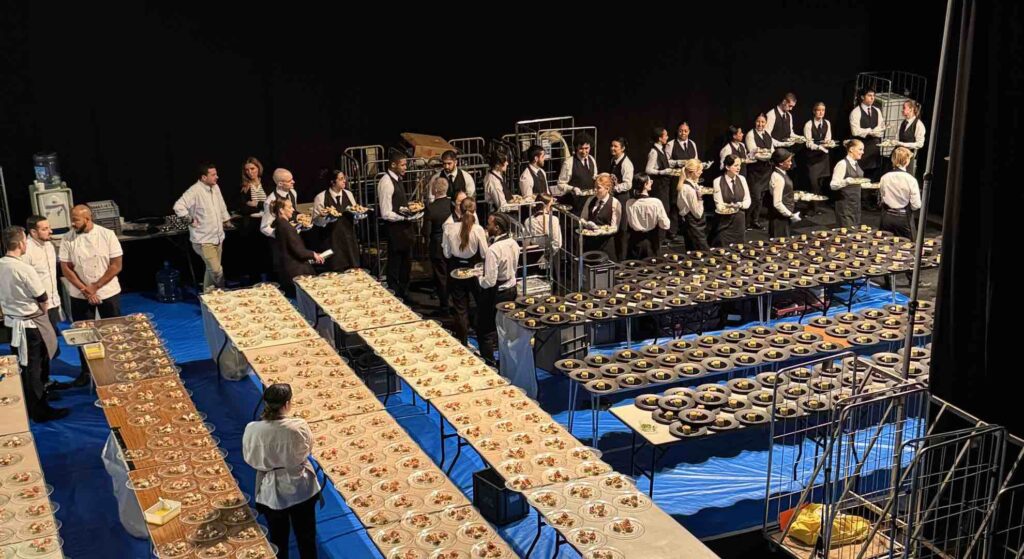
Why delegate profiles matter in corporate event catering
Understanding your delegate profiles is essential when delivering corporate event catering at scale. For example, age, cultural background and professional preferences all play a role in shaping the most effective catering approach.
Factors like this influence what type of catering is suitable throughout your corporate event. Different audiences have different expectations – and catering should reflect that.
For example, a graduate-heavy audience may prefer informal, fast-paced options such as street food or grab-and-go stations, whilst senior executives often expect a more refined experience with higher-touch service and considered menu choices.
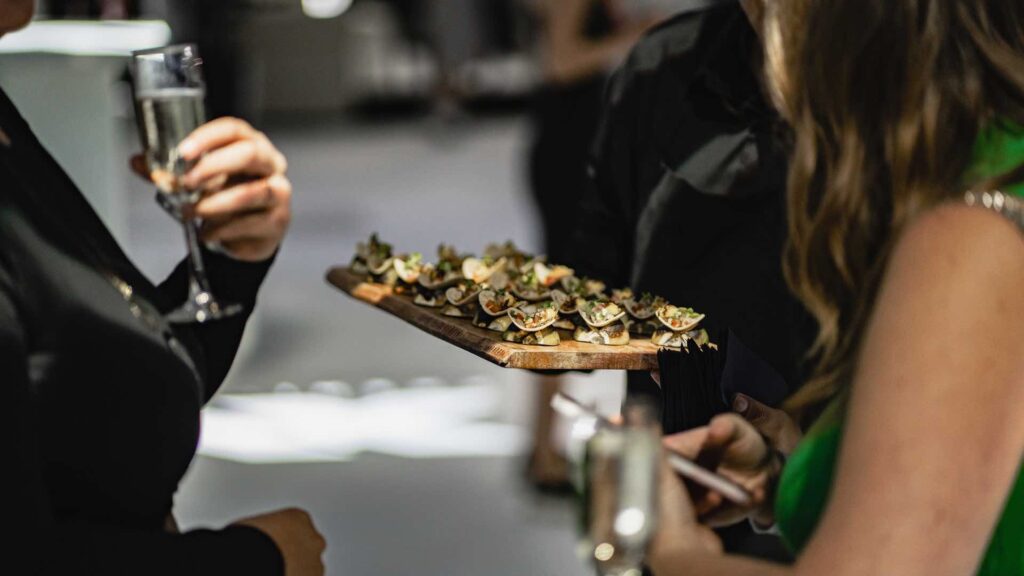
When catering is aligned with your audience, it feels intentional and well planned – not generic or a ‘one-size-fits-all’ approach.
Capturing dietary requirements early through registration tools
Using event registration platforms and conference apps to collect dietary requirements at the earliest stage is critical for large conferences.
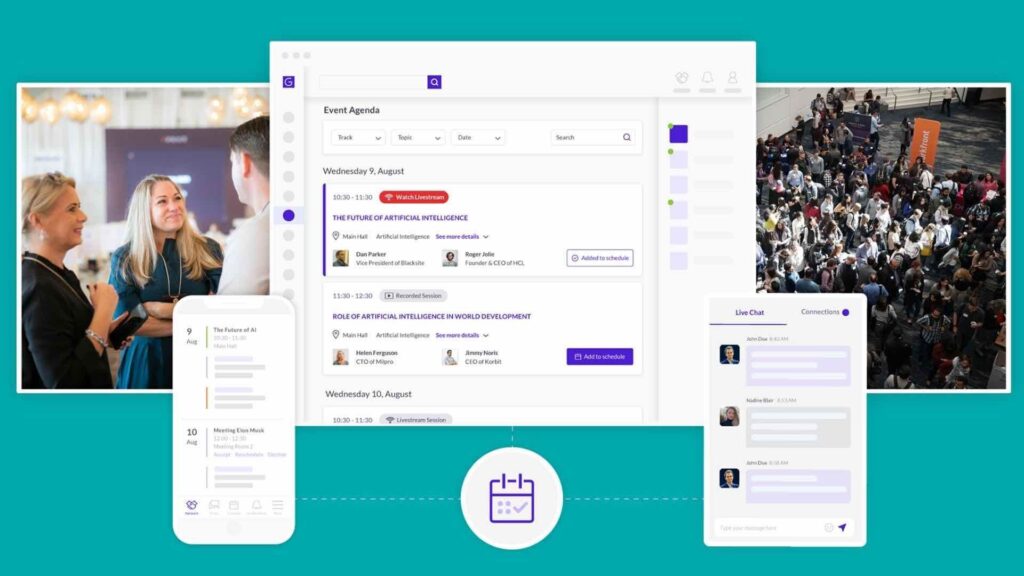
This information allows caterers to plan inclusive menus, allocate appropriate quantities and ensure specialist requirements are properly catered for without last-minute disruption.
Early data capture also improves delegate confidence, as attendees know their needs have been considered well before arrival.
Find out more about what technology to integrate into a conference.
Using data to anticipate demand and reduce waste
Analysing registration data, attendance patterns and session popularity helps predict catering demand more accurately across the day.
When combined with real-time conference technology, this insight allows organisers to adjust quantities, reduce unnecessary surplus, and support sustainability objectives.
Smarter forecasting not only minimises waste but also improves service flow and cost efficiency.
This data-led approach works best when integrated with wider conference technology and sustainability strategies, ensuring catering decisions support both delegate experience and environmental goals.
Find out more about what technology to integrate into your conference.
Types of Catering Options (Day to Night)
For large-scale conferences, catering should be planned as a continuous journey rather than separate, isolated moments. This approach is especially important when working with conference catering services that must perform efficiently across multiple service windows and audience touchpoints.
Each food touchpoint plays a role in maintaining energy, supporting networking and setting the tone as the event transitions from formal content to informal connection.
Breakfast catering: setting the tone for the day
Breakfast is often the first interaction delegates have with your event experience.
Furthermore, for high-volume conferences, buffet breakfasts provide speed and flexibility, whilst plated breakfasts work well for leadership or VIP audiences.
Quick bites, such as pastries, smoothies, and protein pots, are essential for early sessions and late arrivals, ensuring no delegate starts the day disengaged.
- Buffet breakfasts for speed and flexibility
- Plated breakfasts for VIPs or leadership sessions
- Quick bites like pastries, smoothies, and protein pots for early arrivals
- Eco-friendly packaging and branded coffee stations to reinforce your corporate hospitality catering
Morning and afternoon breaks: fuelling focus and productivity
Refreshment breaks scattered throughout your corporate event, specifically conferences, are vital for sustaining attention across longer agendas and are a core component of well-executed professional catering for conferences.
For example, barista-style coffee stations, quality teas and energising snacks help maintain momentum, whilst healthier options such as fruit, nuts and low-sugar treats cater to wellness-conscious audiences.
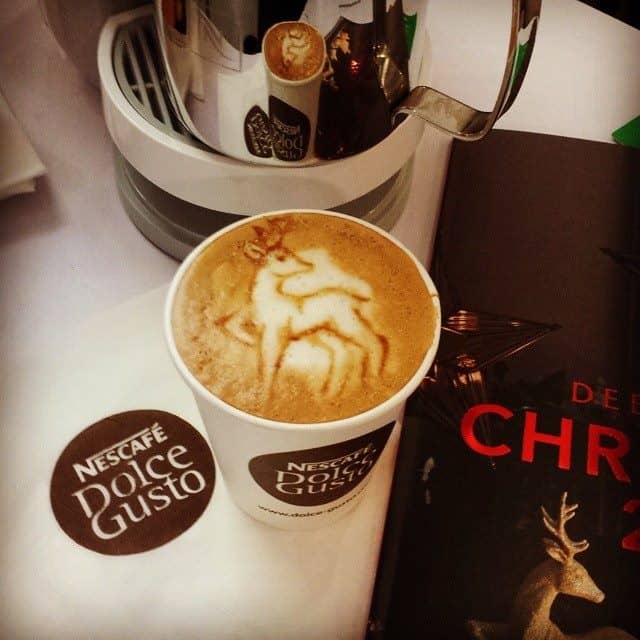
Hydration stations should be visible and consistent throughout the venue, ideally incorporating branded bottles or refill points to reinforce identity and sustainability.
- Barista-style coffee stations and quality teas
- Healthy snacks: fruit, nuts, and low-sugar options for wellness-conscious delegates
- Branded hydration points to encourage sustainability and keep energy levels high
- Interactive or themed snacks to create memorable experiences
Lunch options: balancing efficiency and experience
Choosing between buffet, set menus, or boxed lunches depends on agenda flow and delegate movement, and is where experienced conference catering services can add real value through smart planning and service design.
Buffets encourage networking and accommodate diverse dietary needs efficiently, whilst set menus offer a more refined experience when time allows.
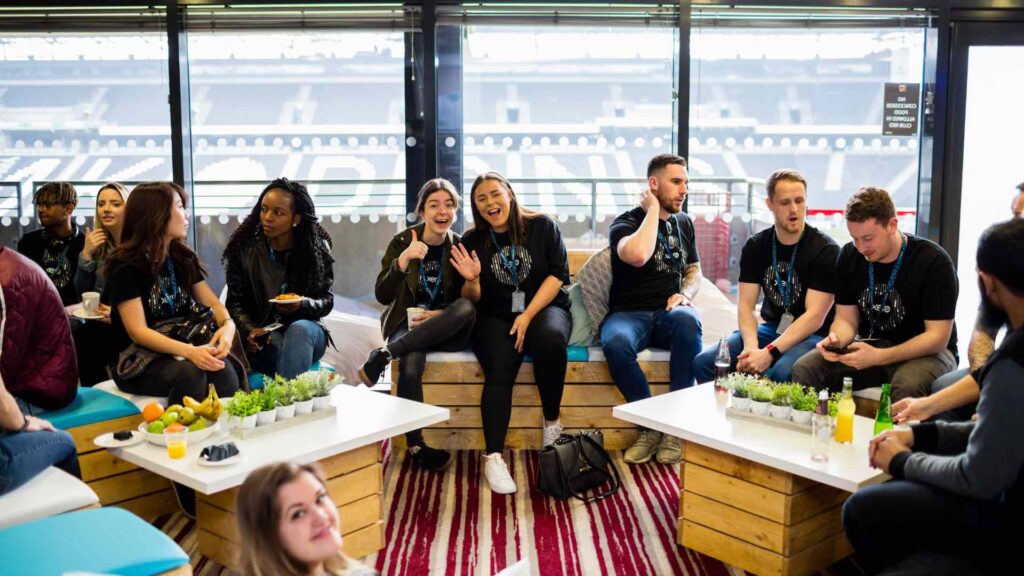
Boxed lunches can work for content-heavy programmes but should feel premium and well-branded to avoid feeling transactional.
- Buffet-style lunches for networking and diverse dietary needs
- Set menus for a more refined, formal experience
- Boxed lunches for content-heavy programmes, designed to feel premium and branded
- Align with conference catering services to maintain flow between sessions
Evening networking and hospitality: creating moments that connect
As conferences move into evening receptions or networking events, catering should become more experiential. This is where corporate hospitality catering plays a key role, shifting the focus from fuel to connection, atmosphere and shared experience.
Canapes and cocktails encourage networking, whilst interactive food stations – such as live cooking, tasting counters, or themed stalls – create focal points for conversation, making it a more comfortable experience for delegates.
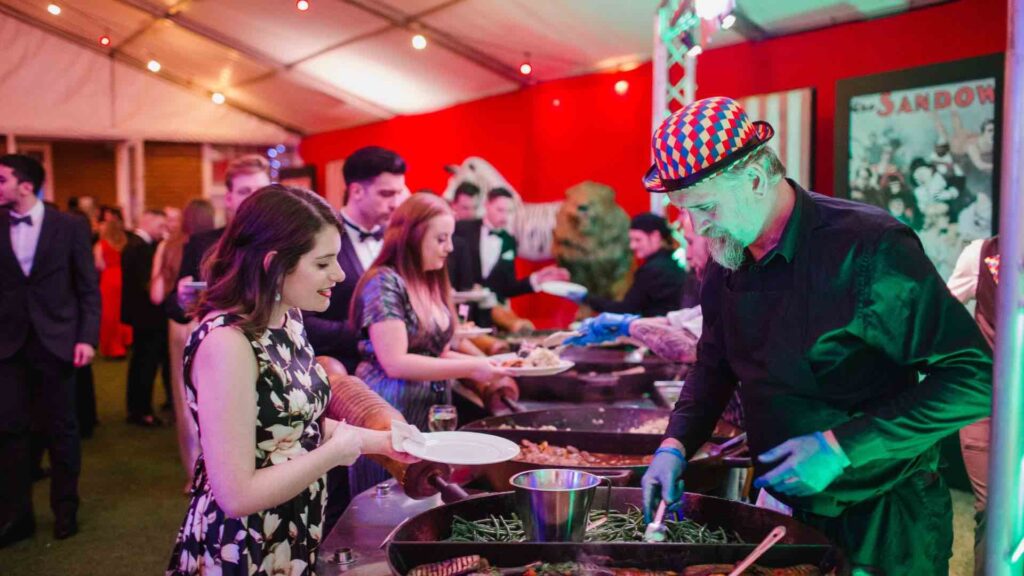
Entertainment-led catering, including mixology sessions or global street food concepts, adds a layer of engagement that elevates the experience.
- Canapés, cocktails, and interactive food stations for engagement
- Themed or experiential catering, such as live cooking stations, tasting counters, or global street food concepts
- Entertainment-led catering (mixology sessions, chef demonstrations) to elevate the experience
- Smooth transition into gala dinners with cohesive corporate event catering themes
One example of thematic catering that can come to any event space is this immersive cocktail experience:
Linking catering to conference themes and gala transitions
Catering becomes even more impactful when aligned with your conference theme.
Global leadership events may feature world cuisine zones, innovation-led conferences might explore experimental plating, and sustainability-focused events can highlight locally sourced menus.
These concepts can then be seamlessly extended into an evening gala, creating a cohesive narrative from day to night and reinforcing the role of corporate hospitality catering in elevating high-profile corporate events.
- Align menus with conference themes, such as sustainability, innovation, or global cuisine zones
- Extend ideas into evening functions for a seamless day-to-night catering experience
Find out more about turning your conference into a gala dinner.
Real-world inspiration: Silbury House
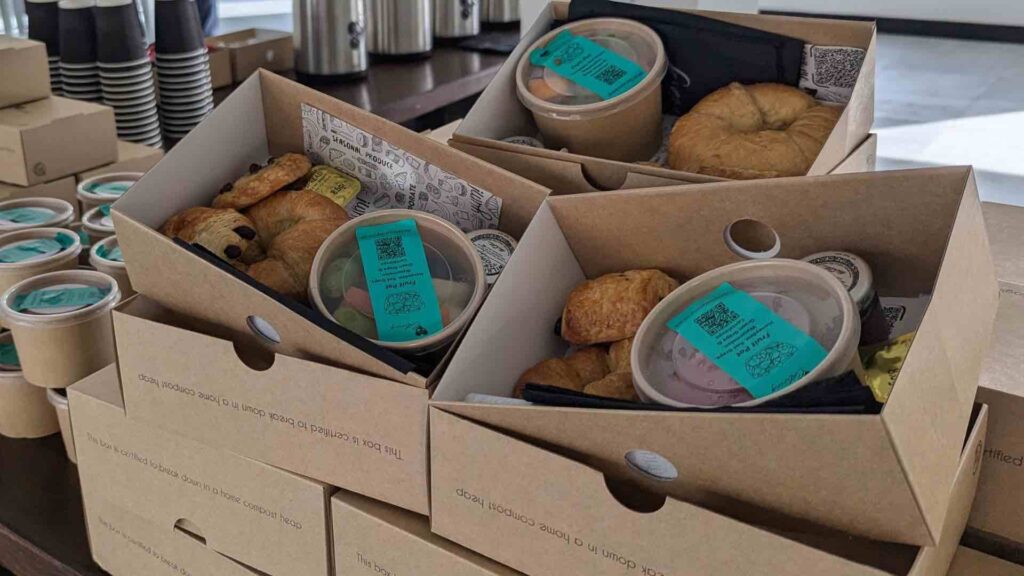
At the Silbury House office opening, catering was designed to complement a live working environment rather than disrupt it.
We delivered sustainable breakfast boxes that were easy to distribute, reduced waste and allowed guests to enjoy food at their own pace as they arrived and settled into the space.
This informal, flexible format encouraged natural movement, conversation and longer dwell time without the need for fixed service moments.
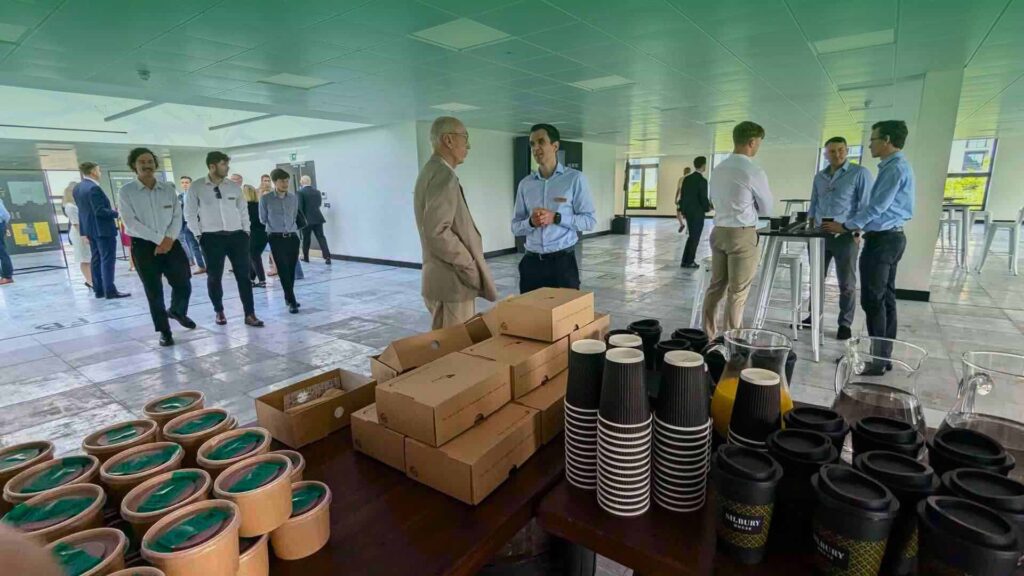
It also demonstrates how thoughtfully planned catering, even at a simple level, can support guest flow, create moments of connection and work effectively at scale, particularly for office launches, conferences and corporate environments where flexibility is key.
Timing food service with session breaks
Aligning catering with session schedules ensures delegates are fuelled at the moments they need it most. This is particularly important for conferences covering in-depth or technical topics, where sustained focus, interaction and participation are key to success.
Well-timed coffee breaks with energising snacks can help reset attention between intensive sessions, while longer lunch periods give delegates valuable time to properly recharge, network and connect with peers.
When planned strategically, food service becomes an active tool for maintaining energy levels and supporting overall delegate engagement – rather than a simple logistical requirement.
Catering moments can be enhanced further by coordinating them with live elements, such as performers or interactive experiences, helping to create natural energy peaks throughout the agenda.
Take a look at this unique immersive cocktail experience as an example:
Handling Dietary Requirements
Handling dietary requirements is a critical part of professional catering for conferences, particularly at scale, where clarity, consistency and confidence in service are essential.
Moreover, at large corporate events, delegates expect their needs to be catered for seamlessly, without drawing attention or causing delays.
Common requirements typically include vegetarian, vegan, gluten-free, dairy-free, halal, and kosher options, all of which should be planned for from the outset rather than treated as exceptions.
Clear labelling and smart service design
Clear, consistent labelling at all catering points helps delegates make confident choices quickly, particularly during busy breaks.
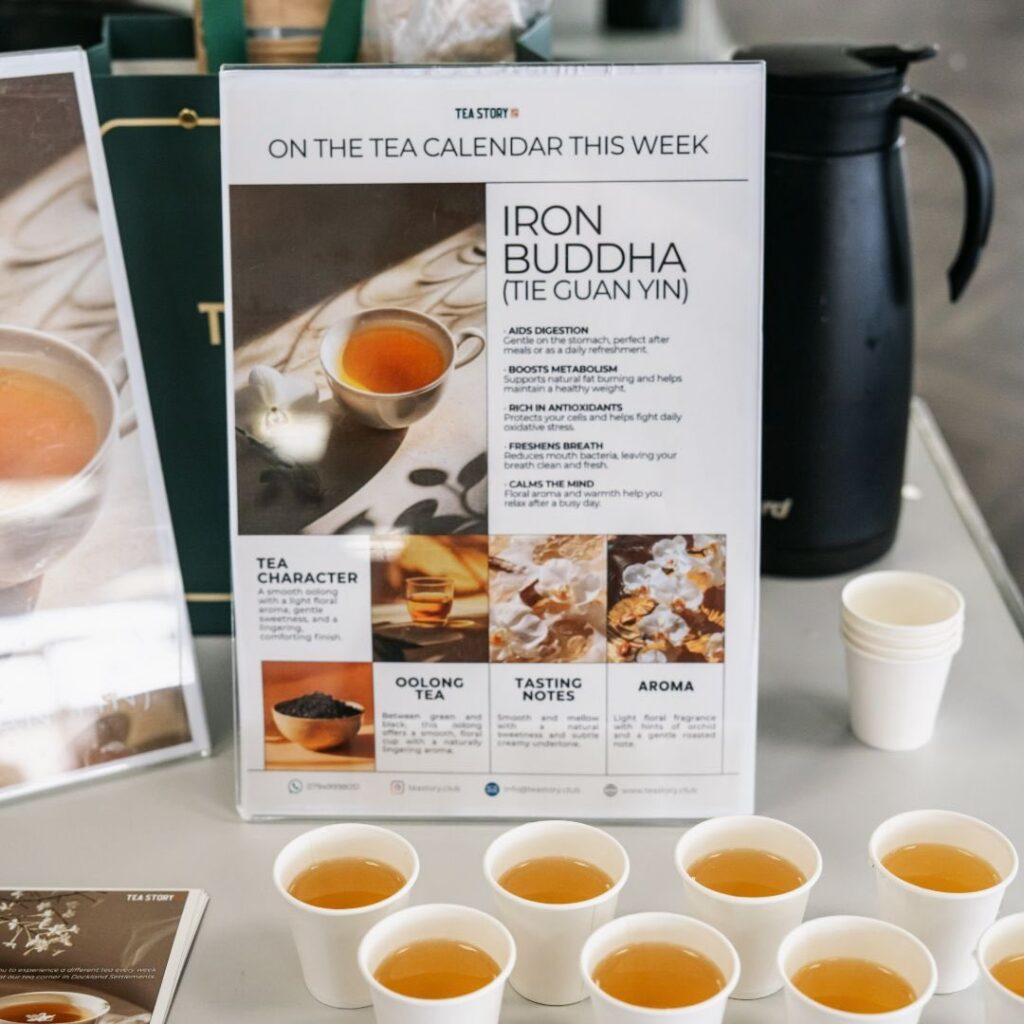
Separate serving stations for specific dietary needs reduce congestion and create a smoother flow, while also helping to avoid confusion at peak times.
Preventing cross-contamination
Preventing cross-contamination is crucial to delivering a seamless catering service at your corporate event.
Catering areas should include separate preparation areas, dedicated utensils and trained service staff who understand allergens and can answer delegate questions accurately.

These details are especially important at large conferences, where small oversights can quickly become high-risk issues.
Communicating in advance to manage expectations
Sharing dietary information with delegates before the event helps set expectations and build trust.
Again, conference apps, pre-event emails, or registration confirmations can highlight how dietary needs will be handled, reassuring attendees that inclusive catering is embedded into the event experience rather than added as an afterthought.
When dietary requirements are managed proactively, catering becomes inclusive, efficient, and stress-free – improving the experience for delegates supporting both delegate wellbeing and overall conference flow.
Integrating Catering into Your Agenda
Effective corporate event catering doesn’t happen in isolation – it should be carefully integrated into your agenda to support energy levels, engagement and networking throughout the day.
Timing food service with session breaks
Matching catering to session schedules ensures delegates are fuelled when they need it most.
Especially for conferences that are covering in-depth topics requiring audience engagement and participation – you want delegates to be fueled and energised to be able to contribute.
Short coffee breaks with energising snacks can revive attention between intensive sessions, whilst longer lunch periods give delegates a chance to recharge and connect with peers.

Creating ‘flow’ through breaks
Well-timed breaks encourage movement around the venue, helping delegates stay alert and engaged.
Furthermore, if you have sponsors who have stands at your conference, this is a huge benefit – whilst delegates are having light bites and roaming your venue, they will be more likely to visit stands and engage with your sponsors.
Strategically placed refreshment points and social spaces can guide footfall, promote informal networking and make content-heavy days feel less taxing.
Choosing the right lunch format
Short, efficient lunches are ideal for packed agendas, allowing delegates to return quickly to sessions.
Depending on the event, we’d recommend around 45 minutes to provide the perfect balance between networking and enough of a break between sessions.

In contrast, longer, relaxed meal periods support conversation, reflection and networking, especially when aligned with high-profile speakers or interactive workshops.
When catering is integrated seamlessly into the agenda, it enhances both delegate experience and conference outcomes, turning food into a tool for engagement rather than a logistical necessity.
Sustainability and Style
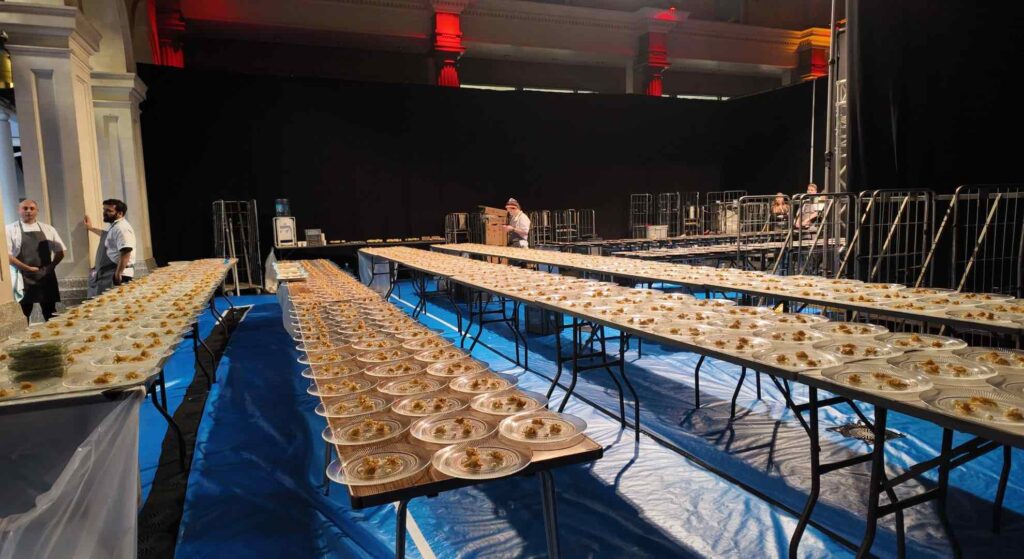
Sustainability is increasingly expected at large-scale conferences, and thoughtful event catering ideas play a major role in reducing environmental impact while enhancing brand perception.
Eco-friendly choices – such as locally sourced ingredients, seasonal produce, minimal packaging, and reusable dishware – not only reduce carbon footprint but also demonstrate a commitment to responsible event management.
Designing functional and stylish breakout areas
Catering areas should be practical for service flow while also visually engaging.
Comfortable seating, thoughtfully arranged stations, and subtle branding create an environment that encourages networking and relaxation.
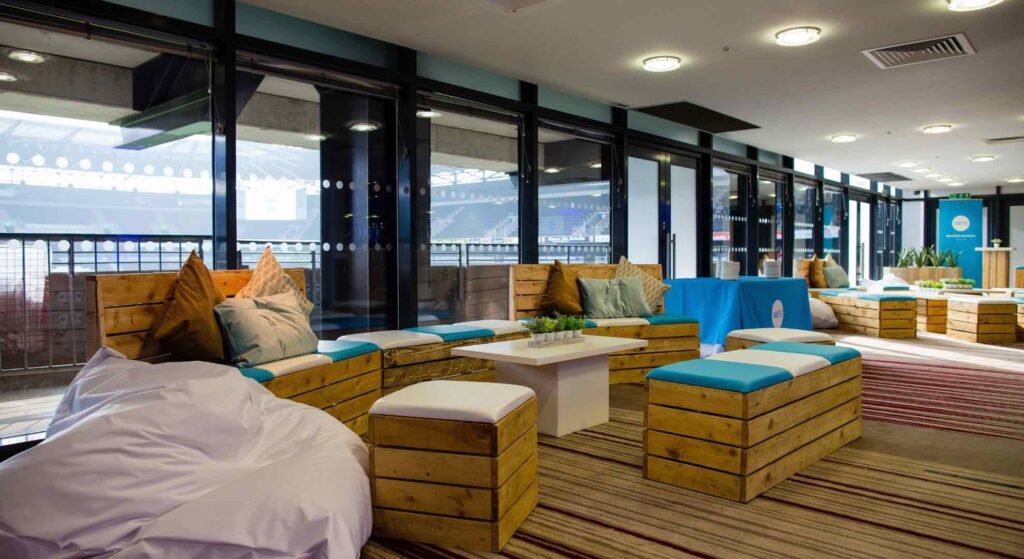
Delegate experience is shaped as much by the aesthetics and comfort of the space as by the food itself.
The impact of style on delegate satisfaction
Well-designed catering spaces influence mood, perception of quality, and overall engagement.
When delegates feel welcomed into attractive, well-planned areas, it enhances their focus, encourages social interaction and reinforces the professionalism of the event.
Integrating sustainable practices with thoughtful design ensures your catering is not only eco-conscious but also leaves a lasting impression on attendees.
Find out more about our sustainable event services.
Book an Event With Julia Charles Event Management
We hope this blog has given you clear, practical insight into how thoughtful catering can transform large-scale conferences into memorable, high-performing experiences.
Corporate event catering is more than feeding delegates – it’s a strategic tool that supports energy, encourages networking, reflects your brand values, and seamlessly carries your event from daytime sessions into evening hospitality.
From data-led planning and inclusive menus to themed food experiences and sustainable delivery, our event producers work closely with trusted conference catering services to deliver catering that performs at scale.
Whether you’re organising a multi-stream conference, leadership summit, or conference-to-gala transition, our corporate hospitality catering solutions ensure your event feels considered, cohesive and memorable.
Get in touch to discuss your next corporate conference or explore our related conference catering, sustainability, and gala dinner services below.

Related services:
- Catering services
- Conference event services
- Gala dinners and award ceremonies
- Sustainable event services
Related blogs:
Get In Touch With Us Today.
With nearly 20 years of Event Management insight, working with world-renowned Clients we'll help you create your Dream Event.
Get in Touch