How To Design An Event Set: Five Components Of Set Design
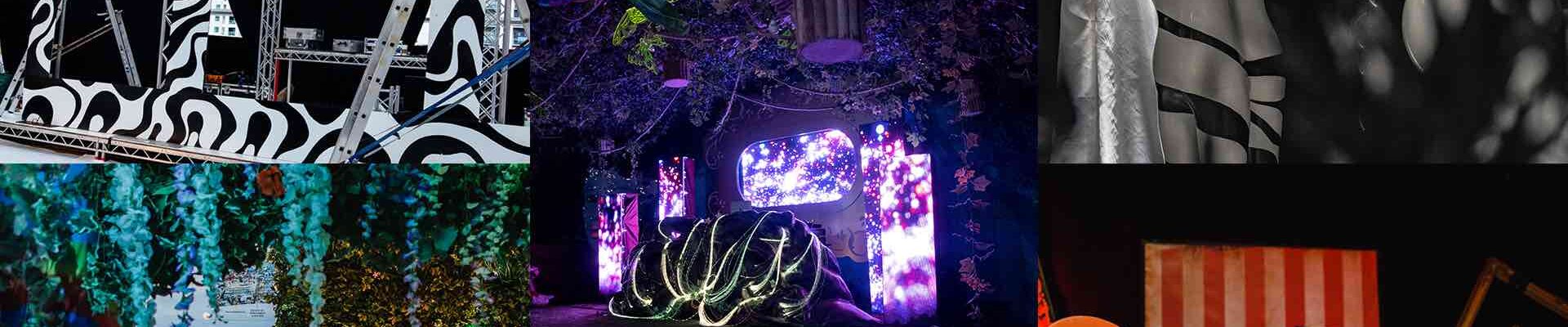
Any successful event requires a multitude of elements that come together to create an unforgettable experience.
The visual side of your event is so important, which is where event production comes into play. One of the most crucial aspects of any event production is event set design.
As an events agency that specialises in event production, we understand the ins and outs of event set design to deliver exceptional events.
In this blog, we’ll cover the intricacies of event set design, highlighting its importance and sharing key insights to guide you through the process.
Whether you’re a seasoned event organiser or someone exploring event design for the first time, this article is designed to ignite your creativity and help you make informed decisions.
What Is Event Set Design?
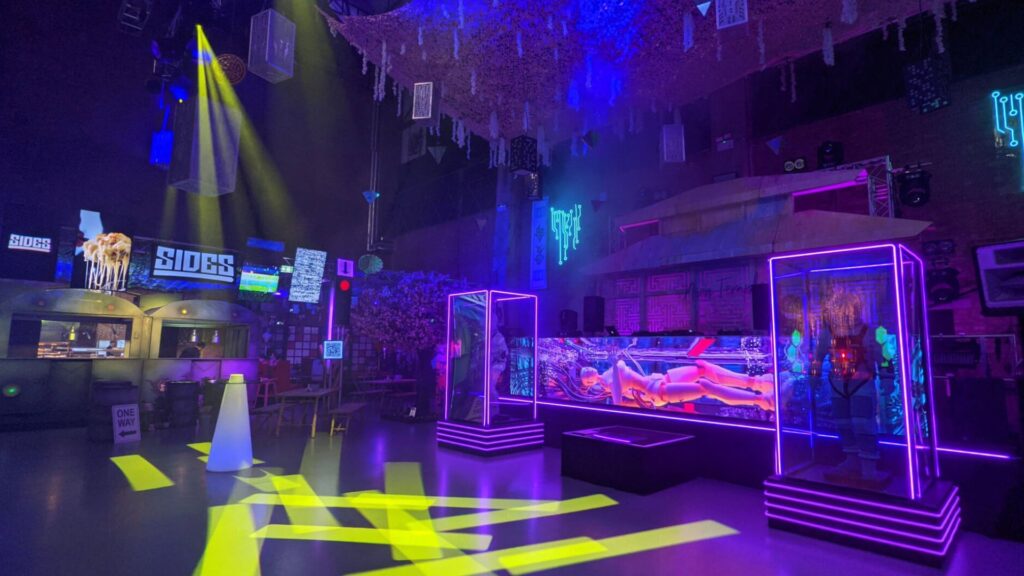
Event set design is the process of designing and producing the physical environment in which your event will unfold.
This includes the overall aesthetic of your event; all of the furniture, props, decorations, lighting and more, to the layout of your event.
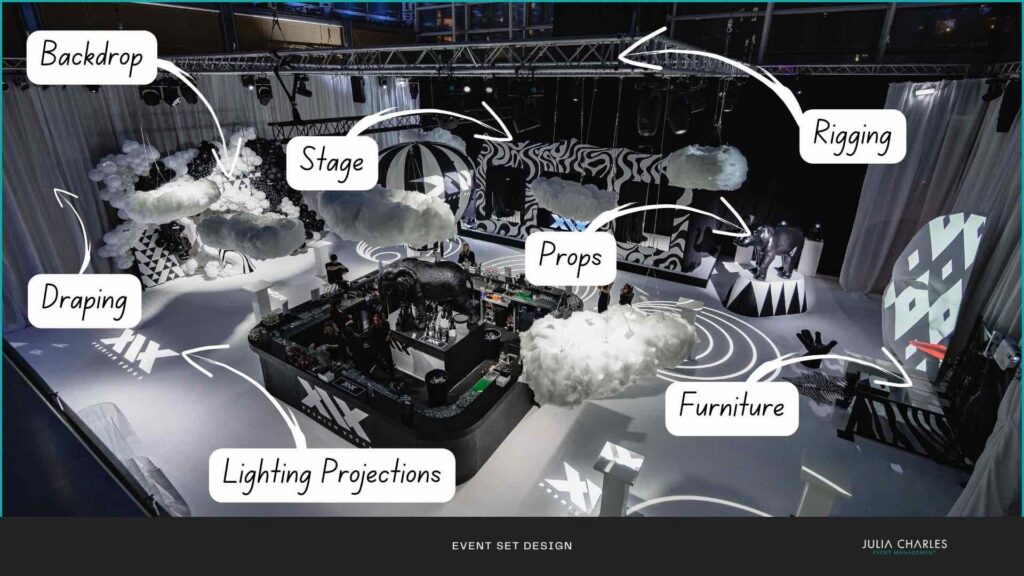
It’s the creation of a visually appealing and functional event space that is designed specifically to an event brief.
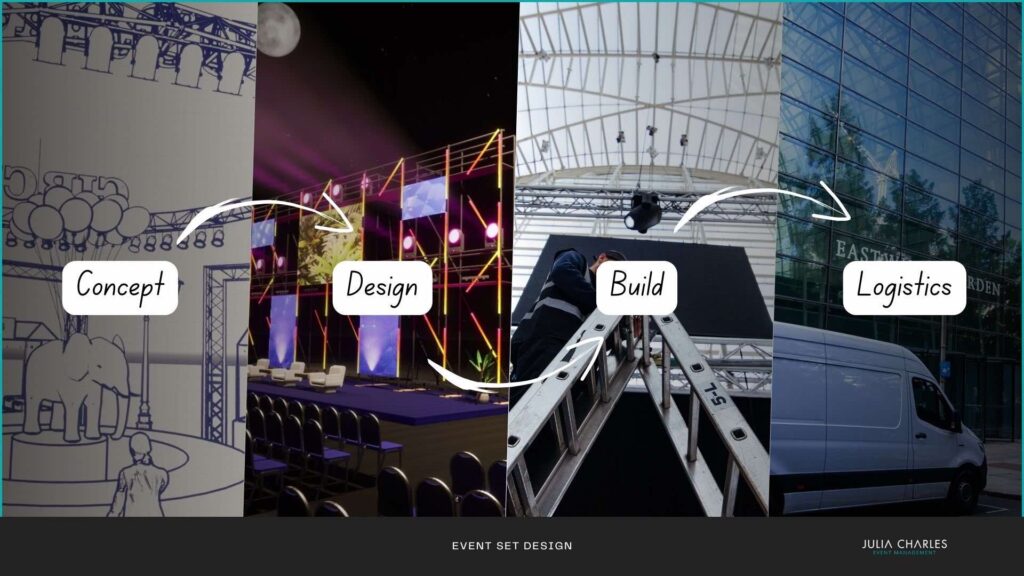
An event set designer deals with everything from creating the concept of the set, designing it and physically building it. Along with all of the logistical side.
An event set design can be used for a variety of event types, from corporate events and conferences to influencer events and product launches.
Event set design plays a significant role in making the event memorable and impactful because it covers the visual side of your event – arguably the most important aspect of an event space.
A well-produced event set is essential to the success of your event. It’s not just about the visual side of the design; it’s about creating a functional design that enhances the event experience and meets your objectives.
Let’s explore the key elements you should consider before starting on your event set design.
Key Elements To Understand Before Starting Your Event Set Design
Before starting your event set design, there are some key elements to consider to ensure you design an event set that hits your event purpose.
1. Understand Your Event’s Purpose and Theme
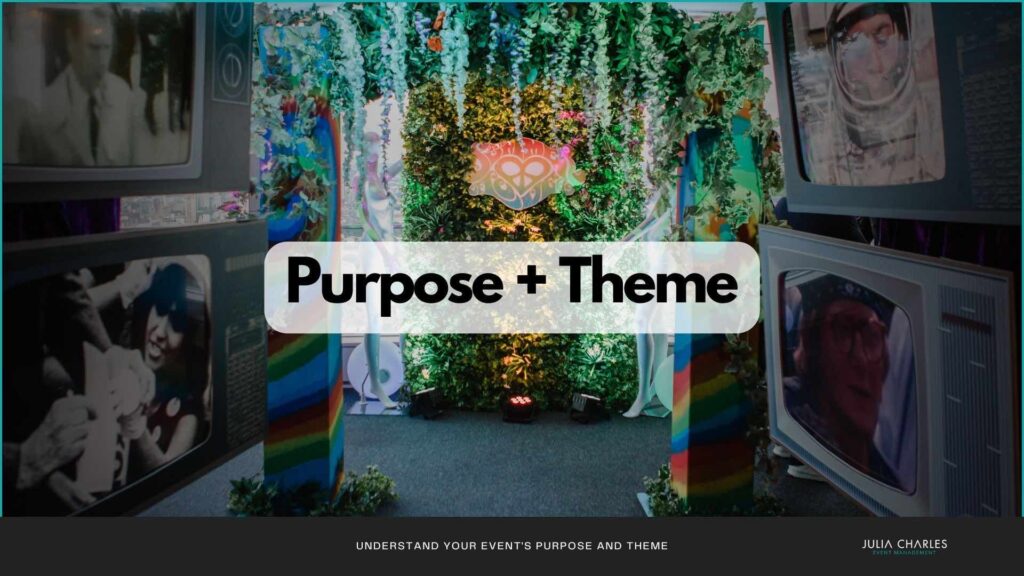
Before diving into your event set design, it’s essential to understand the event’s purpose and theme thoroughly.
- What are your objectives?
- What emotions or reactions do you want to evoke in your audience?
Aligning your set design with these aspects ensures that every element contributes to the event’s success.
2. Understand Your Target Audience
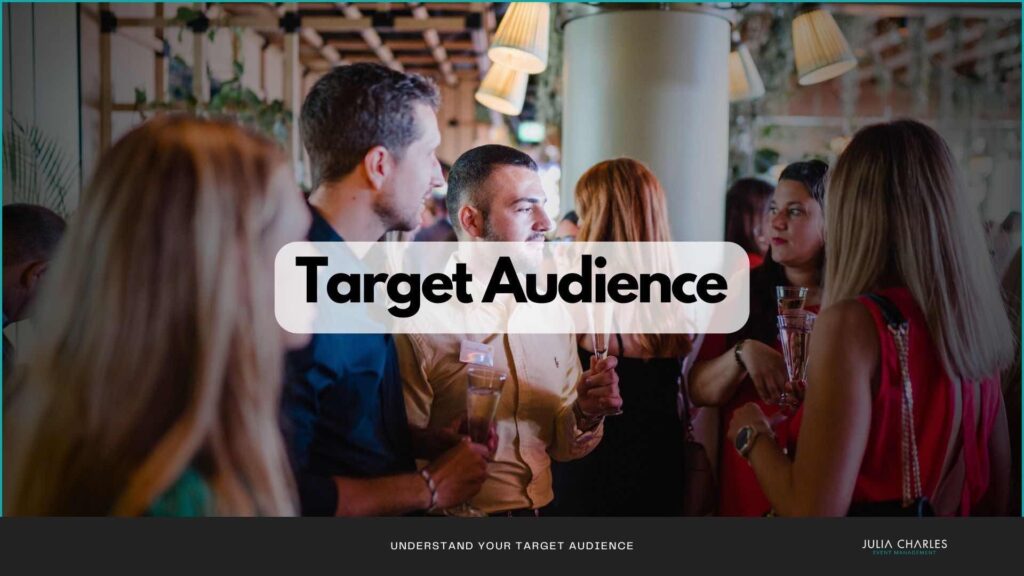
Before starting your design, you need to understand who you are designing it for.
The audience is at the centre of your event. Therefore, your design should be geared towards their preferences and expectations.
Understanding your target audience helps you create a set that resonates with them, making them feel comfortable and engaged throughout the event.
All of this enables you to create an effective event set design that adds to your event.
There are more elements to consider, however, these will be a great starting point before going on to design your event set.
The Five Key Components of Event Set Design
Now we’ve covered some of the basics, we can get into five of the key components of effective event set design.
1. Layout and Spatial Planning
The layout of your event set design plays a pivotal role in ensuring a seamless event experience.
Consider the flow of traffic, accessibility, and crowd management.
Pay attention to crucial details like fire exits, smoke alarms, and technician accommodations.
Your design should facilitate the movement of guests and backstage operations without disruptions.
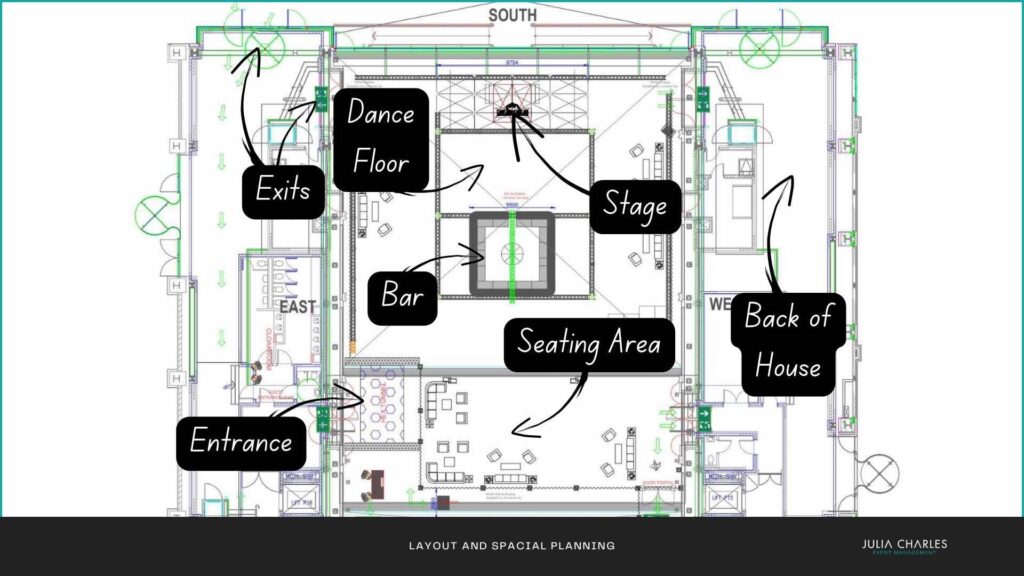
Spatial planning enhances guest experience and helps manage crowd movement.
Consider the placement of elements of your set design – for example – if you have pyrotechnics, you will need to avoid smoke alarms if these cannot be turned off (confirm this with your venue).
Consider how guests will navigate your event – the flow from bar to stage, stage to dance floor, seating areas to toilets and so on.
How can you ensure the event flows and there are no bottlenecks and so forth?
Within your layout, you will also want to assess where your ‘back of house’ area is – where event staff, caterers and more – will enter and exit.
Again, this shouldn’t hinder the flow of your event and cause bottle-necking.
Flow from bar to stage from stage to dance floor from dance floor to toilets, back to seating – does it work?
You may also require a technician desk where all of the technical aspects of your event will be run from – the lighting, AV and more.
The positioning of this should not be obstructive, on show or take away from your set design.
2. Aesthetics and Visual Elements
Visual appeal is often the first impression your event set makes on guests. As such, creating a visually appealing set design is important to your event’s success.
We recommend allocating a significant portion of your budget to the design and production of your event to create a visually stunning event space.
Carefully choose colours, lighting, props and decorations that enhance the event’s theme, setting the right mood and atmosphere.
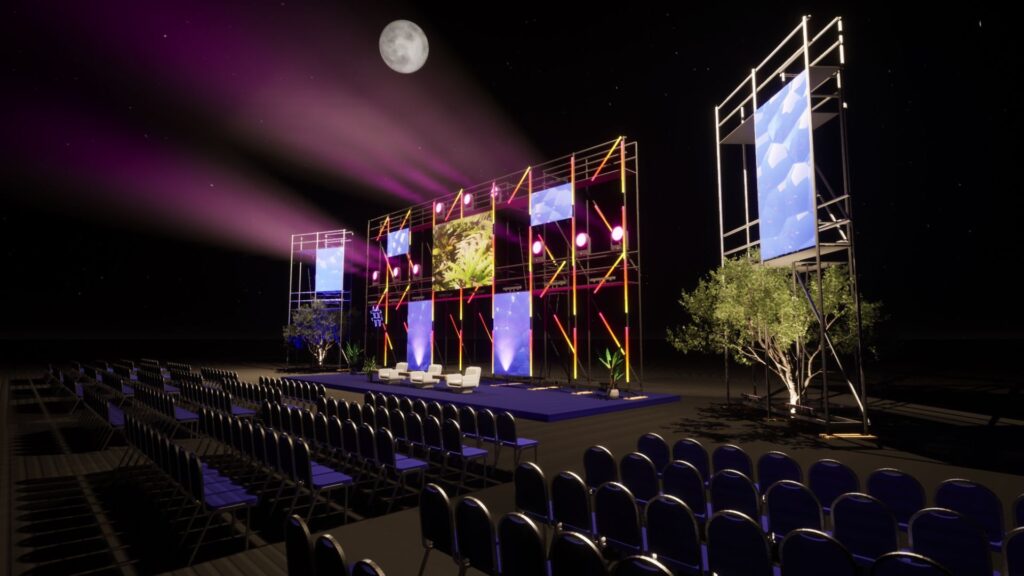
Create visual designs of your event first before producing the real thing and decide on a design that really works for your event objectives.
Working with professional events companies and venues often gives you access to venue walkthroughs, which give you a vivid picture of what your event will look like before producing and building the real thing.
3. Audio and Visual Technology (AV and Lighting)
AV and lighting technology can elevate your event set design to the next level.
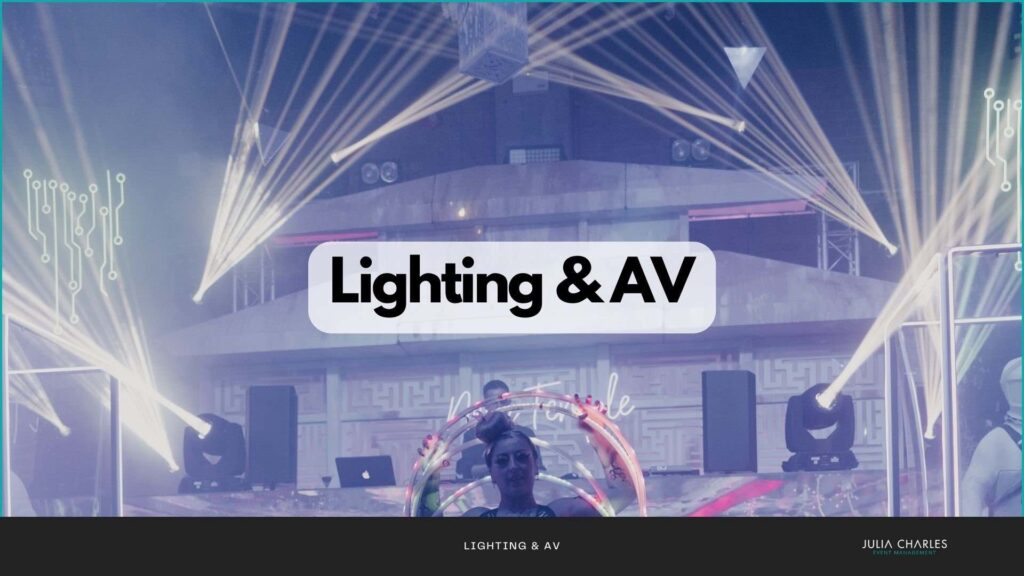
Lighting and AV is arguably one of the most important aspects of any event production.
Consider:
- Projection Lighting
- 3D Projection Mapping
- LED Screens
- Sound Systems
- Pyrotechnics
To create truly captivating experiences.
Be mindful of venue restrictions and technical requirements to ensure a flawless execution. For example, some venues will not allow smoke detectors to be switched off which can hinder the use of pyrotechnics in an indoor space.
If you are using pyrotechnics, it is imperative that your audience can see them and their vision is not restricted to get the full effect of the pyrotechnics. This should be considered at the layout stage (covered previously).
If you’re looking at projection laser shows, for them to be visible, it is essential for darkness and haze. Again, smoke detectors will need to be switched off for this which some venues may not allow.
Logistics are very important for getting this aspect of your set design correct. You will need to plan when each part of your set gets installed.
For example, if you’re rigging from up high – plan correctly for when rigging needs to go in so you can get the right equipment in and out.
To get the lighting correct, your technician will be able to highlight the key areas that need to be lit so the right parts of your set design stand out.
Read more about Lighting and AV.
4. Furniture and Decor
Furniture and decor are essential elements that set the tone of your event.
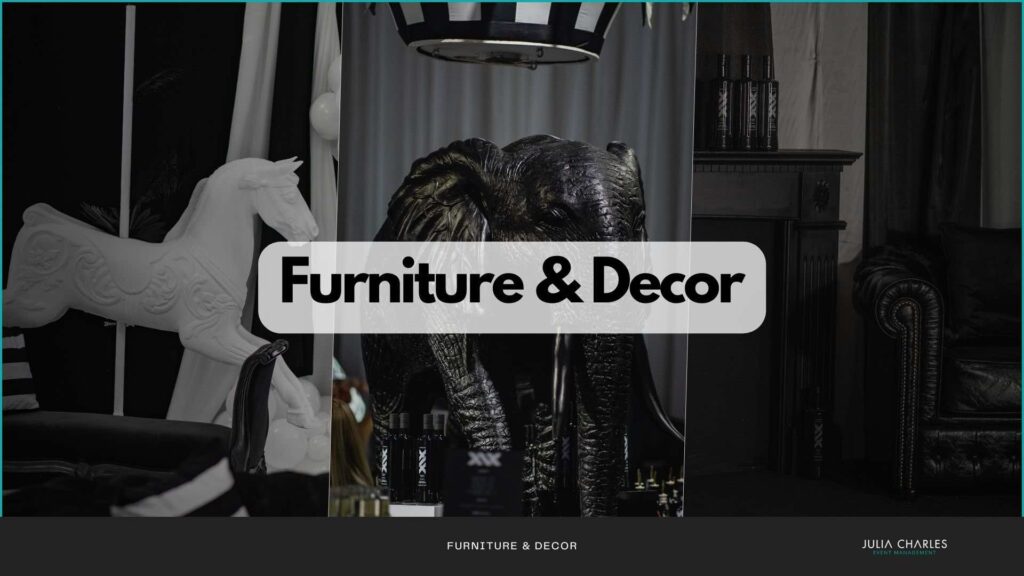
They contribute to the overall theme and desired ambience.
Furniture and decor will cover all aspects of your event – from seating areas, open spaces, backdrops and stages.
For Your Stage: (if applicable)
Any props and decorations that are part of your stage will need to be weighted and secured to the stage.
When designing your stage, measure from the stage’s top, not the floor, to ensure a seamless fit.
When choosing furniture for your seating areas, ensure they enhance and compliment the overall theme of your event space. Both in colour and style.
5. Bespoke Branding and Customisation
Incorporating branded elements into your set design not only reinforces your brand but also makes your event more marketable.
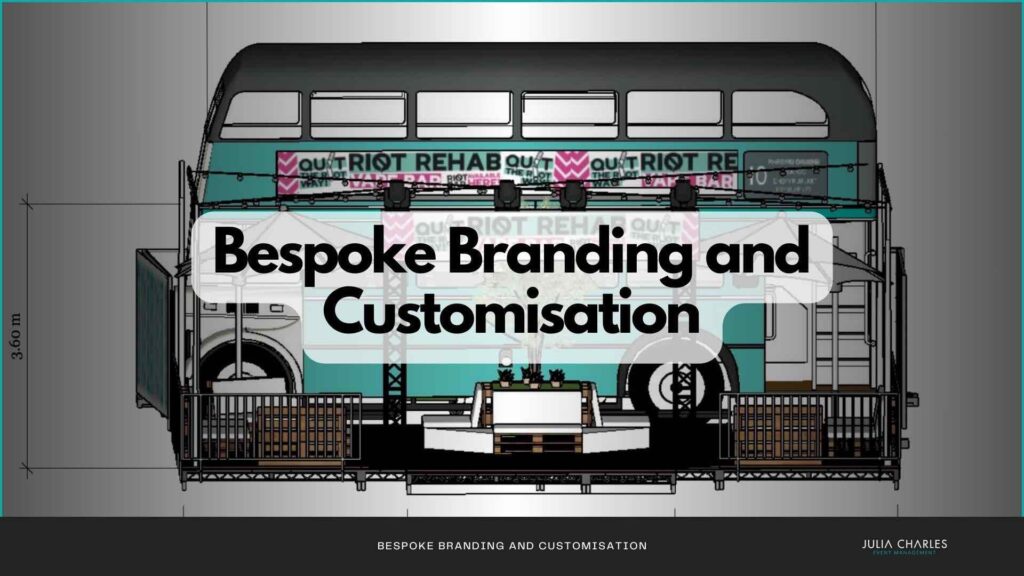
Design every aspect of your set bespoke to your brand, ensuring consistency and creating opportunities for promotion through event visuals.
Any content taken from your event will have your branding involved, which is a great organic way to market your brand.
It doesn’t have to be direct branding either (such as a logo), it can also be enhanced through the overall styling of your event set design by using colours and styling that matches your brand.
BONUS: Extra Elements To Consider
We’ve just covered five of the essential elements, but there are of course more to consider.
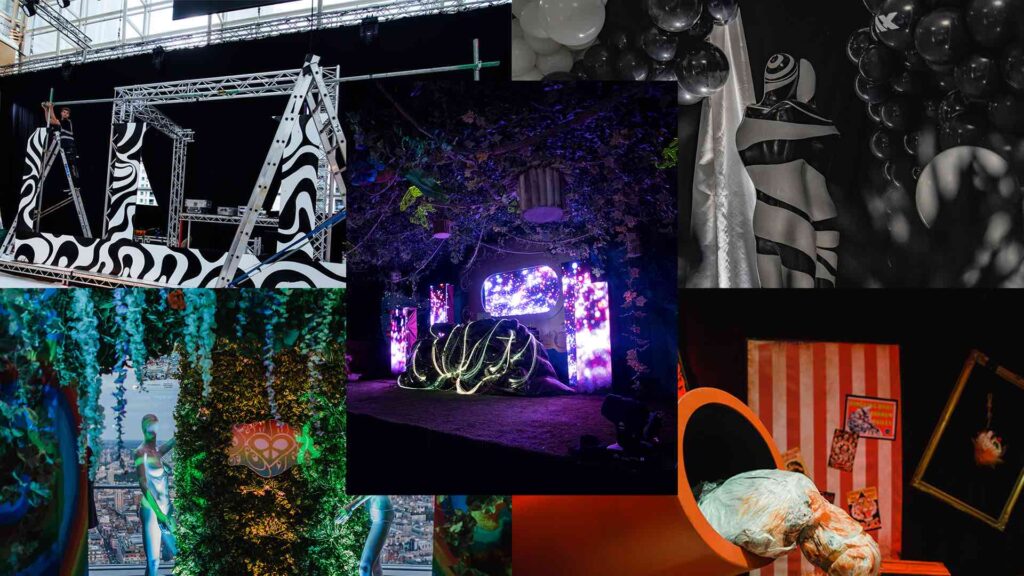
Here are some extra elements to consider:
Consider logistical challenges and timeframes:
- When designing your event set, it can be easy to over-design and over-complicate the design. Everything should be logistically possible – for example – can it get in and out of the venue/event space, can it be delivered or built in time for the event?
Stage levelling:
- Not all venues/event spaces are completely flat (this is more likely for outdoor spaces). So when designing and building your stage, you need to ensure it is level. Your production team will have equipment to level out the stage to the floor on which it is placed.
Fireproofing:
- Always fireproof your event set. This will apply even more so if you have pyrotechnics involved in your event production – not only is this a fire risk, but for pyrotechnics to be used in an indoor space, smoke alarms will need to be turned off. All fabrics should be fireproofed.
Stage design – make sure it fits the number of performers on stage at once:
- Make sure that if you are bringing a band on stage, you know how much kit are they bringing and their measurements. Ensure they fit your stage and if they do, it doesn’t look too cramped.
- Your stage will also need to cater to any camera crew to get the best photos and videos – make sure they can access the stage to shoot from different angles.
- There may also be Multiple DJs along with a band – your stage should have separate areas for DJs and a band. (if applicable)
- Consider the position of your stage and if there are any blindspots as this will restrict the viewing experience for your guests.
Addressing these aspects guarantees a smooth execution and an exceptional event.
We hope this has helped you in creating your own event set design! There are more elements to consider and they will vary from event-to-event. However, we hope this has been a great starting point to get you on your way!
Book An Events Agency To Design and Build Your Event Set
Collaboration is key in event planning, especially when it comes to designing and building your event set.
As an experienced events agency, we centralise all the necessary components to ensure a seamless process.
Our team collaborates with you, your clients and other stakeholders to bring your vision to life.
Are you ready to embark on your journey to create a spectacular event set?
Contact us today and let us transform your event into an unforgettable experience.
Don’t miss out on the opportunity to work with experts who understand the intricacies of event set design.
Find Out More About What We Do:
Related Services:
Related Blogs:
Get In Touch With Us Today.
With nearly 20 years of Event Management insight, working with world-renowned Clients we'll help you create your Dream Event.
Get in Touch