How To Anticipate and Manage Risks During Conferences

When it comes to conferences, risk management is a crucial aspect not to be overlooked. Behind every polished conference experience is a robust risk management strategy working quietly in the background.
From venue safety and technical delivery to delegate wellbeing and crisis communication, conference risk management is one of the most critical elements of professional conference event planning.
The right approach to conference risk management sets the tone from the very beginning, whether you’re delivering a leadership conference, industry summit, sales conference, or multi-day corporate event.
As a creative events agency that delivers conferences for global brands, we know that no two events (and therefore two risk profiles) are ever the same.

Having managed complex conferences across multiple venues and formats, we understand how small operational decisions can significantly impact safety, confidence, and overall event success.
In this guide, we share how experienced event agencies anticipate, manage, and mitigate risks during conferences, ensuring events run smoothly, safely, and confidently from start to finish.
This blog builds on our guide, ‘Top 10 Questions to Ask Your Events Agency Before Booking a Conference’.
Table of contents:
- Why Risk Management Matters at Conferences
- Conducting a Thorough Pre-Event Risk Assessment
- Building a Solid Operational and Contingency Plan
- Understanding Venue and Environmental Risks
- Managing Technical and AV Risks
- Prioritising Delegate Safety and Crowd Management
- Catering, Health, and Dietary Risk Considerations
- Ensuring Speakers and VIPs Are Fully Supported
- Crisis Communication and On-the-Day Monitoring
- Reviewing, Debriefing, and Improving for Next Time
- Book a Conference With Julia Charles Event Management
Key takeaways:
- Conference risk management is proactive, not reactive
- Corporate event safety protects people, brands, and outcomes
- Strong planning reduces stress on the day
- Experienced agencies manage what clients never see
- Continuous improvement strengthens future events
Why Risk Management Matters at Conferences
Why is conference risk management important? It protects delegates, speakers, and stakeholders whilst safeguarding business continuity, brand reputation, and the overall delegate experience.
Corporate conferences are complex environments with multiple moving parts that must work seamlessly together, often under significant time pressure.
For example:
- Multiple suppliers and production partners working to a fixed schedule
- High delegate volumes moving through shared spaces
- Live content, presentations, and technology that must perform flawlessly
- Senior leadership, clients, media, and VIPs in attendance
- Brand messaging delivered in a highly visible, public setting
When something goes wrong at a conference, even something that may appear minor, the impact can escalate quickly.
Whether it’s something as simple as a delayed speaker or a technical issue, unclear communication, or an overcrowded space, they can disrupt schedules, which can dramatically alter the course of your conference, taking away from the experience of your event.

This is why managing risks at conferences is not just about staying compliant – it’s about control, reassurance, and professionalism.
Industry bodies such as the Events Industry Council consistently highlight the importance of structured risk management, clear communication, and contingency planning as core components of safe and successful event delivery.
Their guidance reinforces that many conference risks can be identified and mitigated during the planning phase, rather than being reacted to on the day.
An experienced events agency anticipates risks long before the first delegate arrives, being assessed, planned for, and managed as part of the wider corporate event planning and conference logistics process.
This proactive approach allows clients and stakeholders to focus on objectives, content, and engagement – not operational stress.
This is where professional corporate event safety processes make the difference between a conference that simply runs and one that feels calm, controlled, and expertly delivered from start to finish.
Find out more: What Happens on Conference Install Day: a Behind-the-Scenes Look at Smooth Delivery
Conducting a Thorough Pre-Event Risk Assessment
What is a conference risk assessment? It’s a structured process used to identify potential hazards, evaluate their likelihood and impact, and put appropriate control measures in place before detailed planning and delivery begins.
For professional conferences, it’s a foundational part of effective conference risk management and informed corporate event planning.
Our risk assessment process typically begins months in advance and forms the backbone of every operational decision that follows.
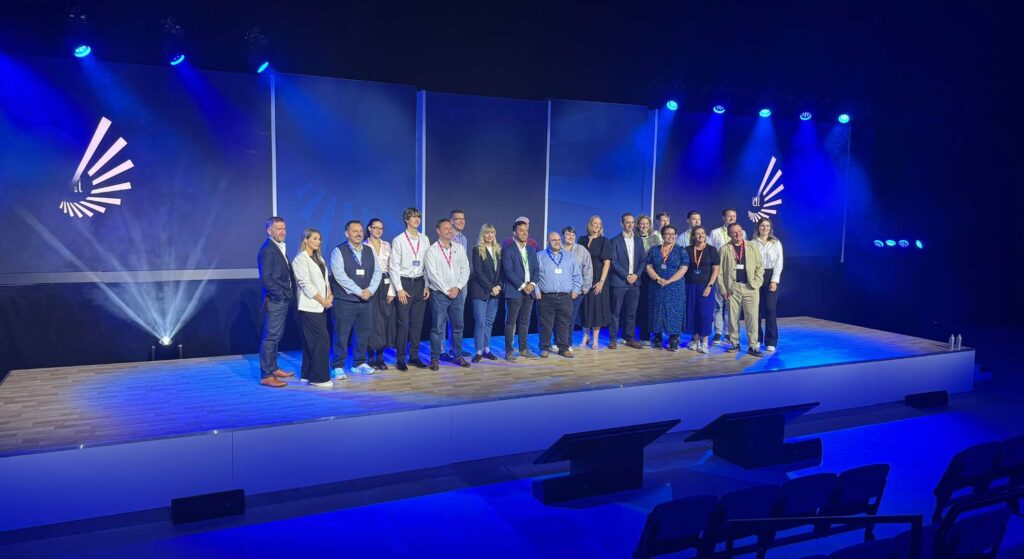
A pre-event risk assessment includes:
- Venue site visits to assess layout, access, emergency routes, back-of-house operations
- Hazard identification and mitigation across physical, technical, environmental, operational risks
- Capacity planning and crowd-flow analysis to reduce congestion and unsafe movement
- Access, loading, and logistics reviews to support safe supplier, production, and catering operations
- Reviewing of historical event data to anticipate challenges and refine planning decisions
This early-stage planning ensures conference logistics are built on safe, realistic and data-driven assumptions rather than approximations.
It allows potential issues to be addressed whilst you are not tied in or committed to specifics – you’re still flexible at this stage to make adjustments, rather than when timelines are locked in, and pressures are high.
By carrying out a thorough pre-event risk assessment, conferences benefit from smoother delivery, clearer decision-making, and significantly reduced on-the-day disruption.
Building a Solid Operational and Contingency Plan
Managing risks at conferences requires structure, which comes from a detailed, well-documented operational plan, bringing every moving part of the event together.
An operational plan acts as the central reference point for the entire delivery team, ensuring everyone understands what needs to happen, who is responsible, when decisions are made, and how issues are managed if plans need to adapt.
A strong operational plan typically includes:
- Clear roles and responsibilities
- Detailed run-of-show timelines
- Supplier contact trees
- Defined escalation procedures
- Backup suppliers, equipment, and resources
Contingency planning isn’t pessimistic – it’s reassurance, building confidence in your team on the delivery of your event – it’s what allows conferences to stay calm and controlled, even when conditions change.
The most common may include:
- Backup registration systems in case of technical failure
- Spare microphones, laptops, and presentation clickers
- Alternative room layouts if capacities or schedules shift
- Weather plans for arrivals, outdoor spaces, or travel disruption
These layers of preparation are rarely visible to delegates or clients, but they’re always felt. They’re what make a conference feel smooth, confident, and expertly managed, even under pressure.
Understanding Venue and Environmental Risks
What venue risks should be considered during corporate event planning? Anything that could affect delegate safety or event delivery.
Mainly: fire safety, accessibility, crowd flow, structural limitations, security controls, and environmental conditions.
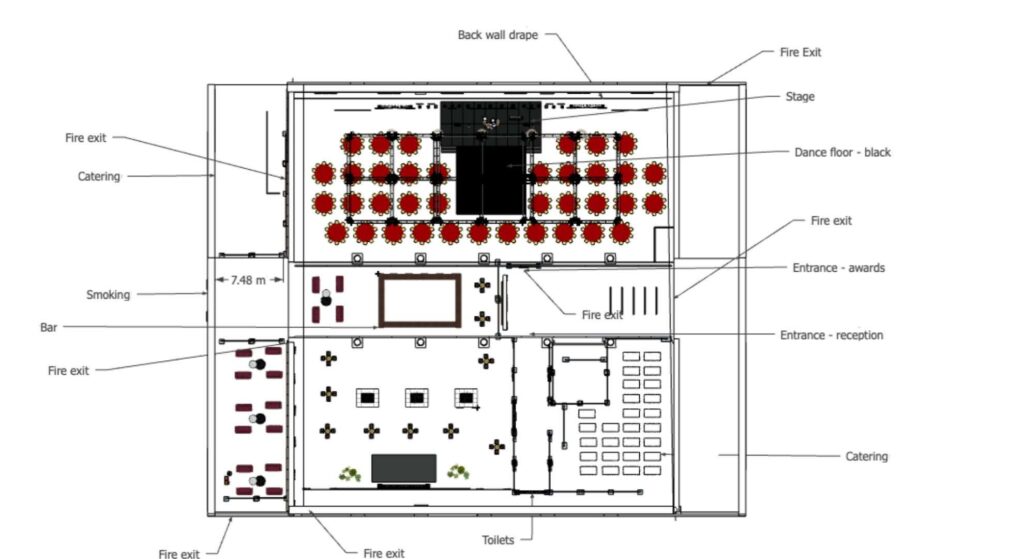
Every venue presents risk, and these can become more complicated depending on your conference format, delegate numbers, room usage, and production requirements. This is why venue-related risk management is a core part of effective conference risk management.
Key areas we assess and manage include:
- Fire safety procedures
- Accessibility compliance
- Crowd flow and pinch points
- Security and access control
- Weather exposure for external spaces
- and more…
We work closely with venue teams, security partners, and health and safety leads to ensure protocols are fully aligned.
Nothing is assumed, and every procedure is clearly documented and communicated to the wider delivery team.
This collaborative approach ensures that venue and environmental risks are controlled well before the event goes live – creating a safer, more confident experience for everyone on site.
Managing Technical and AV Risks
Why is AV risk management critical at conferences? It directly affects content delivery, delegate engagement, and brand credibility – often in real time and in front of key stakeholders.
At conferences, AV is the backbone of the experience. For example, if sound drops, screens fail, or presentations don’t load, even the strongest content can lose impact.
As such, technical planning is a vital part of conference risk management.
Professional AV risk management includes:
- Full technical rehearsals
- Comprehensive equipment testing
- Backup power solutions
- Having on-site technicians throughout the event
- Offline and cloud-based copies of all presentations
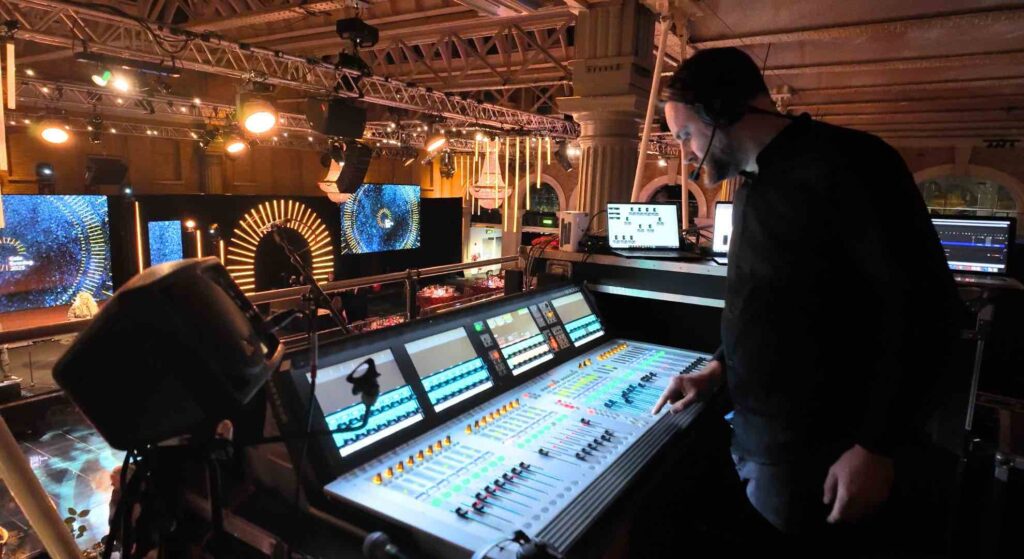
Whether it’s a live event or virtual, everything is planned in advance and supported by a backup plan, ensuring any technical challenges are resolved quietly and quickly, often without delegates ever being aware.
Proactive testing, rehearsals, and on-site technical support are essential to delivering a conference that feels seamless, professional, and in control from start to finish.
Read more on setting up sound for a live event.
Prioritising Delegate Safety and Crowd Management
A huge part of the overall safety and experience of your conference comes from your crowd management.
Effective crowd management is not about restricting movement; it’s about guiding it. When delegates know where to go, what to expect, and who to approach for support, spaces function more smoothly, and risks are significantly reduced.
We design safety into every stage of the delegate journey, including:
- Registration flow and arrival timings
- Clear signage and wayfinding
- Strategic staffing at high-traffic areas
- Breakout room capacity control
- Emergency procedures and staff briefings

This proactive approach ensures potential risks are managed before they escalate.
Furthermore, when delegates feel safe, informed, and supported, they are more relaxed, more engaged, and better able to focus on the content and connections the conference is designed to deliver.
Catering, Health, and Dietary Risk Considerations
How do you manage catering risks at conferences? Clear communication, accurate data collection, professional supplier briefings, and strict compliance with health and safety standards.
Food service is central to the delegate experience, and with it comes all types of risks, such as dietary requirements, allergens, and hygiene standards – all of which must be managed carefully.
Effective conference risk management in this area includes:
- Detailed dietary data collection during registration
- Clear allergen labelling and signage
- Caterer risk assessments for preparation, service, and allergen control
- Food hygiene and compliance checks
- On-site medical readiness

Health considerations are not optional. Furthermore, managing catering and dietary risks professionally helps ensure delegates feel safe, respected, and well cared for throughout the conference.
Ensuring Speakers and VIPs Are Fully Supported
Speakers and VIPs, central to your conference, are a potential operational risk at conferences.
Their experience directly affects programme flow, audience engagement, and the perceived professionalism of the event.
Guest speakers and high-profile guests often work to tight schedules and therefore have specific technical, logistical, and security requirements.

Without careful planning, even small issues can lead to delays, disruption, or added pressure on the wider event schedule.
Our speaker and VIP management processes are designed to remove uncertainty and reduce risk.
They typically include:
- Speaker rehearsals and technical run-throughs
- Duplicate and cloud-based presentation files
- Dedicated speaker handlers
- Transport and arrival planning
- Private holding and preparation areas
These measures reduce stress for speakers and avoid last-minute issues, ensuring sessions start on time and content is delivered as intended.
Crisis Communication and On-the-Day Monitoring
Even with the most thorough planning, conferences are live environments that can change at any moment.
Conditions can change quickly, and effective conference risk management depends on how well teams respond in real time.
On-the-day monitoring ensures potential issues are identified early and addressed before they escalate.
This is achieved through structured systems and experienced operational leadership, including:
- Live operations teams, overseeing delivery across all areas of the venue
- Walkie-talkies and headsets enabling instant communication
- Clear issue escalation protocols
- Real-time decision-making, supported by pre-agreed contingency plans
- Delegate-facing communication strategies

This structured approach means there is no confusion during critical moments.
Moreover, if something changes, everyone knows who makes decisions, who takes action, and who communicates with delegates and stakeholders.
Clear crisis communication and active on-the-day monitoring are what turn potential disruption into controlled, professional responses – often without delegates ever realising an issue occurred.
Reviewing, Debriefing, and Improving for Next Time
Why is post-event review important for conference risk management? It reduces future risk, improves efficiency, and strengthens overall event delivery.
Post-event evaluation is crucial in understanding what worked well, what could be improved, and how processes can be refined for future conferences.
A structured post-event debrief typically covers:
- Incident reviews, analysing any issues that occured, how they were resolved
- Supplier performance, assessing reliability, communication, responsiveness
- Delegate feedback, identifying safety, comfort, and experience insights
- Timeline efficiency, reviewing scheduling accuracy, transitions, pressure points
- Risk mitigation effectiveness
These reviews turn real-world experience into practical learning, enabling you to take the lessons from your recent event to the next.
By documenting outcomes and applying insights to future planning, event teams continuously strengthen their processes, reduce potential risk, and elevate the standard of conference delivery year after year.
Book a Conference With Julia Charles Event Management
When it comes to running a successful conference, proactive risk management gives you confidence, control, and peace of mind.
Every element of risk planning, from venue safety and crowd management to AV reliability and catering protocols, plays a crucial role in ensuring your event runs smoothly, professionally, and safely.
Understanding these processes helps you see where expert support can make all the difference.
As a leading UK events agency, we specialise in delivering conferences that are seamless, creative, and expertly managed, both in the UK and internationally.
Whether you need full conference management, AV and technical production, stage and set design, delegate management, or virtual and hybrid event support, our team can deliver every element from concept to live delivery.
If this guide has helped you, our team is ready to support you at every stage – ensuring your next event is safe, smooth, and memorable.

Related services:
Related blogs:
- Conference trends 2026
- Actionable wellness integration tips for conferences
- How a Sustainable Events Agency Can Reduce Your Event’s Carbon Footprint
- 5 conference strategies to ensure your event stands out
- How to use personalisation and micro-experiences to elevate your conference
- 10 ways to elevate your conference
- 10 unique and fun conference ideas to liven up your event
Get In Touch With Us Today.
With nearly 20 years of Event Management insight, working with world-renowned Clients we'll help you create your Dream Event.
Get in Touch