How to Choose a London Event Agency: What to Look For
Most London event agency searches start with a postcode. They shouldn’t.
A London event agency doesn’t need an office on Regent Street to deliver a gala dinner at Old Billingsgate or a product launch in Shoreditch. It needs a team that has actually done it before, with suppliers who show up when they say they will.
What should you look for in a London event agency? Relevant event experience, creative capability, event management expertise, production capability, trusted supplier relationships, contingency planning, and proven case studies. Any agency can list these. Fewer can prove all seven at once.
Julia Charles Event Management is a corporate event agency for London events, delivering event management, event production and creative event design under one team for brand activations, gala dinners, conferences and product launches, based just outside the capital and delivering across it. This guide covers what separates one agency from another.
Table of contents
- What Does a London Event Agency Actually Do?
- What Type of London Event Agency Do You Need?
- 10 Things to Look for When Choosing a London Event Agency
- 1. Does the Agency Have Experience With Your Event Type?
- 2. Has the Agency Proven Its Experience in London?
- 3. Does the Agency Offer Full-Service Event Management?
- 4. Does the Agency Have Creative Event Design Expertise?
- 5. Is Event Production Properly Integrated?
- 6. Does the Agency Understand London Venues?
- 7. What Entertainment Capabilities Does the Agency Offer?
- 8. Does the Agency Have Strong Case Studies as Evidence?
- 9. How Does the Agency Manage Suppliers and Contingency?
- 10. Does One Team Bring Everything Together?
- Questions to Ask a London Event Agency Before Hiring Them
- What services do you manage directly?
- Have you delivered events similar to mine?
- Have you worked at London venues before?
- Can you manage creative and production together?
- How do you manage event budgets?
- How are suppliers managed?
- What contingency planning do you provide?
- Who will manage the event on the day?
- Can you provide relevant case studies?
- Why First-Hand London Event Experience Matters
- What Are the Benefits of Using a Full-Service Event Agency?
- Looking for an Event Agency for Your London Event?
- Frequently Asked Questions
What Does a London Event Agency Actually Do?
The honest answer: it depends which one you ask. Event services London businesses can access range from single-discipline suppliers through to full-scope agencies, and the label on the homepage rarely makes that distinction clear.
Some agencies focus on event strategy, planning, and logistics. Others focus almost entirely on production, staging, and technical delivery. A smaller group cover the full span, from the first concept conversation through to someone on-site at 11pm making sure the get-out runs to schedule.
At full scope, a London event agency can be responsible for: event strategy, planning and logistics, creative concepts, event design, event production, venue coordination, entertainment, supplier management, and on-site delivery. That’s a wide net, and no two agencies fill it the same way.
Understanding which parts a given agency actually covers, versus which parts they’ll subcontract out, matters more than anything on their homepage.
What Type of London Event Agency Do You Need?
Agencies tend to specialise, even when their marketing suggests otherwise. Knowing which type you’re actually talking to saves a lot of wasted calls.
What Does an Event Management Agency Do?
Handles the planning, logistics, suppliers, schedules and budgeting that keep an event on track, plus the live delivery on the day itself. Strong on process, less likely to lead on creative concept.
What Does an Event Production Agency Do?
Focused on the technical side: staging, lighting, AV, structural builds. The team you want if the creative concept already exists and now needs to physically happen in a room, via event production.
What Does a Creative Event Agency Do?
Leads with concept, storytelling, design and theming. Strong on guest experience, sometimes lighter on the operational and technical delivery side.
What Does an Experiential Event Agency Do?
Builds brand interaction and immersive experience into the event itself, rather than treating entertainment as decoration added afterward.
What Does a Full-Service Event Agency Do?
Combines management, production, design and creative capability within a single team and a single point of contact. For a corporate event with multiple moving parts, that coordination tends to matter more than any one discipline being best-in-class.
Organisations planning something with genuine complexity, several suppliers, a tight production schedule, a venue with its own restrictions, often find that working with one agency across event management, event production and event design removes a layer of coordination that would otherwise fall on their own team.
10 Things to Look for When Choosing a London Event Agency
The strongest London event agencies share ten traits: relevant event experience, proven London delivery, full-service management capability, creative design expertise, integrated production, venue knowledge, entertainment capability, strong case studies, solid contingency planning, and one team coordinating all of it.
1. Does the Agency Have Experience With Your Event Type?
Not all event experience transfers. An agency that’s excellent at intimate private dinners won’t necessarily handle a 500-person conference well, and vice versa.
That distinction matters more in London specifically, one of the busiest and most competitive markets in the UK for agencies to prove themselves in.
Ask specifically about your format:
- Corporate events
- Conferences
- Gala dinners
- Product launches
- Brand activations
- Awards ceremonies
- Large-scale celebrations
General capability claims are easy to make. Naming the last three events of your exact type, with enough detail to sound like they were actually there, is harder to fake.
For product launches specifically, look for an agency that can walk you through their actual process, not just show finished photos. Our own luxury product launch guide gives a sense of what that process should look like.
The same applies to branding: an agency worth hiring should have a clear point of view on event branding ideas.
2. Has the Agency Proven Its Experience in London?
This is the one worth spending the most time on.
London events carry a specific kind of difficulty that doesn’t show up in a portfolio of events held elsewhere. Venue access that’s genuinely complex, supplier coordination across a city where traffic alone can derail a get-in.
Production schedules squeezed into narrow overnight windows, and venue-specific restrictions that vary wildly between a converted market hall and a working nightclub.
Julia Charles Event Management delivered the Sidemen XIX Vodka launch in London, a high-profile brand launch with the scrutiny and turnaround pressure that comes with a well-known client.
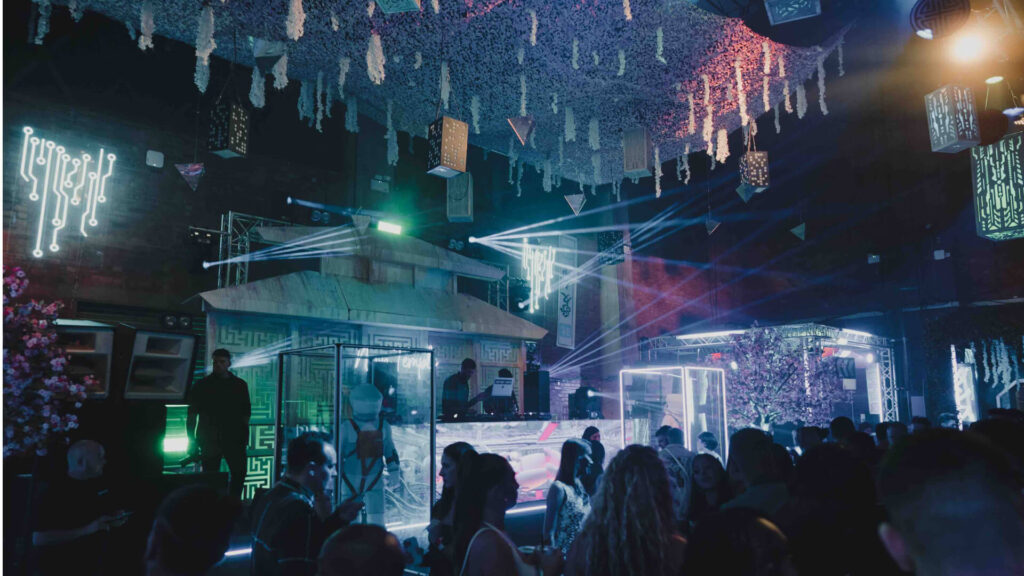
The same team has transformed London nightclubs TABU and REIGN for back-to-back Halloween events in the same week, each with a different theme, each needing to be fully struck and rebuilt on a tight overnight schedule.
Neither of those happens without a working knowledge of how London venues actually operate, not just a willingness to travel there.
3. Does the Agency Offer Full-Service Event Management?
A strong event management company London clients can rely on brings planning, logistics, communication, suppliers and delivery under one team, so there’s one version of the schedule, not five. That sounds obvious until you’ve been the client caught between a caterer, an AV supplier and a venue manager who all have slightly different timings for the same get-in.
A full-service approach means the corporate events company you’re working with functions less like a vendor and more like an extension of your own team.
Whether you call it an event organiser, an event manager, or one of the corporate event planners on staff, the value is the same: a corporate events planner accountable for the whole picture, not just their slice of it.
4. Does the Agency Have Creative Event Design Expertise?
A strong creative team doesn’t start with decor. It starts with what the event needs to achieve, then works backward into spatial design, guest journey, and brand storytelling.
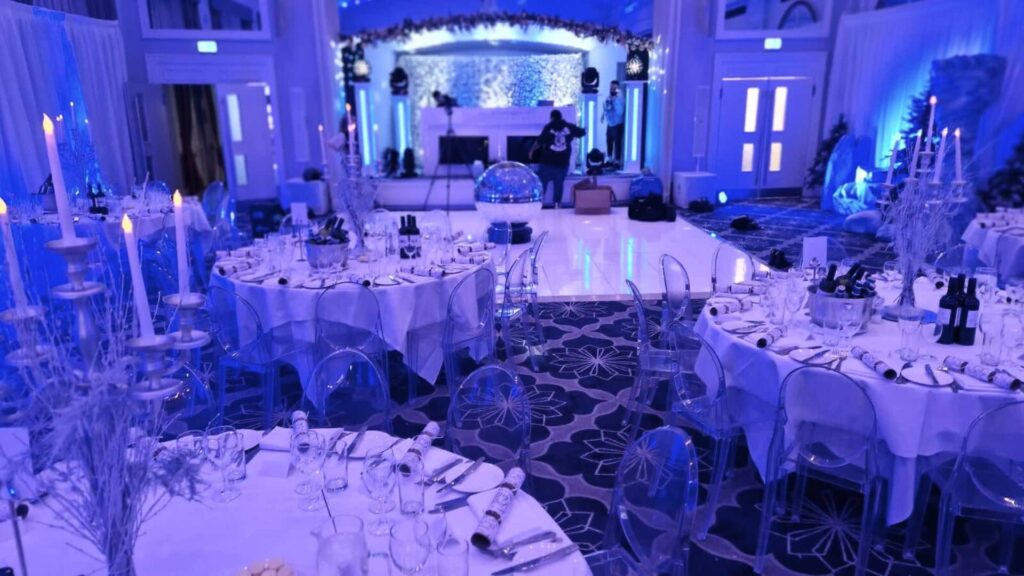
Julia Charles Event Management transformed Old Billingsgate with a jazz-inspired theme for a client’s annual awards ceremony, a full shift in atmosphere built through lighting, a red-and-gold palette, and bespoke concept staging rather than surface decoration.
The same design thinking shaped two separate Halloween transformations at TABU and REIGN nightclubs, each venue given its own distinct concept rather than a template stretched across both.
Good event design and venue styling read the venue first, not the brief in isolation. For more on what that looks like in practice, brand activation ideas covers the same principle applied across different formats.
5. Is Event Production Properly Integrated?
Production is where concepts either hold up in the room or don’t. Lighting and AV, staging, technical builds and temporary structures all have to work together on a schedule that usually can’t slip.
This is one of the areas where corporate event production London venues actually demand matters most, since access windows are often shorter and less forgiving than venues elsewhere in the UK.
Event production London clients rely on isn’t just about having the right equipment. It’s having done the load-in at that specific type of venue before, and knowing where the schedule usually gets tight.
That’s worth checking for directly, since it doesn’t always show up clearly in a portfolio.
6. Does the Agency Understand London Venues?
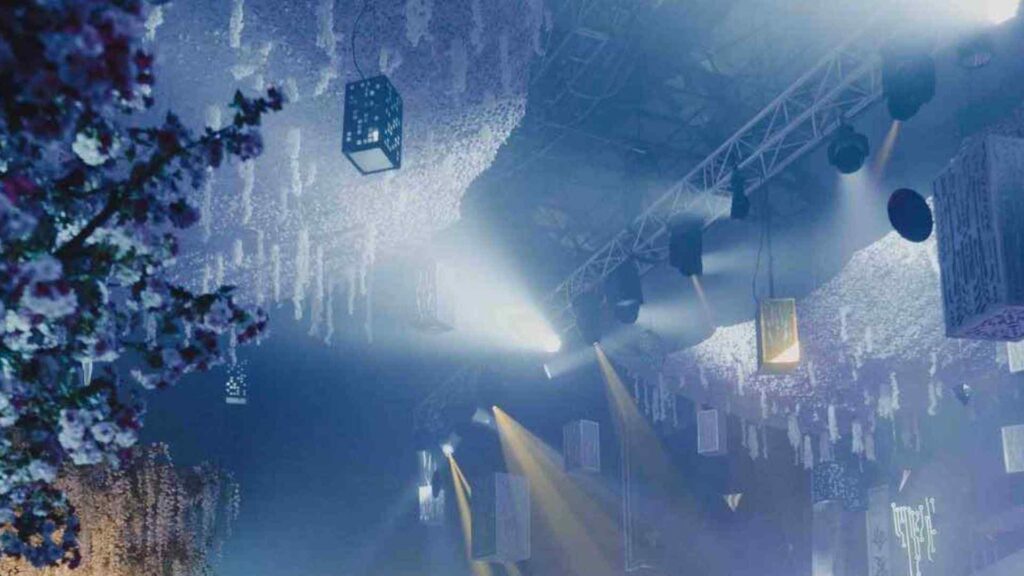
A blank-canvas warehouse and a Grade II listed former fish market need to be approached completely differently, even if the brief on paper looks similar.
The same goes for hotels with their own catering and layout restrictions, corporate spaces built for meetings rather than events, and large event venues where scale itself becomes the main design challenge.
Old Billingsgate is a historic, listed building with its own access and preservation constraints. TABU and REIGN are working nightclubs with their own operating hours and existing infrastructure to work around.
Automotive brand MINI is one of the clients Julia Charles Event Management has delivered for, bringing a different set of production and branding demands again. An agency that’s only ever worked in one type of space will treat every venue the same way. That rarely ends well.
7. What Entertainment Capabilities Does the Agency Offer?
Entertainment works best when it’s part of the event strategy from the start, not booked separately once everything else is confirmed.
That might mean immersive or branded entertainment tied directly to a brand story, interactive technology guests actually engage with, live performers, or bespoke shows built for the specific event rather than pulled from a generic roster.
Participatory experiences can create stronger opportunities for interaction and engagement than passive entertainment alone.
The question worth asking isn’t “what acts do you offer,” but “how does this entertainment support what we’re actually trying to achieve.”
8. Does the Agency Have Strong Case Studies as Evidence?
A good case study answers four questions: what the client needed, what made it difficult, what was actually delivered, and what the outcome was. Vague testimonials and polished photos without any of that context tell you very little.
Julia Charles Event Management’s case study library covers events across brand activations, gala dinners, product launches and more, including the Sidemen XIX Vodka launch and the TABU and REIGN nightclub transformations referenced earlier in this guide. Look for agencies that can point to specific, named delivery, not just a portfolio of nice-looking rooms.
If a gala dinner or awards ceremony is what you’re planning, it’s worth reading a gala dinner planning guide alongside the corporate gala planning details, since the format has its own specific pitfalls that a generalist case study won’t cover.
9. How Does the Agency Manage Suppliers and Contingency?
This is the part of event delivery nobody sees when it goes well, and everybody notices when it doesn’t.
Strong operational management covers supplier relationships, realistic timelines, proper risk planning, RAMS documentation where relevant, clear venue communication, and a genuine backup plan rather than a vague assurance that “it’ll be fine.”
The difference between hiring individual suppliers directly and working with an experienced event management company usually shows up exactly when something goes wrong on the day, and someone needs to solve it without the client ever finding out there was a problem.
10. Does One Team Bring Everything Together?
Every point above is really describing the same thing from a different angle: strategy, creative, design, production, logistics, entertainment and live delivery, all coordinated through one central team rather than stitched together after the fact.
That’s the practical case for full-service agency positioning. Not because it sounds more impressive on a homepage, but because it removes the coordination burden that otherwise falls back on the client whenever two suppliers disagree about timing.
Questions to Ask a London Event Agency Before Hiring Them
What services do you manage directly?
Ask what’s handled in-house versus subcontracted. An agency offering genuine event management manages strategy, design, production and delivery directly, giving you one accountable team. One that subcontracts most of it is really a coordination layer on top of other suppliers.
Have you delivered events similar to mine?
Ask for named examples of your specific event type, not general capability statements. A conference agency and a product launch agency don’t always overlap as much as their marketing suggests.
Have you worked at London venues before?
London venues each come with their own access windows, load-in restrictions and operating quirks. Prior experience at a similar type of venue, historic building, working nightclub, corporate space, saves time and reduces risk.
Can you manage creative and production together?
Some agencies are strong on concept but weaker on technical delivery, or vice versa. Ask how the two teams actually work together day to day, not just whether both exist.
How do you manage event budgets?
A good agency should be able to explain how they track spend, flag overages early, and where contingency sits within the budget, not just quote a final number.
How are suppliers managed?
Ask whether suppliers are long-standing relationships or sourced fresh per project. Established supplier relationships tend to mean smoother communication and fewer surprises on the day.
What contingency planning do you provide?
Ask specifically what happens if a supplier cancels, a venue issue arises, or the weather affects an outdoor element. A vague “we’ll handle it” isn’t a plan.
Who will manage the event on the day?
Confirm whether the person managing delivery on-site is the same person you’ve been planning with, or a handover to someone new. Continuity matters more than most clients expect going in.
Can you provide relevant case studies?
Ask for case studies that answer what the client needed, what made it difficult, and what was actually delivered, not just a gallery of finished photos, in a proper case study library.
Why First-Hand London Event Experience Matters
First-hand London event experience matters because the city has specific delivery challenges, venue access, supplier coordination, tight production windows, that only show up once an agency has actually worked there.
Experience with London events comes from doing the work, not from a business address.
Julia Charles Event Management is based just outside London, in Milton Keynes. It functions as an event company delivering events across London, while also covering delivery throughout the rest of the UK. That distinction matters more than it might seem.
As an event planning company UK clients also rely on for delivery outside the capital, this team regularly plans and delivers in London, navigating venue access, city logistics, and tight production schedules. That builds a genuinely different kind of knowledge than a team that simply happens to have a London postcode on its letterhead.
The Sidemen XIX Vodka launch party is one example of that in practice: a high-profile London launch delivered under real scrutiny. The TABU and REIGN nightclub transformations are another, two London venues, two different Halloween concepts, both rebuilt on overnight turnarounds in the same week.
The pattern holds across smaller, less headline-grabbing work too: gala dinners, corporate conferences, a London office Christmas party, a festival-vibe conference, a fever-dream product reveal, and the Homary product launch — each one different in scale and brief, all delivered in and around the same city.
A fever-dream product reveal, and the Homary product launch, each one different in scale and brief, all delivered in and around the same city.
There’s a longer argument for why London suits activations, and it comes down to exactly this kind of accumulated, city-specific delivery experience.
None of that requires being headquartered in the city. It requires having actually been there, repeatedly, with real budgets and real deadlines attached.
What Are the Benefits of Using a Full-Service Event Agency?
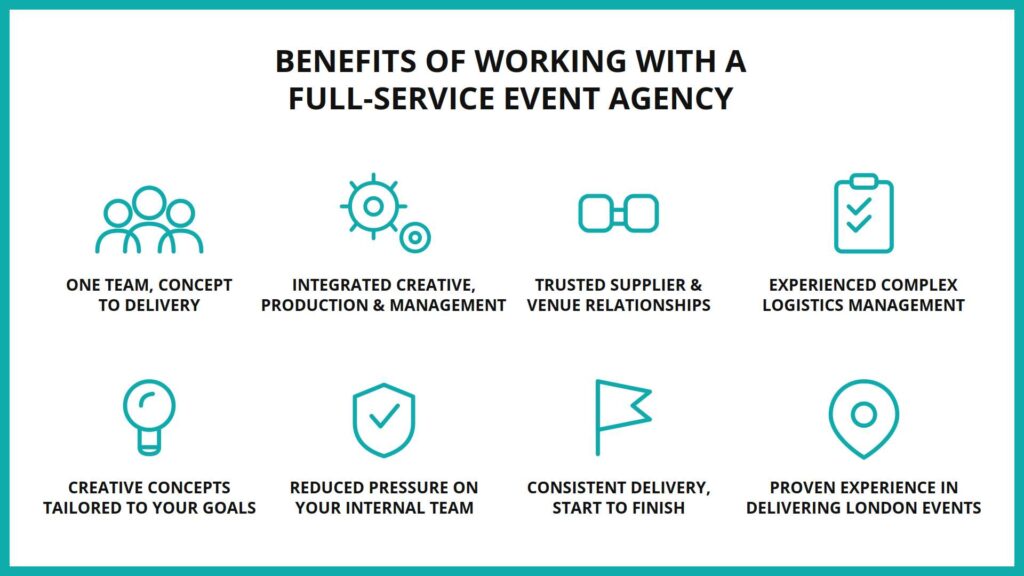
The case for a full-service agency comes down to what stops falling on your own team once one agency handles everything:
- Fewer separate suppliers to coordinate directly
- More cohesive creative and production, since both sit inside the same team
- Centralised communication, one point of contact rather than five
- Better oversight of timelines and budgets
- Consistent event design carried through from concept to delivery
- Stronger contingency planning, since the team already knows the moving parts
- Greater accountability, with no ambiguity about who’s responsible for what
- One team responsible for live delivery on the day
By this point, the type of agency you need should be clearer than it was at the start: management-only, production-only, creative-led, or full-service, depending on how many moving parts your event actually has.
What should carry more weight than the label, though, is whether that experience is proven, whether the services are genuinely integrated rather than subcontracted out, and whether the delivery has actually happened in London before, not just been promised.
Looking for an Event Agency for Your London Event?
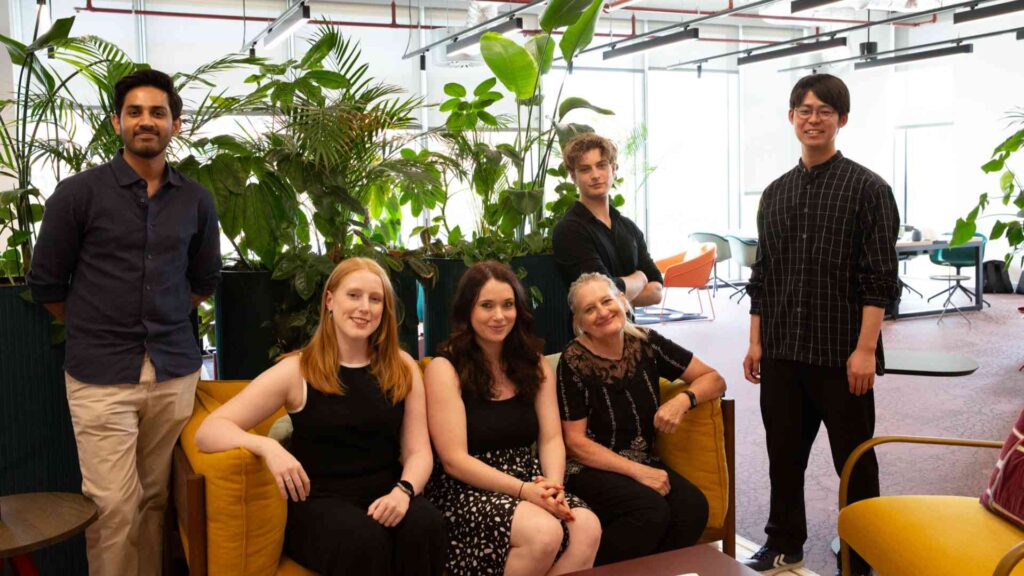
Julia Charles Event Management is an event agency servicing London, delivering corporate and creative events throughout the city, covering event management, event production, event design, creative concept development and entertainment, all through one team from first brief to final get-out.
If you’re comparing agencies for an upcoming London event, get in touch to talk through what you need. The right conversation early on tends to save far more time than it costs.

Frequently Asked Questions
A corporate event agency London businesses hire typically plans and delivers events across the city, covering some combination of strategy, creative design, production, entertainment and on-site management, depending on the agency’s scope.
Look for proven delivery experience with your type of event, genuine first-hand experience working in London venues, and case studies that show what was actually delivered, not just polished photography.
An event planner typically manages logistics, suppliers and schedules. An event agency often covers a wider scope, including creative concept, production and entertainment, alongside planning.
For events with multiple moving parts, creative concept, technical production, entertainment, and tight logistics, a full-service agency reduces the coordination burden that would otherwise sit with your own team.
Some can, some specialise in one or the other. It’s worth asking directly, since combining production and event management under one team tends to reduce the risk of miscommunication between creative and technical delivery.
Get In Touch With Us Today.
With nearly 20 years of Event Management insight, working with world-renowned Clients we'll help you create your Dream Event.
Get in Touch