How to Create Inclusive Event Spaces For Everyone

In today’s world, diversity and inclusion are more than just buzzwords – they are essential because they foster equity, understanding, and collaboration.
For companies, teams are made up of different backgrounds, abilities and experiences. Embracing inclusivity ensures that everyone feels valued and empowered to participate fully.
Events are no exception. As event planners, it’s our responsibility to create spaces where everyone, regardless of their abilities, can feel welcome and engaged.
From physical accessibility to sensory accommodations, inclusive event design ensures every guest has a memorable and positive experience.
In this blog, we’ll discuss exactly how to create an inclusive event space to suit all audiences!

Table of contents
Why Inclusive Design Matters in Event Planning
Creating an inclusive event design is more than just meeting set requirements.
Going above and beyond in the design of your event to make it inclusive makes a statement that everyone belongs and shows that you have given careful thought and consideration to make your event suitable for everyone in attendance.
Considering inclusive design in your event planning:
- Reflects Your Values:
- It shows a commitment to diversity, equity and inclusion (DEI) – your attendees notice when you take steps and make the effort to create welcoming spaces, building trust and reputation.
- Expands Your Audience:
- By designing for universal accessibility, you remove the limitations of your event, opening your event to a wider audience. People with disabilities, sensory sensitivities, or linguistic needs will feel valued and included, ensuring they’re not left out of the experience.
- Boosts Event Success:
- Accessible events are successful events. When all attendees can participate comfortably and feel at ease, it fosters engagement, enhances networking opportunities and creates positive word-of-mouth that extends your reach.
Inclusive design in events enables you to create events that resonate with participants, making it accessible and enjoyable for all.
However, it’s more than a practical consideration – it also reflects your company’s and enables you to create events that open up to a wider audience.
Now, let’s get into how to design your event to make it inclusive.
Key Elements of Inclusive Event Design
Designing an inclusive event involves addressing the range of needs your attendees may need, removing barriers that can hinder participation and overall enjoyment of the event for your attendees.
Before beginning your event design, you should ask attendees about any additional needs they may have to guide your decision-making and the criteria you need to hit to make your event inclusive.
Physical Accessibility
The first element of incorporating inclusivity in your event design is looking at the physical space of your event and how attendees access and navigate your event.
When looking at your event space, look for ones that cater to a range of mobility needs. For example, locations with wheelchair-accessible entrances, elevators and toilets.
In designing your event, the layout is very important; all pathways and routes that can be taken by attendees should be wide and free of obstructions to make the space easy to navigate.
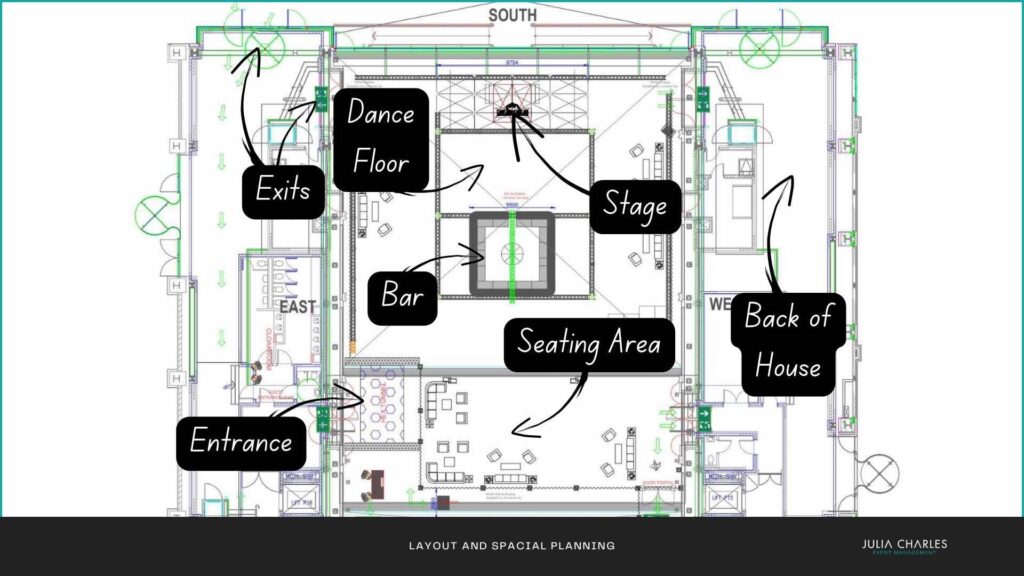
Taking time with your event layout should avoid bottlenecks to ensure it can be easily navigated and attendees have space to move freely.
If your event involves a stage, this should also be viewable for all – consider adding levels or sections in your event space so that, regardless of whether an attendee is seated or standing, they can both see the stage and the performance that takes place.
Providing screens in your set and stage design will be another way of accommodating all, whilst providing a visual spectacle! This will also allow you to include things like subtitles if required.
To further this, these spaces should have clear, visible signage to assist navigation.
Seating arrangements should also accommodate those who use mobility devices or require specific setups.
You should also consider reserving spaces for attendees with wheelchairs and make sure seating can be easily moved to accommodate all.
A successful inclusive event design should look like one space and one experience – how your attendees interact and engage with the event should all seem the same and should not highlight individuals – this would be the opposite feeling you want to create in an inclusive event!
All attendees should have the same shared experience, and this can be achieved through a well-thought-through event design and plan.
In summary:
- Venue Selection:
- Ensure venues have wheelchair-accessible entrances, elevators and toilets.
- Take time with the layout of your event space.
- Easy Navigation:
- Create obstruction-free, wide pathways for your attendees to use
- Provide clear, visible signage.
- Seating Arrangements:
- Offer flexible seating options for those using mobility devices or with specific needs.
- Reserve spaces for attendees with wheelchairs and make sure seating can be easily moved.
You should ask attendees about any additional needs they may have to guide your decision-making – you can do this by creating an event sign-up form through an event app to ask about personal preferences and requirements.
Sensory Accessibility
The next step is to make your event fit everyone’s sensory capabilities.
Sensory accessibility caters to all, avoiding potential discomfort for attendees with sensory sensitivities.
You can do this by including quiet zones, especially for those sensitive to noise, giving them a space where they can take a break from noise or crowds.
The lighting in your event space is important too – you can look at avoiding strobe lights, opting for more stable lighting instead.
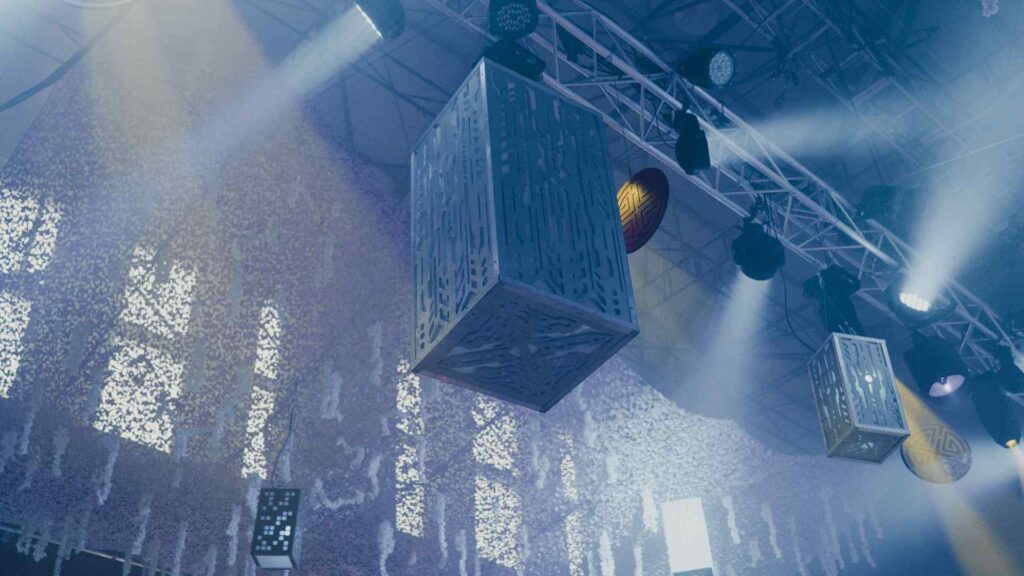
If the lighting is paramount to your event and you want strobe lighting to enhance a performance, you can strike a balance by incorporating seating options in low-light areas for individuals to choose to take a break from the intensive lighting to accommodate varying needs.
For the audio you use in your event, it’s a good idea to offer noise-cancelling headphones for attendees to be able to minimise volume should they require.
In summary:
- Sensory-Friendly Spaces:
- Include quiet zones for attendees who may feel overwhelmed by noise or crowds.
- Lighting and Sound:
- Avoid strobe lights or overly loud audio. Opt for consistent, adjustable settings.
- Provide Options:
- Provide tools like noise-cancelling headphones or low-light seating options.
Linguistic Accessibility
Next, you can look at potential language barriers, which can be a significant obstacle to inclusivity. For example, if you’re putting on a company event with staff in different regions, you don’t want to exclude anyone!
To cater to this, you can look at providing interpreters and translated materials for multi-lingual audiences to ensure clear communication.
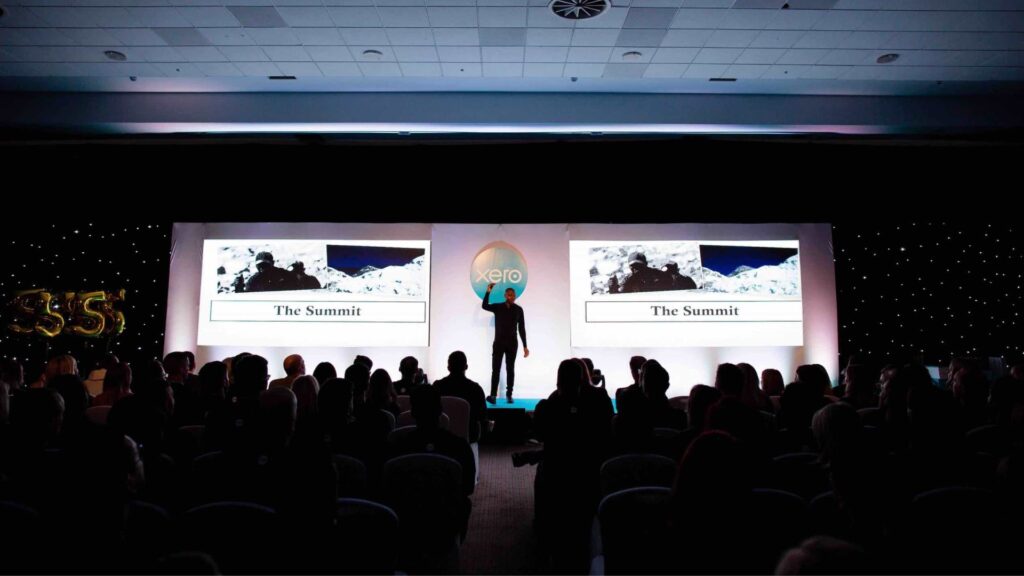
We like to include captions/subtitles for live presentations and video content to ensure this area is covered.
Some people also find it easier to take in information with subtitles provided.
To include anyone with a hearing impairment, you can also hire a sign language interpreter to ensure they, too, can get the most from any presentations or other communications you may have at your event.
Taking these steps ensures that all attendees can fully engage with the content at your event.
- Multi-Language Support:
- Offer interpreters, translated material, or multi-lingual hosts.
- Captions / Subtitles:
- Use these for live presentations and video content – works well for conferences.
- Language Interpretation:
- Hire certified interpreters to accommodate all.
- Ensure that all event materials are accessible, for example, providing communications in braille to accommodate anyone who is visually impaired.
Digital Accessibility
Technology has improved accessibility for all, and for events, it’s revolutionised the way we create accessible events, making it easier to meet all requirements.
Digital tools and platforms now offer features that cater to all audiences, enhancing overall accessibility.
You can now include things such as event websites and apps that offer inclusive features such as screen-reader compatibility, adjustable text sizes and keyboard navigation, catering to individuals with visual or motor impairments.
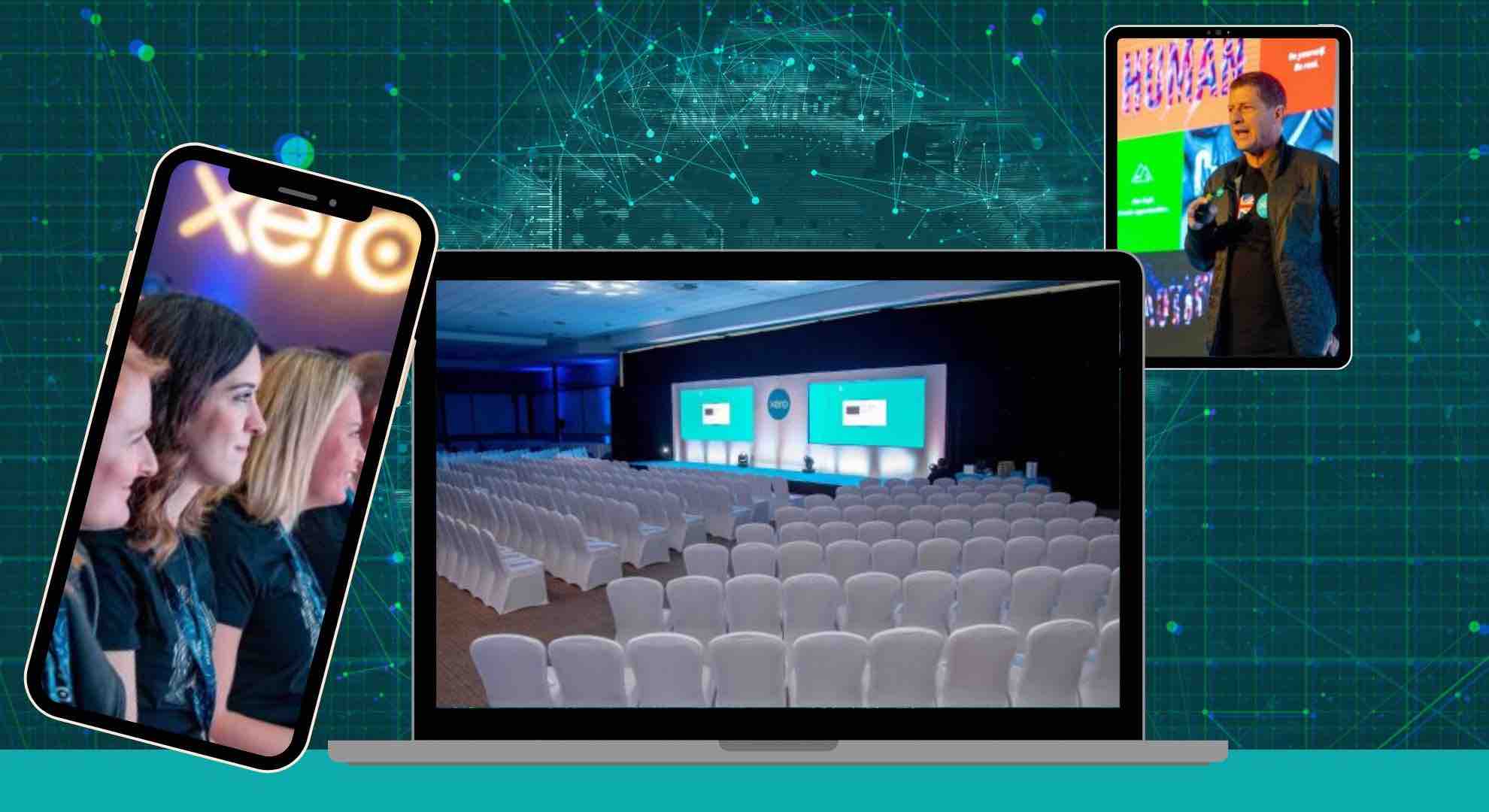
Virtual event platforms have also advanced, offering live captions, sign language interpretation and real-time transcription services.
Digital platforms and tools have improved experiences for all attendees and you can incorporate customisable features, such as personalised agendas, easy-to-navigate interfaces and interactive tools to make event participation more intuitive and engaging.
We’ve even seen things like augmented reality (AR) and virtual reality (VR) elevate this experience even further, creating immersive, barrier-free experiences that set new standards for inclusivity.
Technology also enables you to simplify event registration and provide multiple contact methods to make digital engagement seamless!
- Event Apps and Websites:
- Makes your event more accessible, simplifies navigation and helps users find information around your event.
- Virtual Event Platforms:
- Allows you to include features such as screen-reader compatibility, live captions and keyboard navigation to cater to all audiences.
- Registration and Communication:
- Simplify event registration and provide multiple contact options.
Overall, designing an inclusive event involves addressing all of the needs of your attendees and removing barriers that may hinder participation.
Best Practices for Inclusive Event Design
The points above cover the key points of inclusive event design, so let’s get into some good general practices to assist you in creating an inclusive event, creating a better experience for attendees!
- Engage Experts:
- Collaborate with accessibility consultants and professionals to assess your event before it happens to identify any barriers or areas you may have missed.
- Working with experts ensures every aspect of your design meets the needs of your attendees.
- Select an Inclusive Venue:
- Choose a venue that not only meets physical accessibility requirements, such as ramps, elevators, and accessible restrooms, but also offers adaptability in space arrangements.
- There may be some areas in the venue that you need to adapt to make accessible for all – make sure your venue allows for flexible layouts to accommodate various seating and mobility needs.
- Train Your Team:
- Provide comprehensive training to any event staff on inclusivity best practices.
- They will be the people on hand to assist attendees, so it’s important they are aware of the best practices!
- Create Clear Communication:
- Develop pre-event materials that clearly outline accessibility features and options available (this can also be provided digitally, on your event app, for example).
- Include contact information for attendees to request additional accommodation.
- During the event, provide clear signage and announcements to guide participants.
- Make Your Event Usable For All:
- Strive to design every aspect of your event to be usable by the broadest range of people.
- Look at what furniture, layouts, and technology are used – can all attendees use and access it?
- Offer Flexible Scheduling:
- For multi-day events, provide flexible schedules to accommodate attendees who may need breaks or prefer shorter sessions.
- Virtual/hybrid options can also enhance accessibility for those who cannot attend in person.
- Test Your Setup:
- Conduct trial runs or walkthroughs with individuals representing diverse abilities and backgrounds.
- This helps uncover barriers that may not be apparent during the planning stages and provides opportunities to correct!
- Gather Feedback:
- Create pre-event surveys to identify attendee needs and post-event surveys to learn from their experiences.
By integrating these best practices, you not only ensure compliance with accessibility standards but also create a welcoming environment that leaves a lasting positive impression on all attendees!
The Business Case for Accessibility
Investing in accessibility and inclusivity isn’t just about meeting requirements; it’s about projecting your brand/company identity.
Accessibility and inclusivity aligns with modern values, drive business growth and create meaningful connections with diverse audiences – all key elements of a successful event.
When you prioritise inclusivity in your events, you’re making a statement about your company’s commitment to equity, diversity and respect for all individuals.
Strengthens Your Brand Reputation / Image
Hosting an inclusive event positions your company as a potential leader in diversity and inclusion.
In a competitive market, being recognised for prioritising accessibility can differentiate your brand from the rest!
Stakeholders, clients and attendees take notice when businesses go beyond compliance and embrace inclusivity as a core value.
This commitment builds trust, enhancing how your organisation is perceived both internally and externally.
It’s also great for staff morale if you’re a company hosting an event – team members are proud to work for companies that prioritise inclusion.
Increasing Audience Reach
By making your event accessible and therefore inclusive, you’re expanding your potential audience.
Accessibility features, such as physical accommodations, sensory-friendly spaces and digital inclusivity – all discussed above – ensure that your event is welcoming to individuals of all abilities.
Removing barriers opens up the potential audience of your event – inclusivity has a direct impact on your event’s bottom line.
Accessible events attract a broader demographic, resulting in increased attendance and revenue.
Sponsors and partners are also more likely to support events that reflect their own values.
Furthermore, satisfied event attendees who experience your commitment to accessibility are more likely to recommend and attend future events!
Driving Engagement and Participation
When attendees feel included and valued, their engagement naturally increases.
Accessible events encourage participation, leading to more interactions and stronger connections.
Attendees who feel seen and accommodated are more likely to contribute actively, whether through networking, collaboration or feedback.
Engagement and participation are key indicators of a successful event!
Meeting Compliance and Reducing Risk
Accessibility laws and regulations, such as the Equality Act in the UK, mandate that public events provide accommodations for individuals with disabilities.
By incorporating accessibility into your planning, you ensure compliance, avoiding potential fines or legal challenges.
Beyond reducing risk, compliance demonstrates a commitment to inclusion.
Book Julia Charles Event Management To Create Your Inclusive Event
We hope this blog has provided some useful insight into how to create an inclusive event space!
Prioritising inclusivity in your events is a must, enabling you to create meaningful experiences that resonate with all attendees.
If you need any help in creating an inclusive event, we can help. With expertise in event design, production and management, we create spectacular event spaces that meet the requirements of all attendees.
Whether it’s incorporating sensory-friendly features or ensuring digital platforms meet accessibility standards, we’re here to help.

Related Services:
Related Blogs:
Get In Touch With Us Today.
With nearly 20 years of Event Management insight, working with world-renowned Clients we'll help you create your Dream Event.
Get in Touch