10 Unique Event Design Ideas To Surprise Your Guests

Your event design is one of the most important aspects of any successful event – it’s what sets your space and guest experience apart, ensuring it stands out from the crowd.
Event design isn’t just about making a space visually appealing – it’s all about designing a space to facilitate unique, impactful experiences that leave lasting impressions.
A successful event design utilises many elements including space, light, texture and technology to create immersive event environments, transporting guests into a new world.
A unique event design will mean your event is long talked about – a strategic, bold and creative design that adds an element of surprise, unexpected twists and unique experiences and challenges the norm.
Table of Contents:
- Defying Gravity
- Reactive Spaces
- Hidden Aspects
- Dynamic Lighting
- Immersive Entranceways
- Unexpected Clashes
- Look Up
- Illusions
- Don’t Always Go With the Flow
10 Unique Event Design Ideas
To make your event design stand out, you can use unexpected styles, contrasts and hidden features, just to name a few – these are just some of the aspects we’ll touch on in this blog.
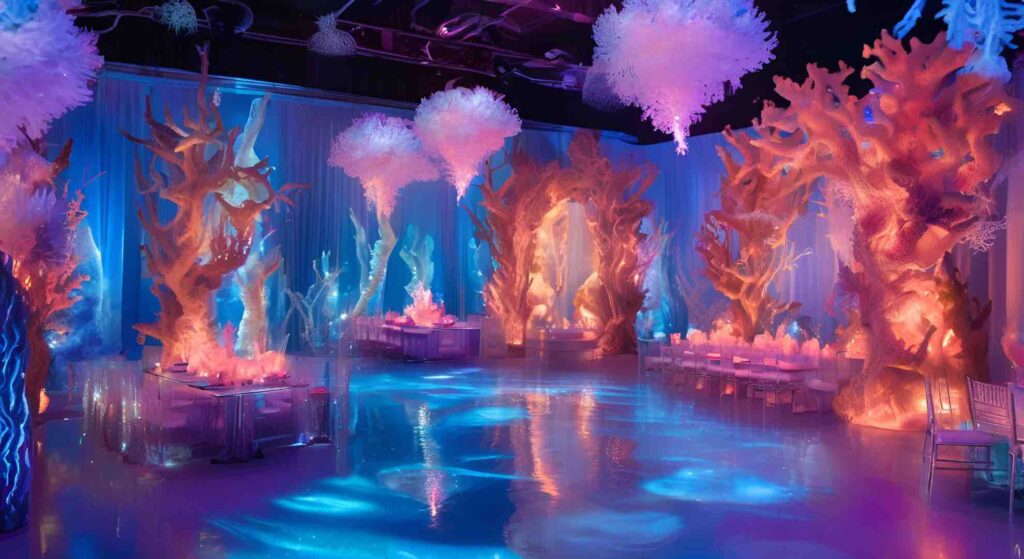
This blog will give you some unique event ideas to help you create an experience that is truly unforgettable.
Let’s get into our list of ten unique event design ideas to set your event apart!
Defying Gravity
To create an unexpected event space, imagine walking into an event where the world is turned upside down.
Upside-down rooms, suspended furniture and floating illusions create an impactful event experience, immediately captivating your guests and setting the tone for your event.

For example, if you are designing a gala dinner event space – imagine an inverted dining setup where tables appear to float above guests!
This would be a unique way to add an extraordinary touch.
Using clever event design techniques like hidden supports, mirrors and lighting, you can use these tools to create surreal effects, making attendees feel like they’ve stepped into a dream or Inception style world.
Creating a Gravity-Defying Event Space:
- Use hidden supports and mirrored surfaces to create levitating effects.
- Install hanging decor such as upside-down chandeliers and other floating objects.
- Create gravity-defying illusions with cleverly placed lighting and reflections.
Reactive Spaces
To create a more immersive experience, you could incorporate ‘reactive spaces’.
Multi-sensory event design transforms static spaces into interactive environments, using elements such as LED mirrors responding to movement, walls that change colour based on touch or entire rooms shifting based on sound or temperature.
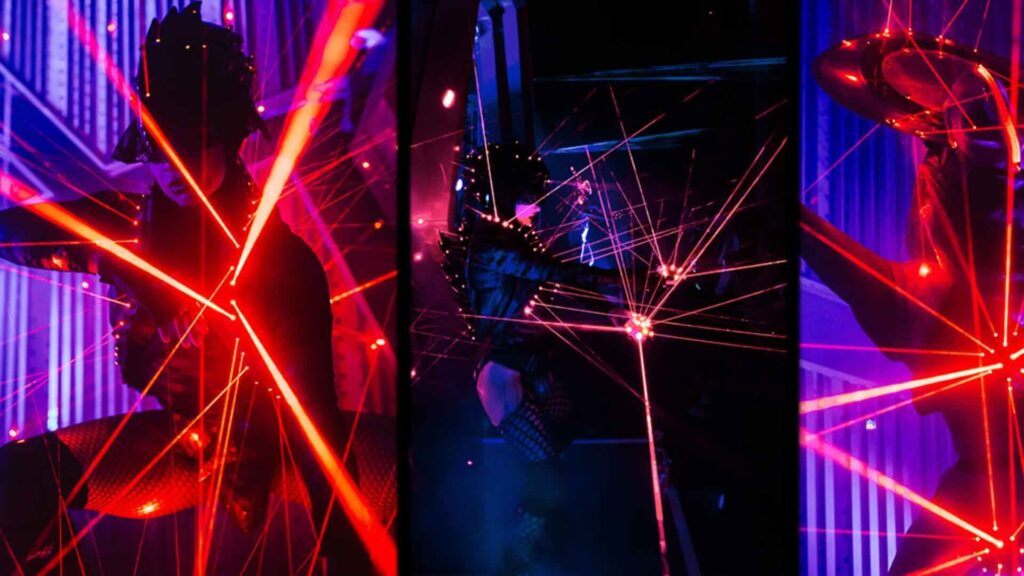
For corporate events, whether it’s a conference or gala dinner, integrating reactive installations like a floor that illuminates with each step is a unique way of making your environment more interactive for guests, keeping them engaged and encouraging exploration of the space.
These elements are also perfect for brand activations, creating unforgettable moments that feel tailor-made for attendees.
Creating a Reactive Event Space:
- LED mirrors that show different messages depending on who is looking.
- An interactive body mapping wall that transforms ordinary spaces into vibrant and immersive experiences.
- Sound-sensitive lighting that reacts to music or conversations.
Hidden Aspects
One way of creating a memorable event design is by incorporating hidden aspects that surprise guests.
Adding hidden doors, secret rooms or surprise projections that may not be instantly visible as they walk into your space is a great way of keeping guests intrigued.
This is a hidden room we incorporated into a ‘Cult Awakening’ themed Halloween event:
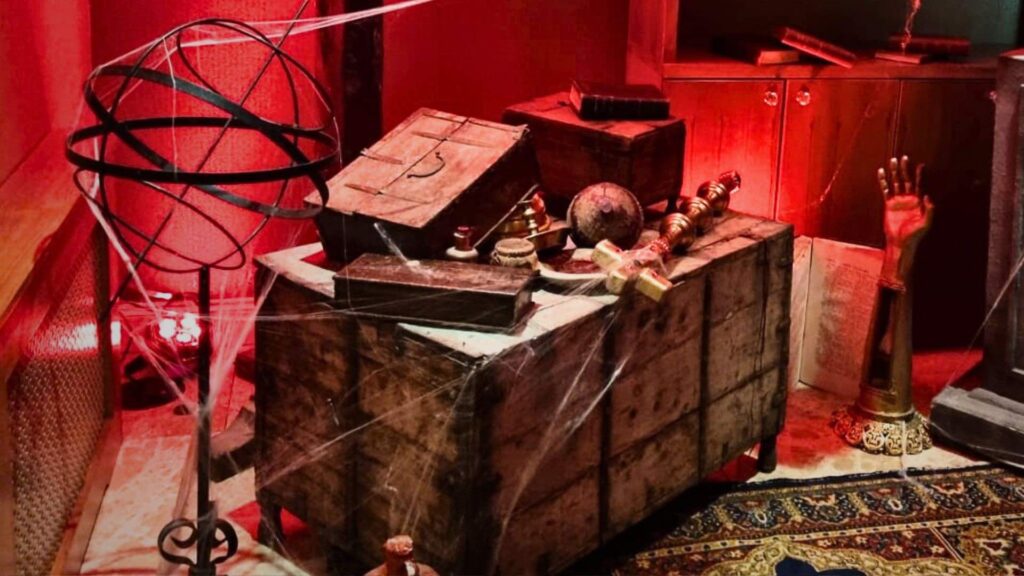
We like incorporating hidden spaces for product launches as a way of creating a more dynamic and immersive event space, making for fun, shareable moments for attendees.
A gala dinner could have an exclusive VIP lounge hidden behind a disguised bookshelf – a great way of adding intrigue to your event.
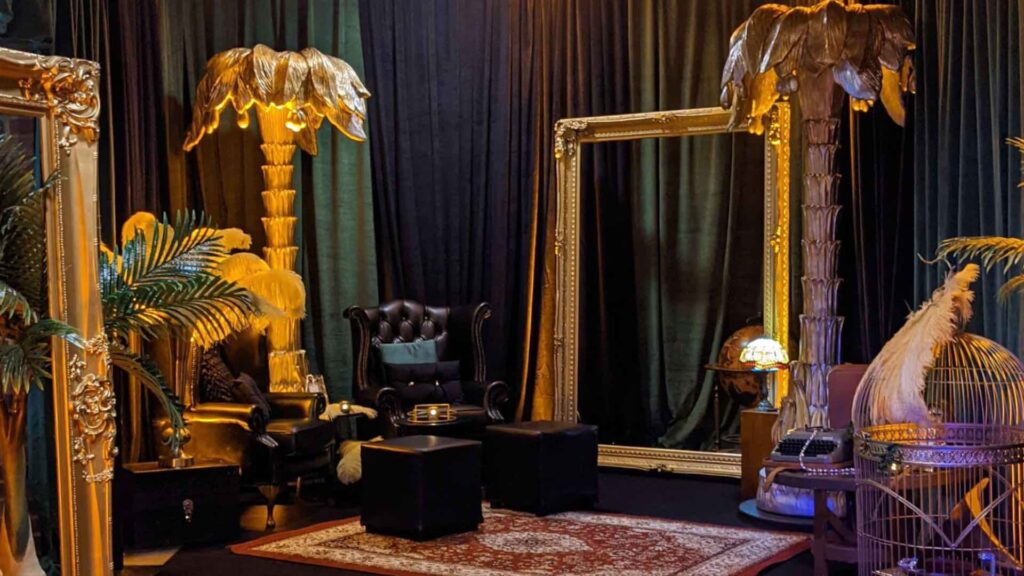
Other elements such as holographic projections that are only visible for short periods of time or at specific angles are another great way of adding hidden aspects.
If you want to get more creative – you could incorporate AR technology into art installations in your event space, bringing the installations to life when attendees go to take a photo:
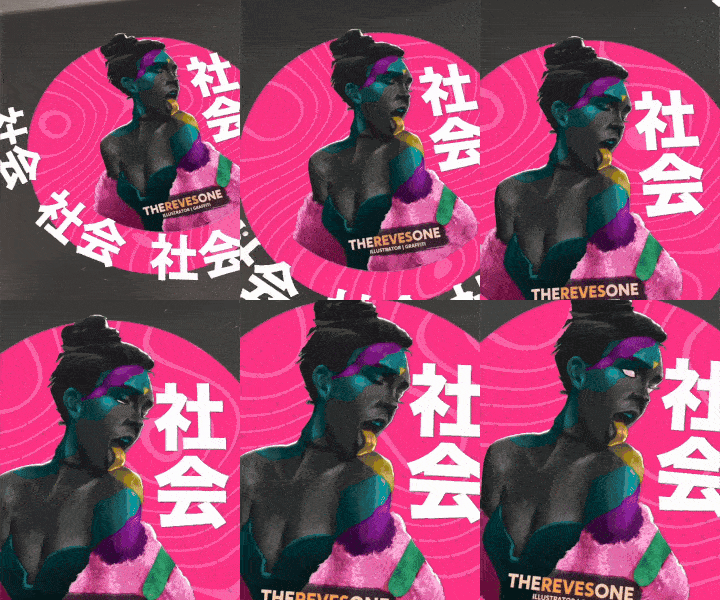
These elements build excitement and encourage deeper exploration of the space, creating a dynamic environment that lends itself to a memorable experience.
Adding Hidden Aspects To Your Event Design:
- Install secret areas which aren’t instantly seen as you walk into the space – disguised as walls or bookshelves for example.
- Use holographic projections that only reveal themselves at certain angles or go a step further and incorporate AR technology.
Dynamic Lighting
Lighting is arguably one of the most powerful and transformative tools of any event production.
Lighting is about more than just illuminating the space. It’s one of the most significant ways you can alter the mood and feel of your event and is one of the most noticeable visual aspects of your event.
It needs to be used strategically to completely transform an event space, adding colour to your space, projecting light and colour onto surfaces, ceilings and floors, and creating a dynamic and visually stunning event space.
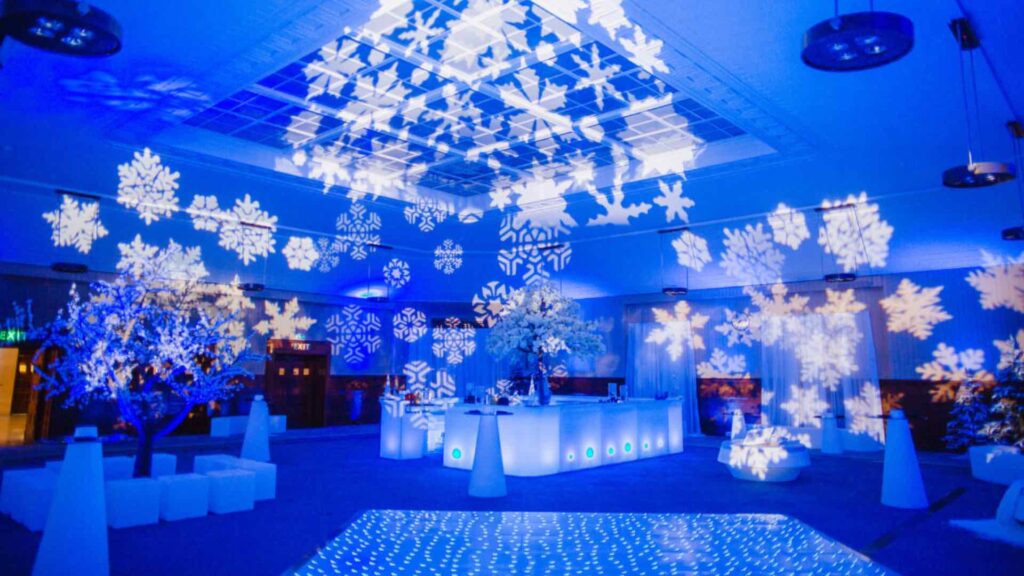
Lighting still goes a step further than this – we can make it dynamic!
Reactive lighting seamlessly shifts the ambience of a space, dynamically adjusting to suit different segments of your event – whether it’s for a stage performance, presentation or dance floor.
You can also apply the same dynamic to stage performances, whether it’s dancing or musical.
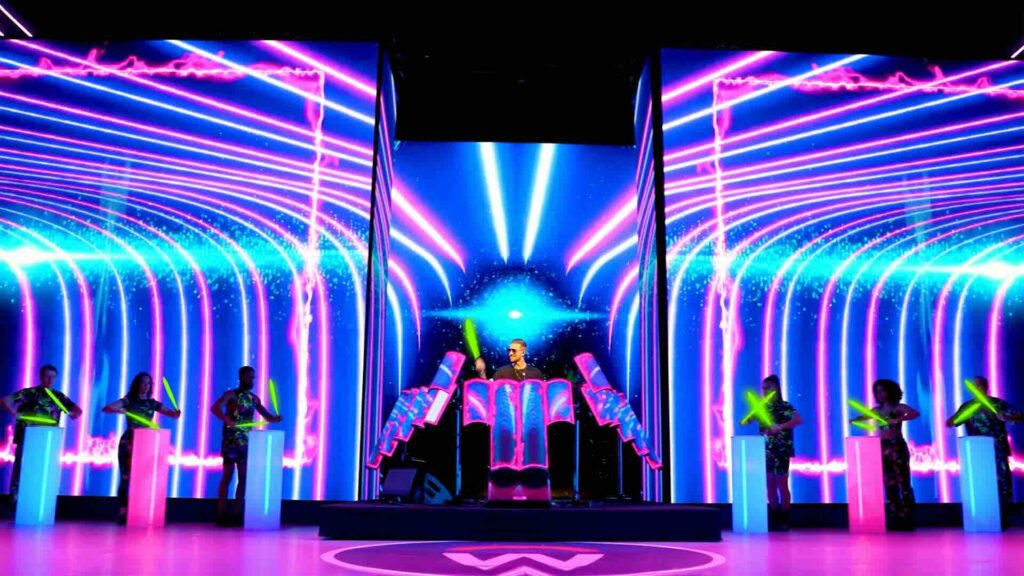
To make it feel part of the space that attendees can interact with, you can also incorporate this into the flooring of your event – reacting to footsteps as they roam your event.
Best Uses for Dynamic Lighting:
- Stage lighting that responds to speakers’ voices.
- LED pathways that guide guests through an event space.
- Colour-changing lights that shift based on music and atmosphere.
Immersive Entranceways
The entrance of your event sets the tone for the entire event, so it’s important to focus on this area to make an impact with your event design!
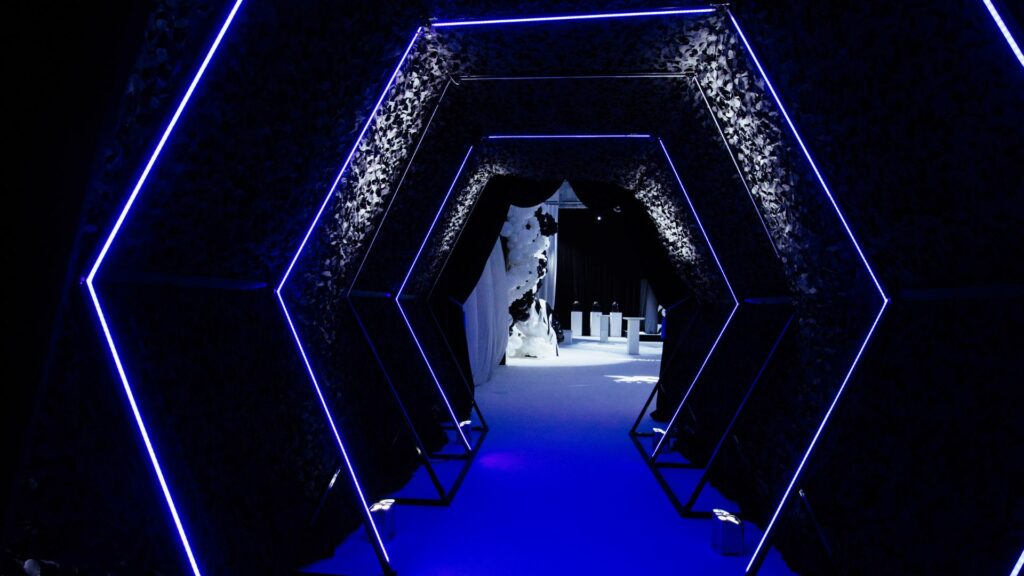
This is the place to make it clear guests are entering a new space – immersing them in the world of your event – a crucial aspect if you want to create an immersive theme.
It’s an impactful way to set the theme for your event.
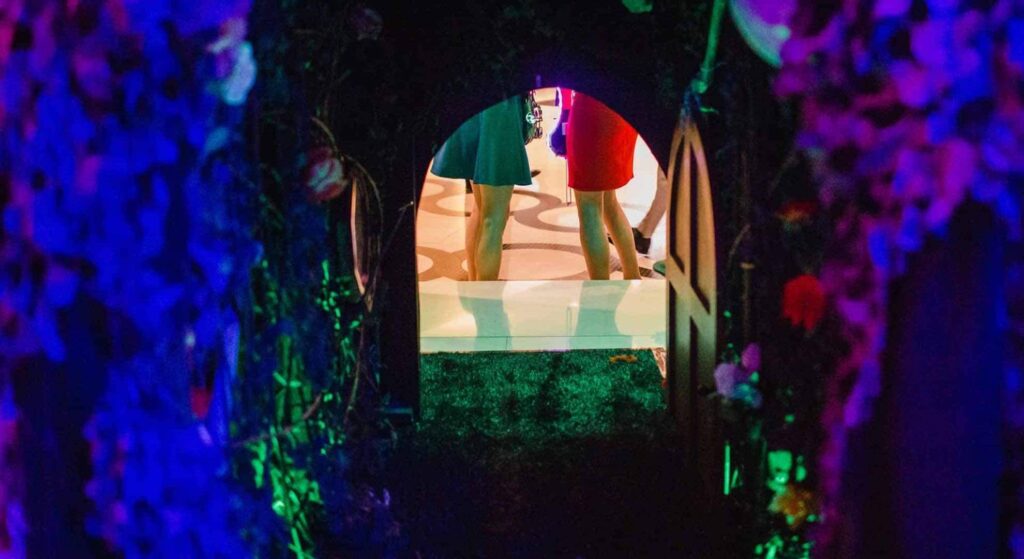
For example, in this Alice in Wonderland event we created, we added a rabbit tunnel that guests could crawl through to enter the space, making the theme much more immersive:
We incorporated a similar concept to another Alice in Wonderland themed event – see the video below (at the 1:22 mark) to see what it looked like from the guests’ POV:
If that’s not enough – you could even incorporate performers to be a part of your entranceway – like in this Winter Wonderland themed event we created where performers were in the sides of the entrance, bringing the installation to life:
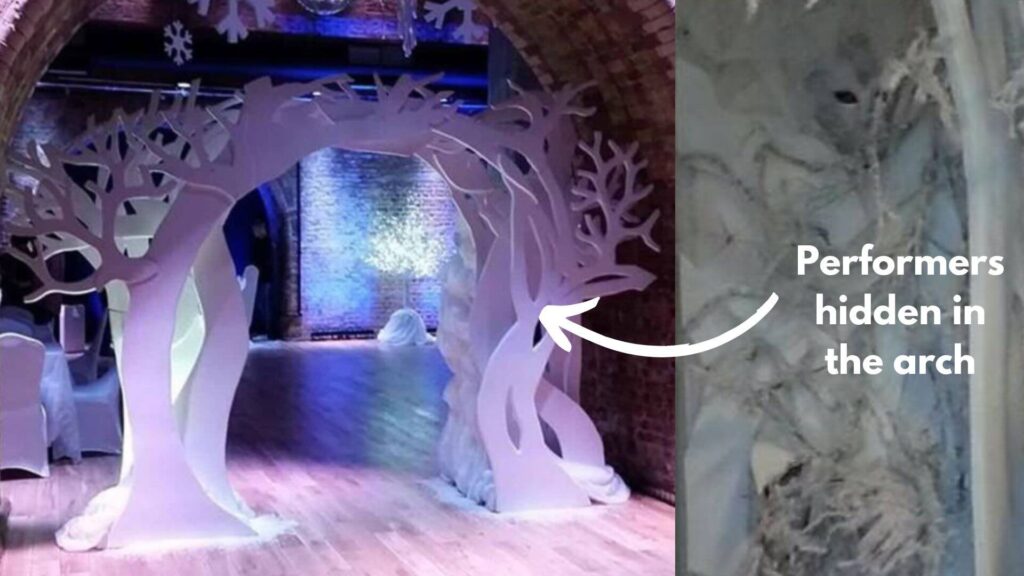
Immersive event design starts at the entrance and using LED lighting alongside bespoke props and decorations creates the illusion for your guests that they are stepping into a completely different world.
Creating an Immersive Entrance:
- LED lighting and impactful set design to make an impactful entranceway.
- Projection tunnels that change as guests move through them.
- Augmented reality elements that interact with guests as they enter the space.
Unexpected Clashes
Another great way of creating an impactful event space is by incorporating ‘unexpected clashes’ – themes and decorations which wouldn’t typically go well together, but instead clash!
Surprise your guests by intentionally clashing styles. For example, you could blend industrial aesthetics with high-end luxury by using neon signs juxtaposed with chandeliers, or street art alongside velvet drapes.
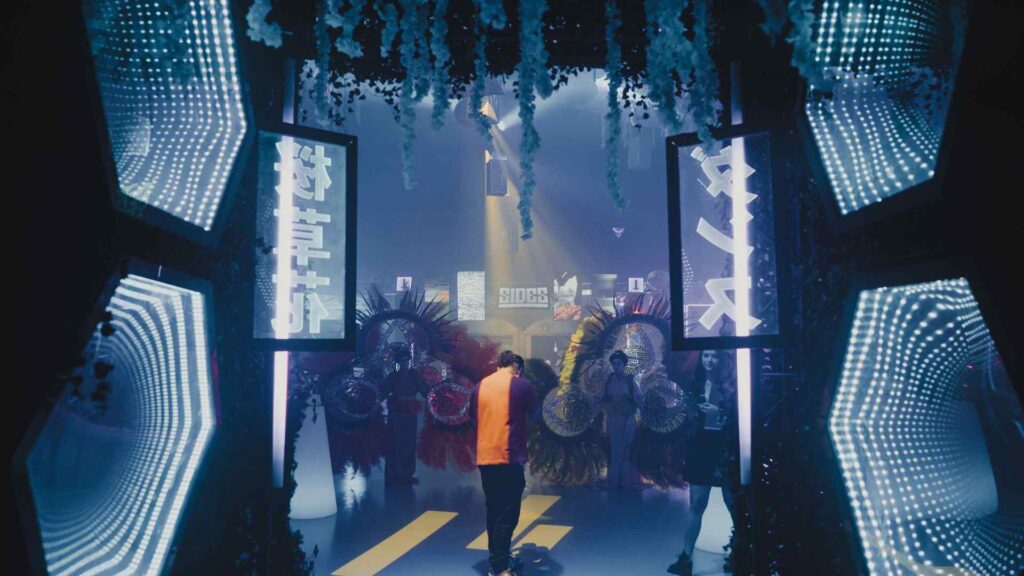
You can also play with bold colours and clashing design styles to create an interesting contrast that makes for an impactful event design.
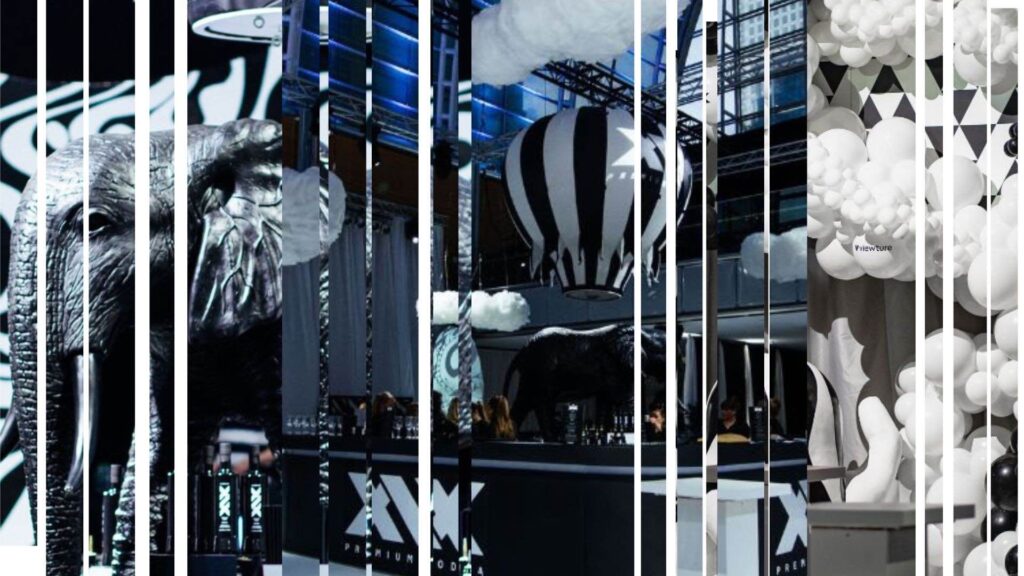
The same goes for your props and decorations – create unexpected focal points, like placing ultra-modern sculptures in a Renaissance-themed space.
By deliberately breaking the norms of expected styling, you create a design that challenges perceptions and engages attendees on a deeper level. – this can be particularly impactful at product launches or brand activations where differentiation is key.
Incorporating Unexpected Clashes in your Event Design:
- Combine high-tech visuals with old-world elegance.
- Mix bold neon colours with neutral or vintage tones.
- Use opposite textures, such as smooth metals against rough wood.
Look Up
Ceilings are often overlooked in event design, but they can completely transform a space.
They add a dynamic layer to your event space, creating more of a 360 event space – no matter where attendees look, they will see a space that fully envelopes them into the theme of your event space.
For large venues, suspending ceiling installations can make a vast space feel more intimate – hanging floral arrangements, mirrored panels or even digital ceiling projections create a dynamic atmosphere that evolves throughout the event.
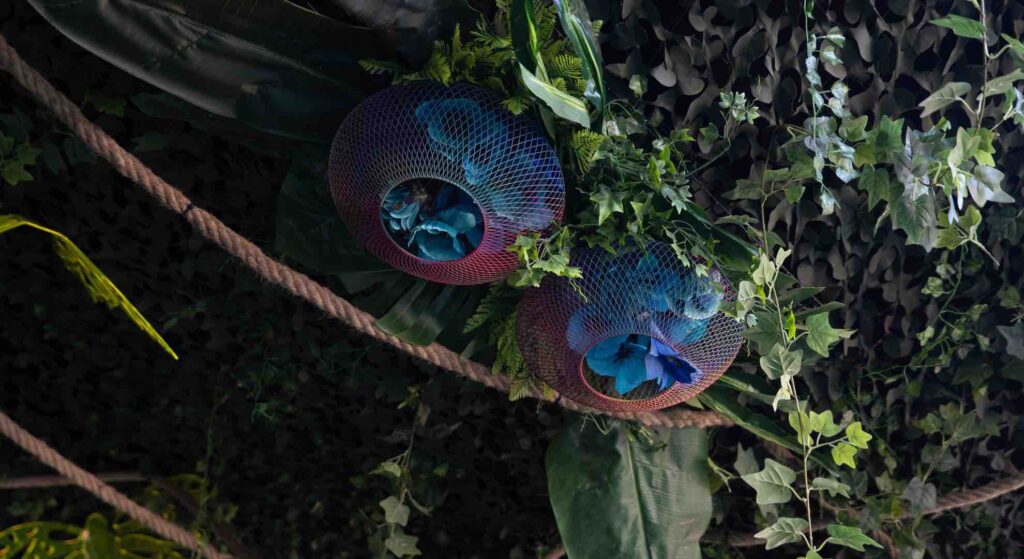
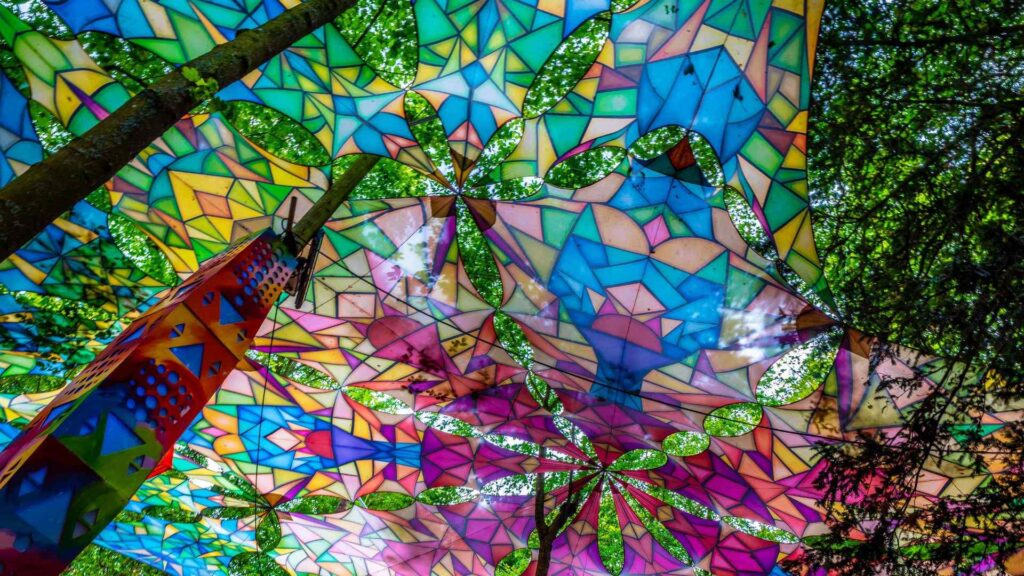
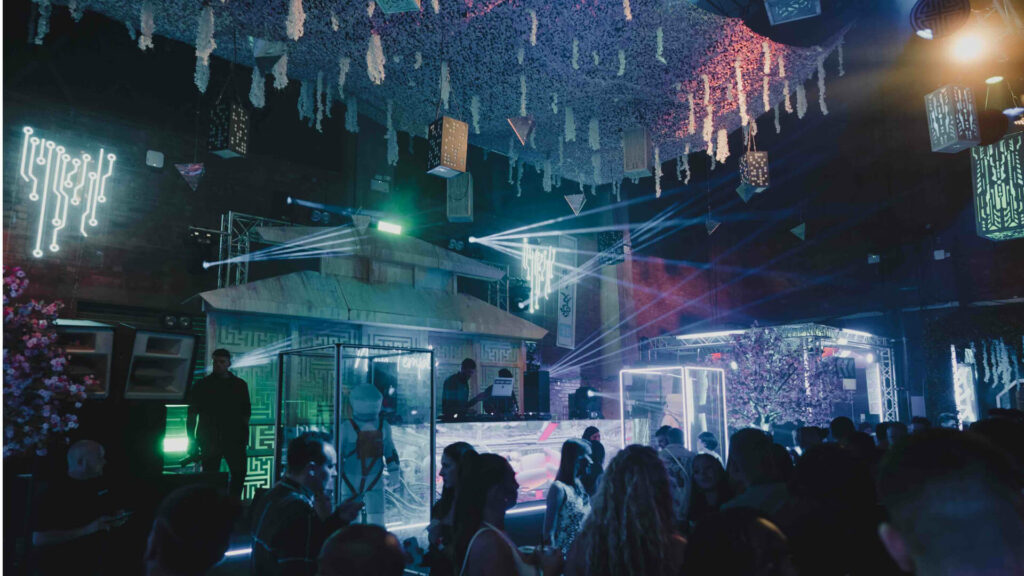
A product launch could incorporate floating holographic branding above the audience, reinforcing messaging in an engaging way. Meanwhile, a gala dinner could feature twinkling LED stars to create an enchanting ambiance.
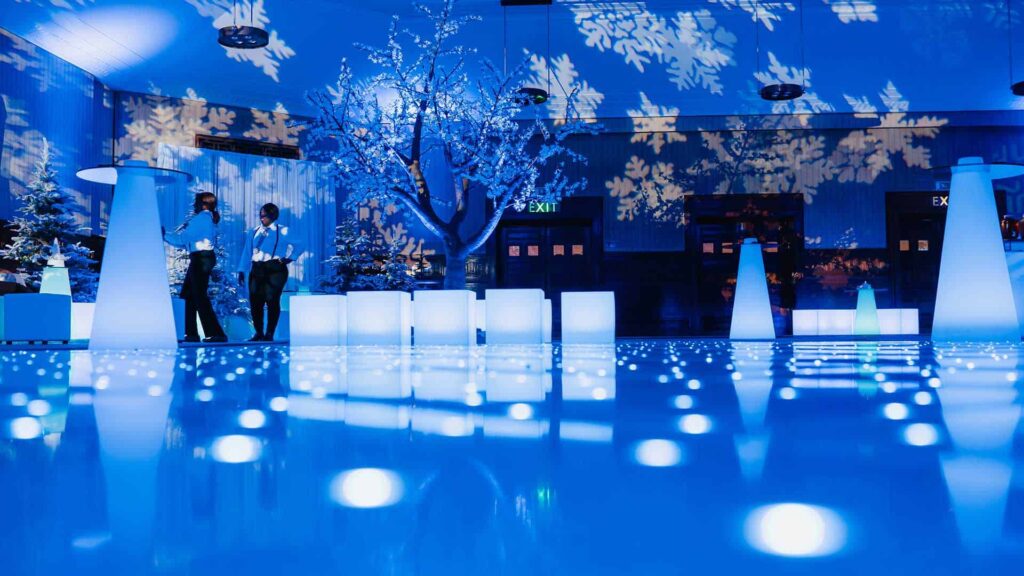
A well-designed ceiling captivates attention, drawing guests’ eyes upward and completing the event’s immersive experience.
Incorporating The Ceiling In Your Event Space:
- Hang suspended floral or crystal installations to add depth.
- Use projection lighting or even ceiling screens to display shifting digital visuals or immersive landscapes.
- Incorporate mirrors to reflect lighting and create the illusion of endless space.
- Add ceiling draping to transform ceilings and enhance theme consistency.
Illusions
Adding illusive aspects to your event space can be one of the most striking ways to surprise guests.
By utilising lighting, shadows and cutting-edge technology, you can create an illusive event design.
For example, you could have holograms that greet attendees as they enter your space or seemingly bottomless holes in the floor that give a sense of vertigo.
Strategic mirror placement can also be used to create infinite reflections, making rooms appear twice their size or warping perspectives for a surreal experience.
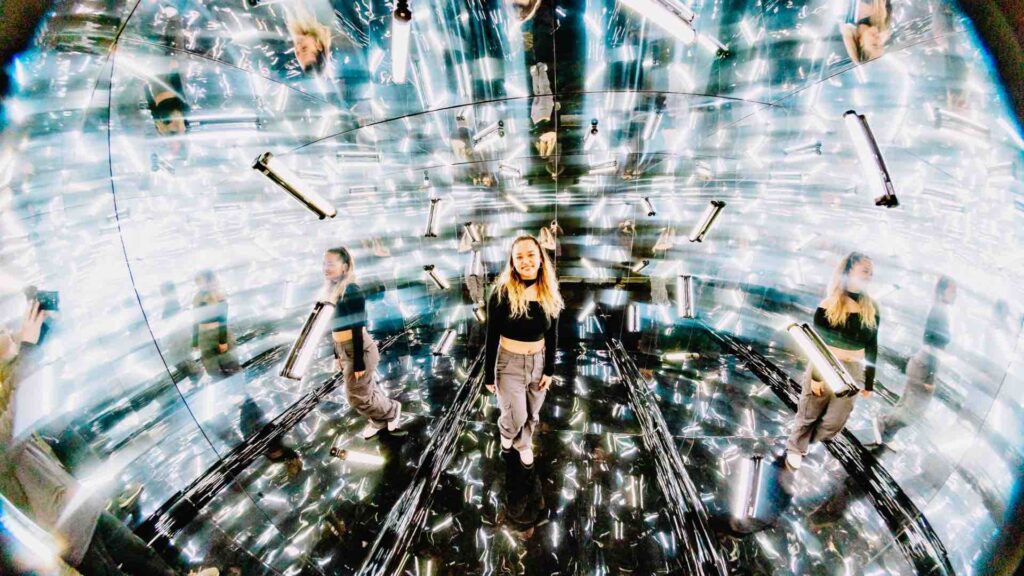
Illusions enhance your event design by making guests question their senses, resulting in a truly unforgettable and surreal experience.
Creating an Illusive Event Space:
- Holographic projections that display interactive visuals.
- AR installations (such as the AR murals mentioned earlier) that allow guests to see a different version of reality through their devices.
- Infinity mirror corridors that make spaces feel endless and surreal.
- 3D projection mapping that creates the illusion of shifting walls, doorways, or even entire landscapes.
- Optical illusion floor designs that make the ground appear to rise, fall, or ripple.
Don’t Always Go With the Flow
Last on our list – don’t go with the flow!
Similar to incorporating ‘unexpected clashes’ – by deliberately designing spaces that feel unfamiliar or force attendees to think differently, you can create an experience that is both intriguing and unforgettable.
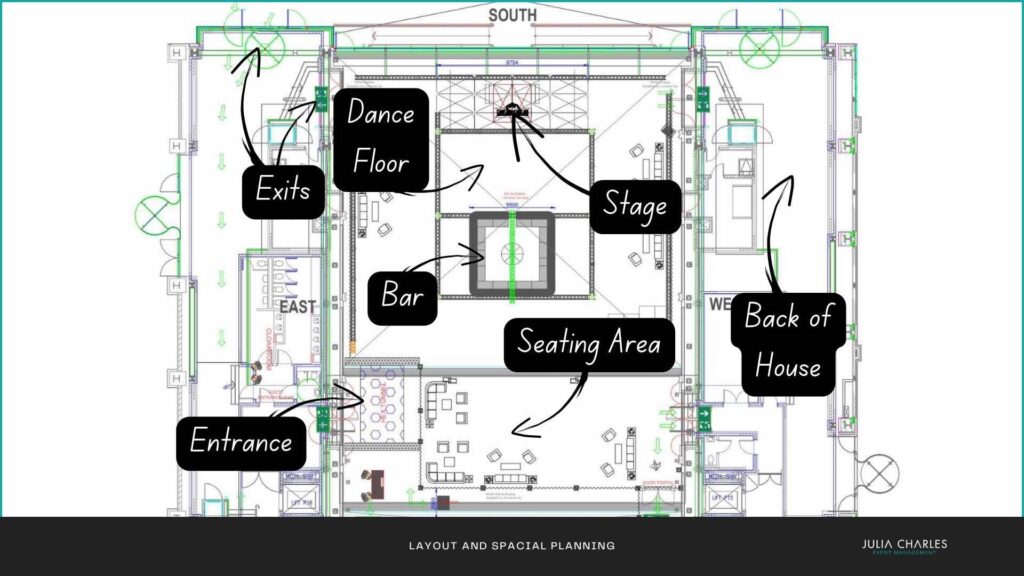
For example, instead of a traditional event setup where guests move seamlessly from one area to another, consider intentionally disorienting elements such as maze-like pathways, scattered seating, or unexpected barriers that encourage guests to explore.
Disrupting the natural flow of movement can make guests more aware of their surroundings and interactions.
A great way to implement this is through unconventional seating arrangements – rather than standard round tables, try asymmetrical table placements, tiered seating or even floating platforms that shift throughout the evening.
Not only does this challenge traditional norms, but it also sparks conversation and engagement among guests.
Unconventional Event Layouts To Consider:
- Asymmetrical seating that forces guests to interact differently.
- Floating platforms or moving furniture that shift throughout the event.
- Non-linear event spaces that disrupt the natural walking flow, making guests explore.
Beyond physical layout, you can also play with perception – as discussed in our previous section ‘illusions’ – incorporate mirrored surfaces that create endless corridors, rooms with shifting walls that subtly alter throughout the night, or even gravity-defying elements that challenge what guests expect from their surroundings.

Disrupting Event Expectations:
- Maze-like pathways that encourage exploration instead of straightforward navigation.
- Hidden doorways and secret rooms that require guests to interact to discover new spaces.
- Unexpected juxtapositions such as high-end decor in a raw industrial space.
- Contrasting visual styles that create a deliberate clash between elements.
Disrupting the flow of your event also extends to the schedule of your event – you can create a schedule where the usual flow of an event is reversed or disrupted.
By intentionally challenging expectations, your event will remain in guests’ minds long after they leave.
When done well, anti-flow design transforms confusion into curiosity and ensures a one-of-a-kind experience that people will talk about for years to come.
Book Julia Charles Event Management To Design An Impactful Event
We hope this blog has provided some unique insight into how to create an impactful event design to surprise your guests at your next event.
Event design has many aspects to consider in order to create an all encompassing experience that creates the desired effect.
As an established events agency that specialises in event design – and one with a real passion for it – we can help you design an impactful event.
Take a look at some of the events we’ve designed.
Whether it’s taking your event from concept through to production or to assist in specific aspects such as your set and stage design, we can help make your next event a success.
Get in contact with a member of the events team.
Related Services:
Related Blogs:
- How To Design an Event Space From Scratch
- Designing The Best Creative Event Concept
- How To Visually Design an Event
- How To Optimise Event Flow
- 10 Unique Elements To Producing An Impactful Event Stage Design
- What are the Key Aspects of Successful Event Production?
- We’ve covered this topic in depth – view all event design blogs.
Get In Touch With Us Today.
With nearly 20 years of Event Management insight, working with world-renowned Clients we'll help you create your Dream Event.
Get in Touch