AI-Driven Storytelling in Events | What It Is & Why It Matters

Artificial Intelligence (AI) is taking numerous industries by storm and the events industry is no different.
We can use this powerful tool to enhance event experiences for all – event planners and attendees to make for more efficient, impactful events.
One area AI is enhancing the event experience is through AI-driven storytelling – the use of AI to create, enhance and personalise narratives that engage attendees in unique and interactive ways.
It combines data analysis, automation and immersive technologies to craft compelling brand stories that evolve in real time based on audience interaction.
In this blog we will show how AI can enhance event storytelling, explaining what it is, how it can be used by event designers, producers and concept creators, whilst discussing the benefits and challenges.
Table of Contents:
- What Is AI-Driven Storytelling in Events?
- Benefits of Utilising AI-Driven Storytelling
- How to Use AI in the Design and Production of Your Events
- AI-Powered Event Experiences: Real-World Applications
- Challenges and Considerations For AI In the Events Space
- Future Trends in AI Storytelling
- Book an AI-Powered Event With Julia Charles Event Management
What Is AI-Driven Storytelling in Events?
AI-driven storytelling enables you to create, enhance and personalise event narratives that engage attendees in unique and interactive ways, making for a more impactful event experience for all.
AI blends data analysis, automation and immersive tools to create real-time experiences that adapt dynamically to audience interaction.
In summary, AI-Driven Storytelling Provides:
Personalised Content
- AI creates narratives based on attendee demographics, behaviour and engagement with specific aspects.
Real-Time Adaptation:
- AI-driven experiences evolve based on audience input and reactions.
- Assessing what gets engagement, AI will adapt in real-time to provide attendees with what engages them the most.
Immersive Technologies:
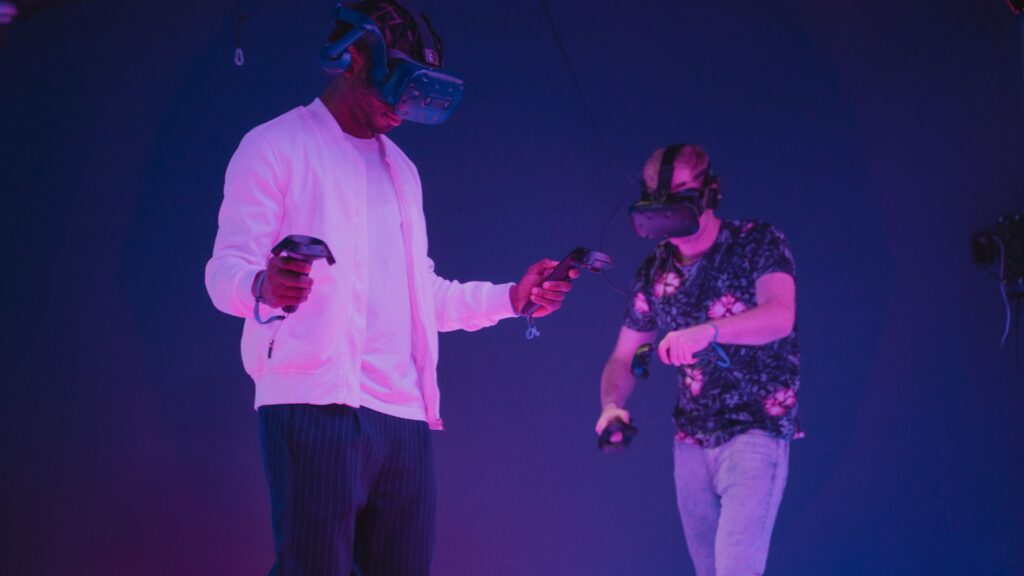
- AI integrates with Augmented Reality (AR), Virtual Reality (VR) and projection mapping to create fully interactive and immersive event spaces.
Data-Driven Engagement:
- Arguably one of the most powerful aspects of AI, this tool collects and processes attendee feedback to refine event experiences.
- This can be used both in real-time and for future events, giving planners actionable data to make informed decisions on what works well for future events – in the design of their events, attractions and more.
Find out more about our event technology services.
Benefits of Utilising AI-Driven Storytelling
Now we know what AI-driven storytelling in events means – let’s get into a top-level overview of the benefits it provides:
Enhanced Personalisation:
- AI adapts event content in real-time to match attendee interests.
Deeper Audience Engagement:
- Interactive AI features make events more dynamic and immersive.

Scaleability and Efficiency:
- AI automates tasks, reducing workload and improving event execution – benefiting event planners and attendees.
Data-Driven Decision Making:
- AI insights help event planners refine future strategies – the data AI provides gives you actionable insights into what works well, which you can implement into future events.
Increased ROI for Event Planners:
- AI provides valuable data to optimise marketing efforts and attendee satisfaction.
- You can easily showcase the return of your event to key stakeholders in terms of engagement, attendee numbers, financial return, and any aspect you want to measure.
Want to discover more about hosting virtual or live events in 2025 and which one is right for you? Check out our guide: Hybrid vs Live Events: What’s Right for You in 2025?
How to Use AI in the Design and Production of Your Events
AI enhances the design and production of your events by enabling interactive, adaptive and personalised experiences:
AI-Powered Content Generation
- AI tools can help planners create event scripts, video content and social media posts tailored to audience interests – leading to increased engagement and enhanced experiences.
- It’s a tool that can be used to generate custom storytelling elements, from speeches to immersive visuals – alongside the human touch, this makes for a more impactful event.
Event Theming and Environments:
- AI can be used in the physical design of your event to make it more dynamic and ultimately more immersive.
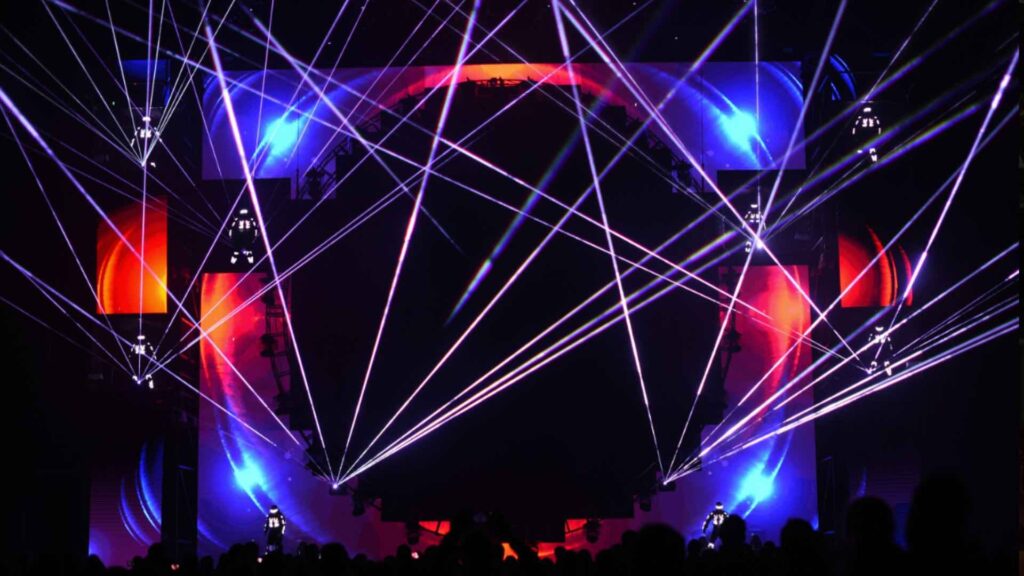
- For example, you can implement AI in your event design to customise lighting, music and decor (LED screens, projections and more) in real time based on attendee preferences and engagement.
- If you implement AI-powered 3D projections, AI can dynamically alter projection visuals based on audience movements and engagement.
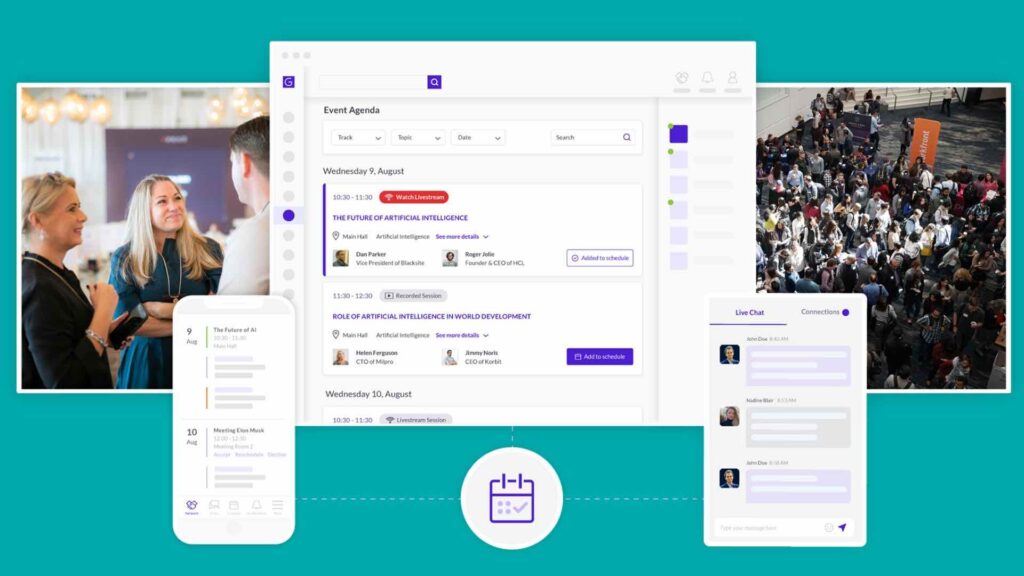
AI-powered Event Apps:
- Event apps are a powerful event tool that enables planners to provide attendees with personalised recommendations, voice assistants, networking tools and more.
- This is a useful addition for conferences, especially ones that require a networking aspect, making it easier for attendees to see which sessions they may want to attend or deleggates they may want to meet and network with.
- Apps also provide you with invaluable data based on what attendees engage with, proviing you with the data required to see what has been a success at your event.
- For planners, it also makes the logistical side more efficient, automating huge, time-consuming parts of this process.
Find out more about our event technology services.
AI-Powered Event Experiences: Real-World Applications
We’ve discussed the benefits and general applications of AI within the events space – now let’s get into some specific event applications.
AI For Immersive Brand Activations and Product Launches
- Installations that utilise AI can analyse present audiences (such as movement, where they are looking and blinking to see what they are engaging with) to tailor brand messages specifically to them, creating a personalised experience.
- For example, at an interactive brand activation pop-up, you could use AI elements that display content based on specific customer behaviour.
- For product launches, if it’s a beauty product, for example, you could implement an AI display that recommends shades based on facial recognition.
- For more ideas on immersive AI-driven brand activations and product launches, take a look at our Digital Brand Activation Ideas for Guest Creativity and Interactivity blog.

Learn more about blending Human, Tech and AI for authentic events.
AI To Enhance Networking at Conferences and Exhibitions
- One of the most powerful aspects of AI is the data and personalisation it gives you to enhance event experiences.
- One key area of this is in the networking aspects of your events – particularly useful for conferences and exhibitions where this may be a focus.
- We use AI at networking-focused conferences to create matchmaking tools that make it easier for attendees to connect with shared interests through the use of an event app.

Challenges and Considerations For AI In the Events Space
Now we’ve covered, the benefits and some specific use-case scenarios for AI in the planning and execution of your events, we’ll now cover some of the key considerations to make when implementing it.
Over-Reliance on AI
One of the biggest challenges of AI is relying too heavily on it.
This can present challenges in terms of how your audience perceives your event – they may have concerns about data transparency and authenticity – if you rely too heavily on this, it can make your event feel inauthentic:
- Events must balance AI automation with human creativity to maintain authenticity.
- Transparency in AI usage is essential to maintain attendee trust.
- Ethical concerns around data privacy must be addressed.
Technical Limitations
AI requires careful, strategic planning to implement successfully. It can also present a high entry cost which can limit accessibility:
- AI tools require seamless integration with event technology to function effectively.
- High implementation costs can be a barrier for smaller event budgets.
AI Bias and Content Accuracy
Although AI automates large parts of your event, it still requires the human touch – areas that are not so data-driven and black and white:
- AI algorithms can reflect biases present in training data, requiring human oversight.
Future Trends in AI Storytelling
Now we know all about the current use of AI within events and their storytelling – what about what the future holds for this powerful tool?
Hyper-Personalised Event Experiences
One huge benefit of implementing AI in events is the level of personalisation it gives you.
Now and in the future, we predict to see this taken even further in terms of providing bespoke, tailored event journeys, and offering predictive recommendations based on past behaviour.
AI is data-driven – the more this tool is used and implemented within events, the more data it will acquire, giving it the ability to be more accurate and impactful.
AI and the Metaverse
The metaverse is a fairly new and untapped space and in the future, we expect to see AI continue to take this space by storm, creating more impactful and immersive digital environments.
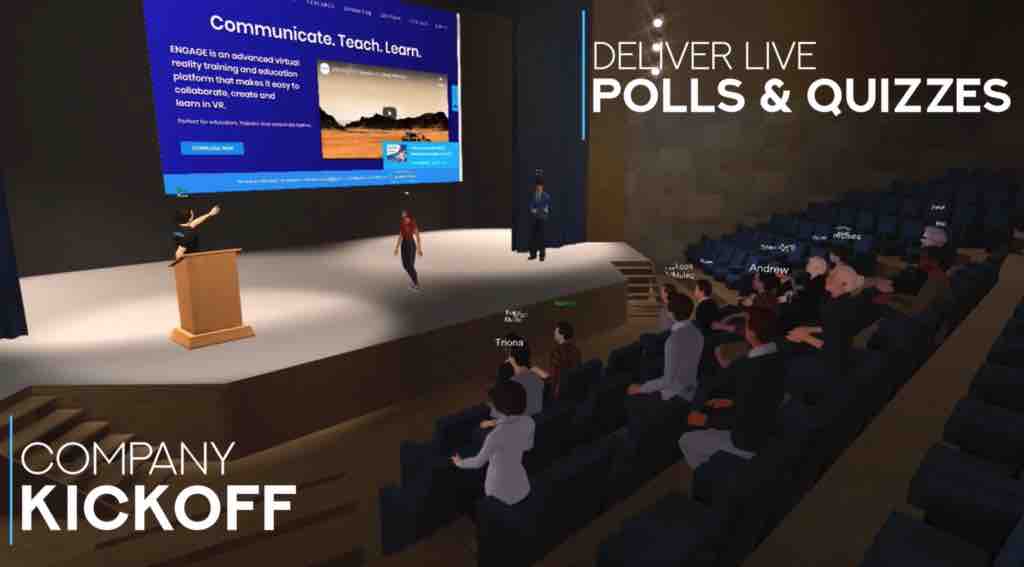
This will be huge for virtual and hybrid events where this space is utilised, enabling planners to provide more immersive and interactive metaverse environments within their events.
Find out more about Metaverse events.
AI-Powered Visuals
We’ve already seen the impact of AI on digital content – especially photos and videos.
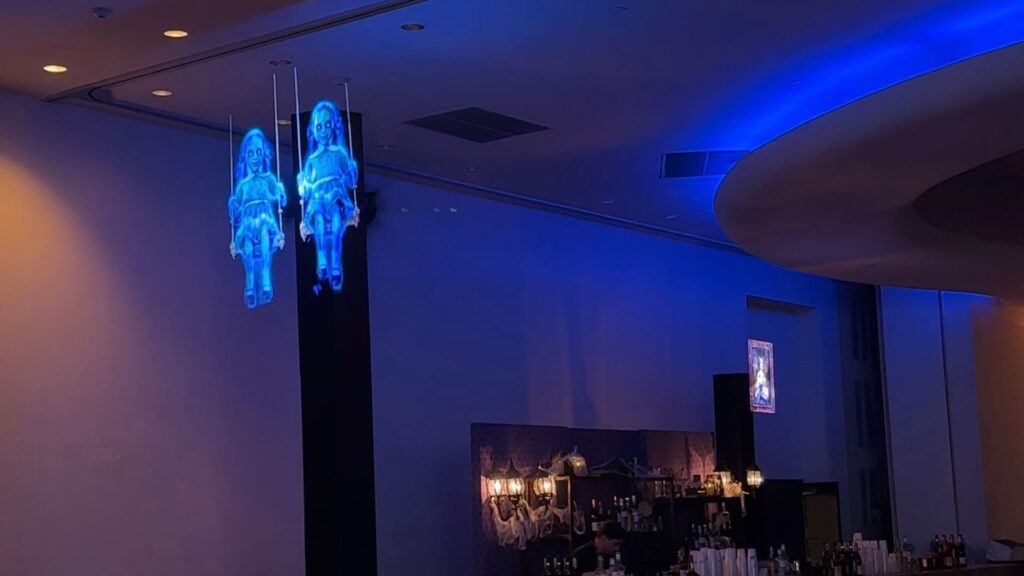
We expect to see this area continue to evolve, enhancing the quality and impact of visual elements of events – specifically holograms in the form of AI-generated holograms that create immersive brand storytelling.
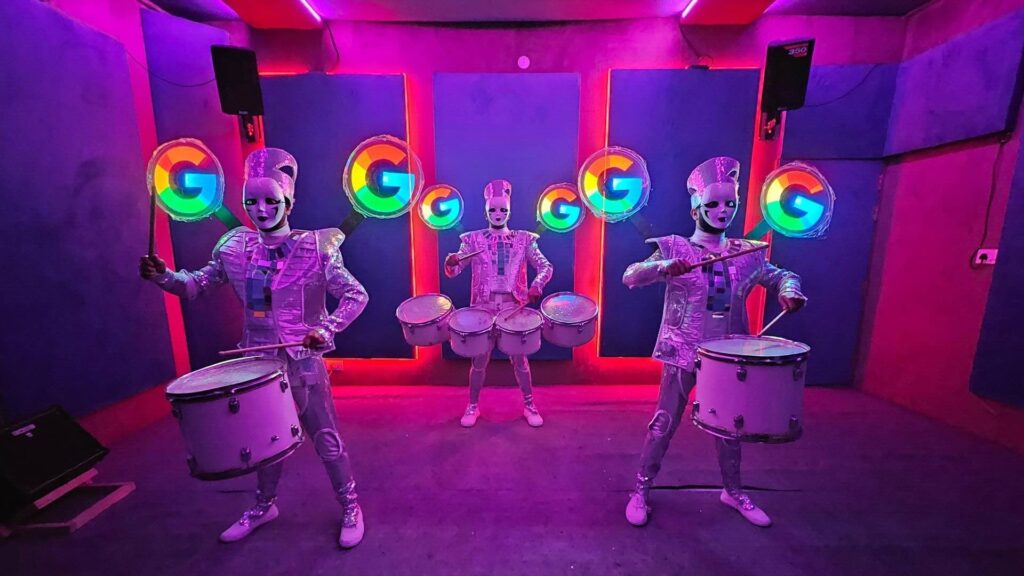
AI will also analyse facial expressions and audience sentiment to refine live projections, providing more personalised experiences and impactful events.
Book an AI-Powered Event With Julia Charles Event Management
We hope this blog has provided some valuable insight into how to implement AI within your event to enhance the storytelling and overall experience – for attendees and planners alike.
AI-driven storytelling in events is revolutionising audience engagement. From real-time content adaptation to hyper-personalised experiences, AI is shaping the future of event design.
If you’d like to find out more about implementing AI into your events, get in contact with a member of the events team today.
Our team are on hand to help in all aspects of your event – whether you need an event delivered from concept through to culmination or just assistance with a singular aspect, we can help.
Find out more about our event technology services.
Related Services:
- Event Technology
- Immersive Reality
- Event Management
- Event Production
- Event Design
- Conferences
- Brand Activations
- Product Launches
- Fan Zones
Related Blogs:
- How can Event Managers use AI to their advantage?
- 10 Event Technologies To Revolutionise Your Events in 2025
- How to use Digital and Augmented Reality in Events
- What are the Technology Essentials for a Successful Event?
- The Impact Of Technology On The Events Industry
- 10 Ways To Elevate Your Conference
- Holographic Technology in Events: The Ultimate Guide
- What are the Key Aspects of Successful Event Production?
- Making Your Brand Activation an Unforgettable Spectacle
- How Successful Are Your Events? How Do You Know?
- How Consumer Trends Will Effect Product Launch Events in 2025
Get In Touch With Us Today.
With nearly 20 years of Event Management insight, working with world-renowned Clients we'll help you create your Dream Event.
Get in Touch