How to Build a Product Launch Event Around Your Product
The phrase ‘the product should be the hero’ has been appearing in launch briefs for as long as we can remember writing them.
Walk into the planning process for almost any product launch event from the last decade and someone will have written it – in the brief, in the deck, occasionally near the bottom of a two-page agenda nobody read past slide three.
Sometimes the event reflects it. Often it describes a plinth under a spotlight and not a great deal else.
What’s actually changed in the briefs generating the more interesting work isn’t the language. It’s the sequence.
The product isn’t placed inside the event. The event is built out of the product – its story, its visual world, who it’s for and what they’re supposed to feel walking out the door. That’s product storytelling, not product placement.
Here’s what that looks like in practice.
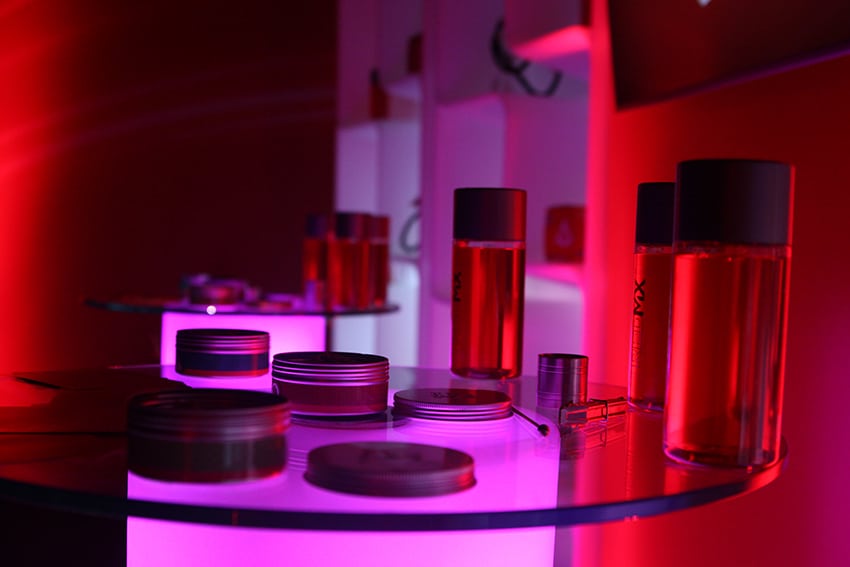
Table of contents
- What ‘Product-Led’ Actually Means – And Why Most Briefs Skip It
- Start with the Product Story – Why the Concept Has to Come Before the Venue
- Build the Whole Environment Around the Product – How Production Makes It Physical
- Theming That Comes from the Product – Not from Pinterest
- Add Branding Without Making the Event Feel Like a Trade Stand
- Turn the Event into a Journey – Why the Reveal Isn’t Always the Point
- Use Bespoke Entertainment to Make the Product Part of the Show
- Reveal the Product in a Way That Earns the Moment
- Let Guests Use, Test and Experience the Product – Why Interaction Beats Observation
- Use a Product Launch Party to Build Energy Around the Brand
- Create a Virtual or Live-Streamed Product Experience – Same Principles, Different Screen
- Real Examples – Three Briefs, Three Different Answers
- Making the Product the Reason the Event Exists
- Frequently Asked Questions
What ‘Product-Led’ Actually Means – And Why Most Briefs Skip It
A product launch event built around the product sounds like it shouldn’t need explaining. Until you read the brief and realise the venue was locked in February and the product brief hasn’t been written yet. That happens more than it should.
The version that works starts from the product – what it does, who genuinely cares about it, what world it belongs in. Venue, format, entertainment and guest journey follow from that.
Most briefs still do it the other way. That’s why most product launches feel like events that happen to have a product inside them rather than experiences built around one.
Start with the Product Story – Why the Concept Has to Come Before the Venue
What Should a Product Launch Event Concept Be Built On?
We’ve been in briefings where the venue deposit was paid before anyone had properly asked what the product meant to its audience. The conversation goes venue, catering, AV, entertainment – and then someone says ‘right, how do we make the product the hero?’ three weeks before the event.
By that point the shapes are already set.
You end up with a good-looking room that has a product sitting inside it, not an experience built around it. Guests can feel the difference even when they can’t articulate it.
What does this product do? Who’s it for? What does it feel like to hold it, open it, use it for the first time? What’s the feeling the brand wants someone to carry out the door?
Those questions need answers before the venue shortlist – before the caterer, before the floor plan, before anything. When they drive the concept, the event has a spine. When they’re left to week three of production, the brief has already written itself around whatever the venue can accommodate.
There’s a useful breakdown of the planning side in six steps to launch.
Build the Whole Environment Around the Product – How Production Makes It Physical
How Can Set Design and Production Centre the Product?
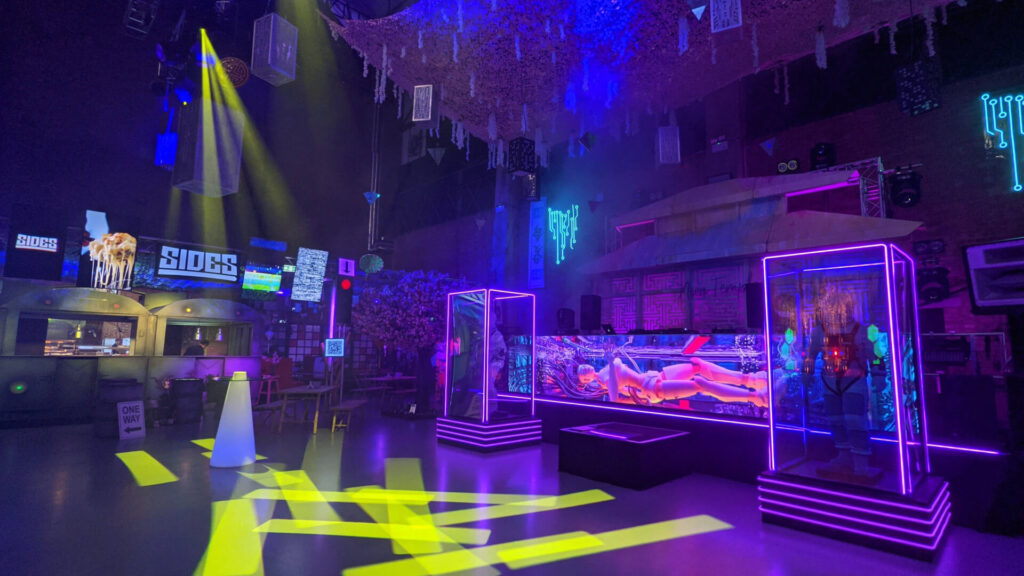
Full event production is where the concept gets physical. Scenic design, stage builds, lighting and AV installations, entrance treatments, branded walkways – all of it drawn from the product’s world, not a generic aesthetic that could belong to any brand launching anything that week.
The product doesn’t need to appear physically in every corner. That’s the bit people often misread.
Its colour palette, shape or material language can do subtler work. A colour temperature running through the lighting drawn from the product’s packaging. A spatial rhythm in the room that mirrors the way it opens or feels in use.
Guests don’t consciously clock those decisions – they just register that the room had a character. That’s harder to pull off than it sounds. Worth more than most of what gets agreed in the production meeting.
The Riot Squad brand exhibition is probably the clearest example we can point to. Guests didn’t look at the product – they walked into it. Every surface, every material, every sight line drawn from the brand’s world. Not a logo on a white wall and a product on a plinth. An environment.
Worth more than any amount of podium time.
Theming That Comes from the Product – Not from Pinterest
How Do You Turn Product Attributes into an Event Theme?
Theming sits inside the wider event design process. It has been applied to everything from multi-zone immersive builds to a colour palette someone liked in a mood board.
The version that actually works starts with the product – its colours, textures, sounds, materials that exist because of what the product is, not because someone liked the renders. Not a mood board someone found online and loosely applied to venue styling that already existed for something else.
That can mean something dramatic – themed zones, oversized product-inspired props, sensory details layered through every room, a sequence of spaces that each tell a different part of the product story.
Or it can mean something almost invisible. A scent down a corridor. The weight of a door handle that references the product’s materials. Ambient sound drawn from the world the product belongs in. Guests won’t necessarily register any of that consciously.
Both land. What doesn’t is theming that has nothing to do with the product – a vaguely futuristic aesthetic applied to a heritage brand because someone liked it in a pitch deck.
We’ve seen it more than we’d like.
The immersive brand experience trends piece covers how this thinking is evolving. The same logic runs through immersive retail experiences too – product and environment needing to feel like they came from the same brief, not separate ones.
Add Branding Without Making the Event Feel Like a Trade Stand
What’s the Difference Between Integrated Branding and Overdoing It?
There’s a version of event branding where the logo appears on the napkins, the step-and-repeat, the table centrepieces, the screen savers, the coasters, the wristbands and the side of the bar. We’ve all been to that event. The logo is everywhere and the product is somehow nowhere.
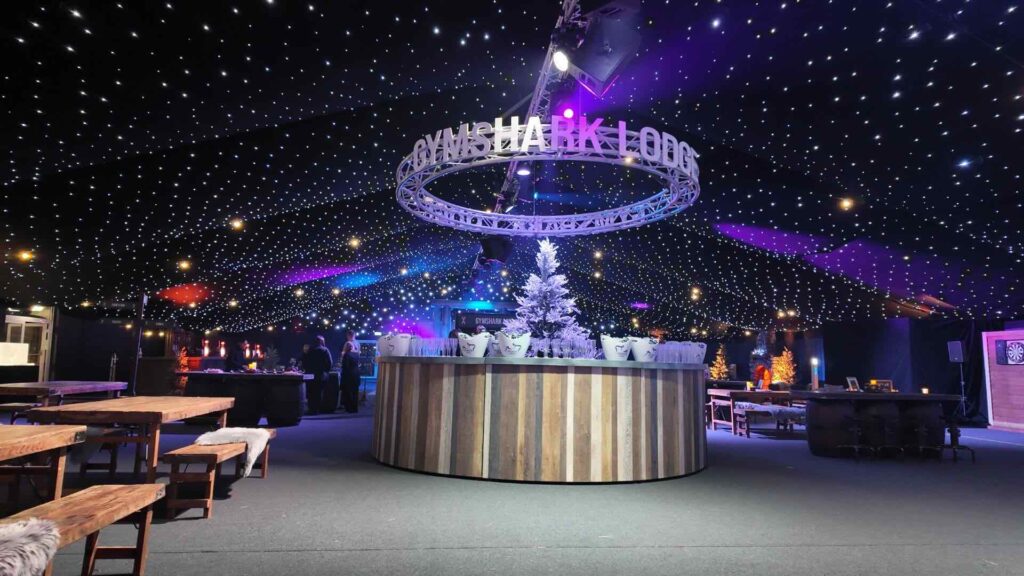
Effective event branding sits inside the design language. Lighting projections. Colour-led styling. Monograms woven into scenic elements. Branded drinks serves and performer costumes that reference the product. That’s a branded event experience, not a logo repeated at every touchpoint.
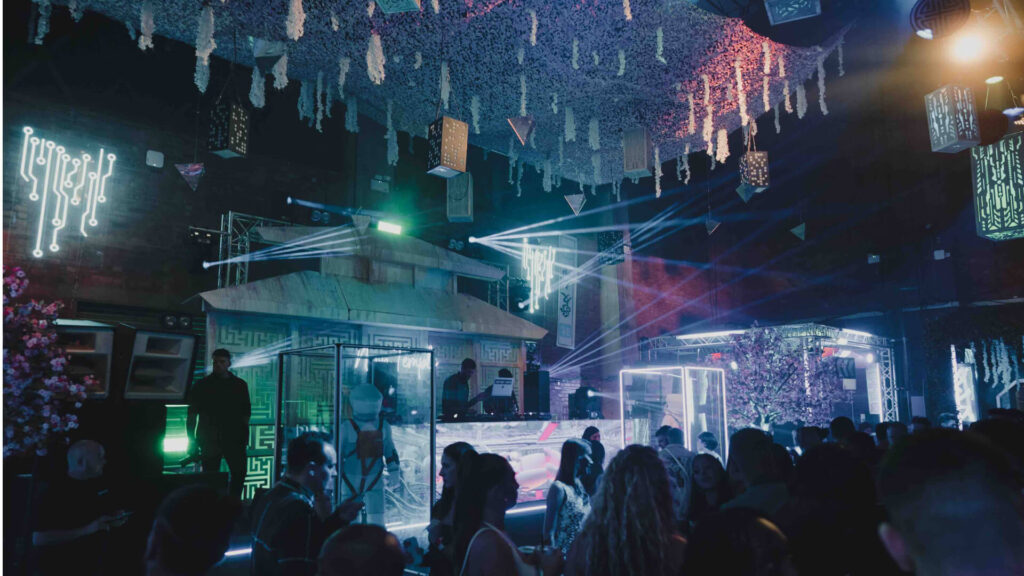
At the Red Mix product launch at Tobacco Dock, the brand’s identity ran through the 3D projection show, the staging, the production design – a packed room spent the evening inside the brand’s world.
Most of them couldn’t have told you how many times they’d seen the logo. Because that wasn’t what the experience was built around.
That’s the balance. The brief for it is harder to write than most people expect – ‘subtle branding’ is one of those notes that sounds clear and means something different to every supplier in the room.
Turn the Event into a Journey – Why the Reveal Isn’t Always the Point
Can a Product Launch Event Tell a Story from Start to Finish?
The brief that says ‘big reveal at the end of the keynote’ produces a particular kind of event. Everyone waits. The curtain drops. People clap. Fifteen seconds later the DJ starts and everyone moves to the bar.
That’s one shape. Not wrong. Just limited.
We’ve worked on product launch events where guests discovered the product gradually, across multiple touchpoints – a walkway that introduced the problem it solves, a room that showed how it worked, a zone where you could actually use it, then the moment where everything came together.
In our experience that format holds attention better than a single-reveal structure. The reveal wasn’t weaker. It landed better, because people arrived at it already knowing why the product existed.
According to EventTrack’s 2024 report, 91% of consumers said they felt more positively about a brand after attending a live experience. That’s the argument for building the event around the product rather than around a presentation that ends with a reveal.
Worth looking at what different formats actually look like in practice – the immersive event ideas page covers a range of them.
Use Bespoke Entertainment to Make the Product Part of the Show
What Kind of Entertainment Works for a Product Launch Event?
Entertainment selected from a catalogue and bolted onto a launch brief fills the programme. That’s about the most you can say for it. Entertainment designed from the product brief communicates something – what the product is, how it feels, who it’s for. That distinction matters more than the budget line.
In practice, about half the briefs we see ignore it. The entertainment gets chosen because it looks impressive in isolation – brand reveal entertainment that has nothing to do with the product it’s supposedly revealing.
Choreography that references how the product moves, performers that interact with it physically, LED shows and projection mapping drawn from the product’s visual identity – that’s a different thing entirely.
Technology-led entertainment, aerial performances, theatrical storytelling, bespoke shows – all of it works differently when the product is the brief from the start, not something the entertainment team is handed three weeks before load-in. That’s the difference between bespoke entertainment for product launches and entertainment picked off a shelf.
Reveal the Product in a Way That Earns the Moment
What Are the Best Product Reveal Ideas?
Projection reveals. Automated set transformations. Performer-led unveilings. Aerial drops. LED countdowns. Concealed installations that open, split, rotate. Theatrical sequences. Lighting reveals in near-total silence.
We could go on. The more useful question is which of those makes sense for this product, with this audience, at this point in the event story. A spirits brand doesn’t need the same reveal as an electric vehicle.
And the moment guests tend to remember isn’t always the loudest. Sometimes it’s three seconds of silence before the light changed.
Let Guests Use, Test and Experience the Product – Why Interaction Beats Observation
How Can a Product Become Part of the Entertainment?
Guests remember products they’ve touched. Not ones they watched being unveiled from 30 metres behind a rope. An interactive product launch holds attention differently – the product is the activity, not the thing the activity happens around. That’s an interactive brand experience, not a display with a QR code.
Live demonstrations, sampling stations, interactive installations, workshops, personalisation zones – where the product is genuinely part of the activity, not something to look at from behind a barrier. Photo and video moments built around that interaction give guests content they’ll actually share, because it’s theirs.
That’s earned media. It costs less and lands harder than anything paid. But it only works when there’s something real to photograph – an experience, not a display stand with good lighting.
Thinking about how your product launch event should flow? Our product launch event management team works with brands from concept through to delivery — building the guest journey, entertainment and production around the product from day one.
Use a Product Launch Party to Build Energy Around the Brand
How Does a Launch Party Keep the Product at the Centre?
A product launch party turns a product introduction into a social event. Music, entertainment, influencer attendance, branded drinks, photo moments, press, guest gifting, live demos – energy and content in the same room at the same time.
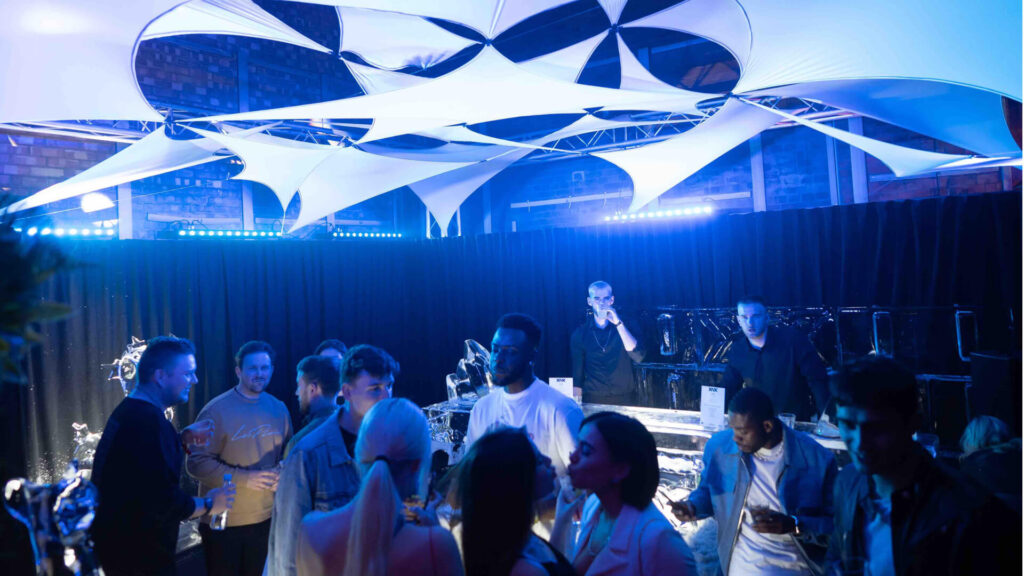
The Sidemen XIX Vodka launch is the reference point here. Branded bars, themed zones, entertainment drawn from the brand’s world – guests were inside the product experience from the moment they walked in. The Sidemen’s audience came expecting spectacle. The product had to deliver it, not just sit alongside it.
That distinction matters. The format works well for Gen Z audiences and social-first brands where the party is the content.
But the product still has to be the reason the party exists. Without that, it’s just a party with a logo on the cup. The same product-first thinking applies to corporate party planning more broadly, whatever the scale.
Create a Virtual or Live-Streamed Product Experience – Same Principles, Different Screen
Can a Product Launch Event Work Virtually?
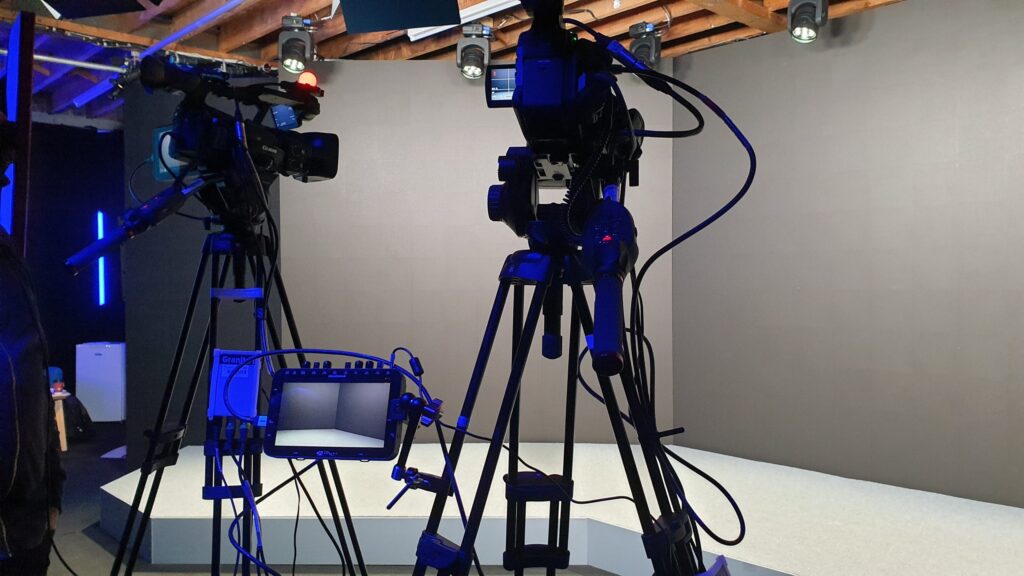
Every principle here applies to a screen. Virtual product launches, live-streamed reveals, studio-based broadcasts, hybrid events connecting a physical room to a remote audience – the medium changes, the fundamentals don’t.
That said, virtual is harder to pull off than most briefs acknowledge. Not technically. Conceptually.
Keeping someone watching a screen requires a reason to keep watching, and most virtual launch formats don’t build that in from the start – they build in the keynote and hope the rest follows. Nobody’s pitching ‘we’ll just stream it’ as a differentiator any more.
A virtual set can be designed around the product just as deliberately as a physical venue. A virtual product launch experience still needs a story, still needs a reveal, still needs something worth waiting for. The screen just makes the gaps more obvious when they’re there.
Real Examples – Three Briefs, Three Different Answers
Three product launch case studies that approached the same question differently:
Red Mix at Tobacco Dock. The brand’s visual identity drove the entire product launch production – 3D projection shows, performer-led entertainment, scenic design all drawn from the same source. A packed guest list. The branding felt integral rather than applied because it was the design language, not a layer placed over it afterwards.
Riot Squad at Vaper Expo. An immersive brand environment where the product’s identity shaped every surface and every visual decision. Not a booth. A world guests walked into. The difference is significant when you’re inside it.
Sidemen XIX Vodka. A launch party format where the product was embedded into every element of the guest experience – branded bars, themed entertainment, a social journey built around introducing the brand rather than formally presenting it. The audience expected spectacle. The product had to earn it.
For a fuller breakdown of how these elements came together, the Homary launch case study is worth reading alongside these.
Making the Product the Reason the Event Exists
The product launch events that earn budget renewal – and get mentioned in the briefings that follow – tend to have one thing in common. The product shaped everything.
Not just the reveal. The concept, the environment, the entertainment, the guest journey, the branding – all of it traceable back to what the product is, who it’s for, the world it belongs in.
The common failure in launch event production is leaving that question until the creative is already locked. That produces good-looking events. Not always ones that justified the spend, and not usually ones that generate the brief for next year.
- A product-led concept agreed before the venue shortlist, not after it
- Entertainment designed from the product brief, not selected for it
- Branding as design language throughout, not repetition at every touchpoint
- A production partner thinking about how the product lives beyond the day
That last point matters more than most briefs acknowledge. What happens the week after the event is where product launches either compound or dissolve.
The brands getting this right aren’t necessarily the ones with the biggest budgets. They came to the brief with better questions – and worked with a team that could answer them across concept, set design, entertainment and delivery without the brief being handed off between four different suppliers.
Julia Charles Event Management has been producing product launch events, brand activations and luxury immersive brand experiences for nearly two decades. Clients have included Netflix, Gymshark, Vodafone and The Sidemen. Concept, production, entertainment and delivery from the same team throughout – not parcelled out at each stage.

- Explore our Product Launch Event Management services
- Discover our Brand Reveal Entertainment
- View our Set and Stage Design services
- Product Launch Event Management
- Brand Reveal Entertainment
- Set and Stage Design
- Event Design
- Venue Styling
- Show-Stopping Luxury Product Launch
- Immersive Brand Experience Trends
- Immersive Retail Experiences
- Inside the Homary Launch
Frequently Asked Questions
Start with the product, not the venue. That’s the bit most briefs get backwards – venue locked, concept follows.When the concept, environment, entertainment and guest journey draw from what the product actually represents, guests experience it rather than observe it. The events worth attending two years later almost always started with a different kind of brief.
Choreographed reveals, performer-led interactions, branded LED shows, projection mapping – the thread running through the ones that actually work is that they communicate something about the product rather than filling time around it.In practice that’s harder to brief than it sounds. Most entertainment gets selected because it looked impressive in someone else’s event. The question worth asking first: what does this entertainment say about what we’re launching?
Its colours, textures, purpose and visual identity all translate into physical design decisions – themed zones, product-inspired installations, sensory details, layouts that echo how the product feels in use.The version that works is when guests sense the room exists because of the product. They probably won’t be able to say why. But they’ll feel it.
Yes. A live-streamed product launch, virtual launch or hybrid format all follow the same principles – a clear product story, production that reflects it, branding that feels integrated, a reveal worth waiting for.What changes is that the screen makes weak points harder to hide. A dull moment in a physical room still has the room. Online, it has a mute button.
Honestly, it depends on what the event has been building towards. A spirits brand might suit something atmospheric and slow – darkness, silence, a single light source. A tech product might land harder with a choreographed LED sequence or an automated set transformation.The mistake is treating the reveal as a standalone moment rather than the answer to a question the event has been asking since the doors opened.
Through the design language rather than repetition. Lighting, colour palettes, materials, performer costumes, drink menus, signage that sits inside the scenic build. The tell is when guests remember the feeling of the room without being able to name the logo. There’s a full guide to how this plays out in the event branding ideas article.
A product launch introduces something new. A brand activation builds engagement around something that already exists. The production, entertainment and guest experience can look identical from the outside.The brief behind them is a different document – and treating them the same way is where most of the wasted budget goes. A more detailed breakdown is in brand activations vs launches.
Get In Touch With Us Today.
With nearly 20 years of Event Management insight, working with world-renowned Clients we'll help you create your Dream Event.
Get in Touch