How To Plan An Event: The 8 Stages
Estimated reading time: 19 minutes
Event planning is the process of turning an objective into a live experience.
It starts with defining what the event needs to achieve. Then comes the budget, the venue, the suppliers, the marketing, and the logistics. Afterwards, you review what worked.
Done properly, it follows a structured sequence rather than a scramble of separate tasks.
That sequence matters. Most event problems are planning problems. Budgets set before goals are agreed. Venues booked before capacity is understood. Suppliers confirmed too late to negotiate on.
This guide breaks the professional event planning process into eight stages. It runs from initial objectives through to post-event evaluation.
Each stage covers what needs to happen, why it matters and what to consider.
It is the same framework our team uses on conferences, brand activations and large-scale productions across the UK and internationally.
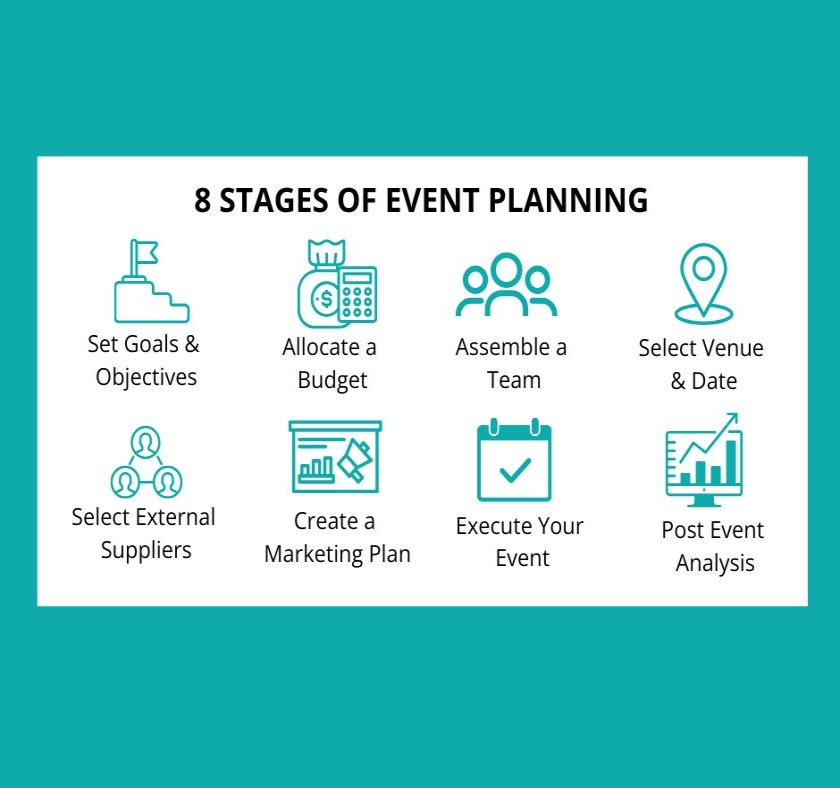
Table of contents
What Is Event Planning?
Event planning is the end-to-end process of researching, organising, coordinating and delivering an event that meets a defined objective.
It runs from the first conversation about what the event is for. Then through budgeting, venue sourcing, supplier selection and marketing.
Three terms get used interchangeably. Separating them makes the process much easier to manage:
- Event planning: The strategic and organisational process: goals, budget, timelines, venue, suppliers, logistics and contingency.
- Event management: The delivery of that plan, including on-site coordination, supplier liaison and real-time problem solving.
- Event production: The technical and creative build: staging, set, lighting, AV, sound and the physical elements your guests actually experience.
On a small internal event, one person may cover all three. On a conference, gala dinner or multi-site activation, they are usually separate disciplines working from the same plan. That is why the plan itself has to be good.
What Is An Event Plan?
An event plan is the working document that holds all of your event planning decisions in one place.
It records what the event is for, what it will cost, who is responsible for what, and what happens when. Everyone involved then works from the same information.
A complete event plan usually covers:
- Objectives and success measures: What the event must achieve, and how you will know whether it did
- Budget: Top-line figure, category breakdown, actual versus estimated tracking, and contingency
- Date and venue: Confirmed dates, signed contract, capacity and restrictions
- Running order: A minute-by-minute schedule covering build, live event and breakdown
- Suppliers: Contracts, arrival times, technical requirements, and insurance
- Roles and responsibilities: Who owns each area before, during and after the event
- Marketing and communications: Pre-event promotion, on-the-day content and guest communications
- Risk and contingency: What could realistically go wrong, and what you will do about it
Keep it in one shared, version-controlled place. The most common cause of confusion on site is simple: two people, two versions of the same running order.
What Are the 8 Stages of Event Planning?
The eight stages of event planning are:
- Determine your goals and objectives
- Set a budget
- Assemble a team
- Choose your date and venue
- Select external suppliers
- Plan your event marketing
- Execute the event
- Conduct a post-event analysis
These eight event planning steps take you from defining the initial objective through to measuring the final results. Each one below ends with an event planning checklist you can work through as you go.
Working through them in this order keeps decisions in the right sequence. You cannot set a realistic budget before you know what the event is for. You cannot brief suppliers properly before you have a venue and a date. Each stage is broken down below.
1. Determine Your Event Goals And Objectives
Every decision that follows – budget, venue, format, entertainment, marketing – depends on the answer to one question: what is this event for?
Define Your Purpose
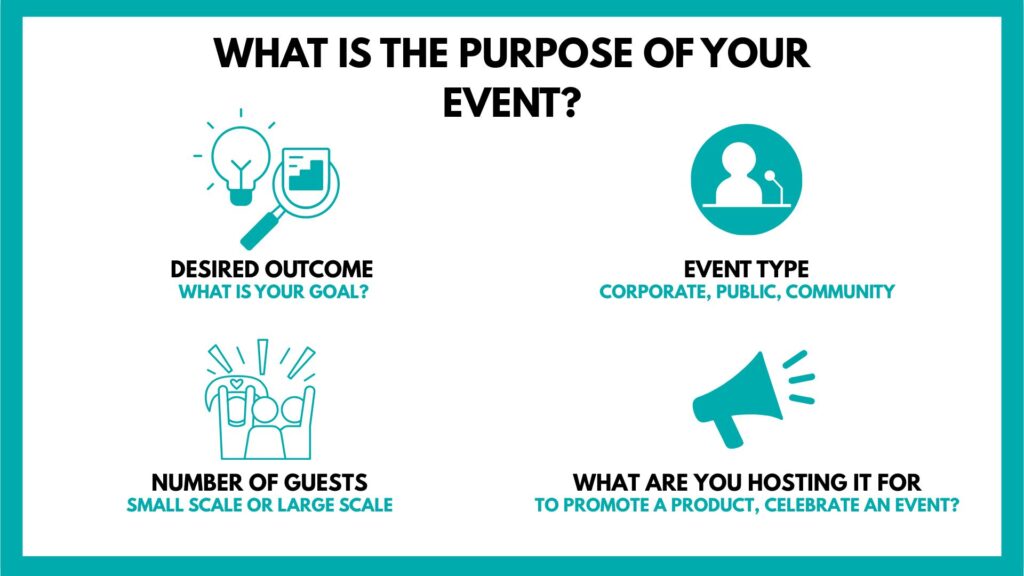
Begin with the most important step in event planning – defining your purpose. Ask yourself:
- Why are you hosting this event?
- What do you want guests to do, feel, or decide as a result?
- How will success be measured – attendance, qualified leads, media coverage, feedback scores, internal engagement?
Vague goals produce vague events. “Raise brand awareness” gives you nothing to design against. “Introduce 200 existing clients to three new product lines and generate 50 follow-up meetings” tells you the format, the guest list, the room layout, and the measurement, all in one sentence.
Set the Foundation: Key Planning Details
The type of event you are hosting affects everything that follows. A product launch is built around a single reveal moment. The room needs to hold attention at one point in the schedule.
A conference is different. It needs sustained energy across a full day, breakout capacity, and a content programme that earns the delegates’ time.
Settle these details before moving on:
Corporate Event Planning Checklist
- ✓ Define the type of event you want to host
- ✓ Estimate the number of attendees
- ✓ Identify your target audience and who needs to be in the room
- ✓ Decide on the event location or venue
- ✓ Set your event dates and timeframe
- ✓ Agree how success will be measured
Align Your Team and Theme with the Vision
Consider a theme for your event early. Do not treat it as decoration added at the end.
A theme decided at the goals stage informs the venue you look for, the venue styling budget, the entertainment brief and the marketing creative. Everything then arrives feeling like one event rather than several.
A strong theme also does something a logo on a banner cannot. It gives guests a reason to stay in the room, to share what they are seeing, and to remember the brand behind it. That is the difference between an audience that attends and one that engages.
Make sure everyone involved understands the goals, objectives and chosen direction. Every later decision is made against them. The whole team needs to be working towards the same vision.
Top Tip: Create a single centralised document or shared board at this stage. Keep every decision in it. It becomes the backbone of your event plan.
2. Set A Budget
With your goals agreed, you can set a budget that supports them. Set it early. Agree it in writing. Build the contingency in from the start rather than finding it later.
Set a Realistic Budget Based on Your Goals
Don’t guess your budget; base it on your goals, objectives, and client expectations. Ask the client key questions such as:
- What type of venue and location do you envision?
- Are there specific VIPs, influencers, or entertainment requirements?
- What level of production, décor, or theming is expected?
- Does anything need to be built, branded, or custom-made?
Once you have these answers, allocate a budget that realistically supports the event’s vision and objectives and ensures ROI.
Track Every Detail with a Clear Budget Plan
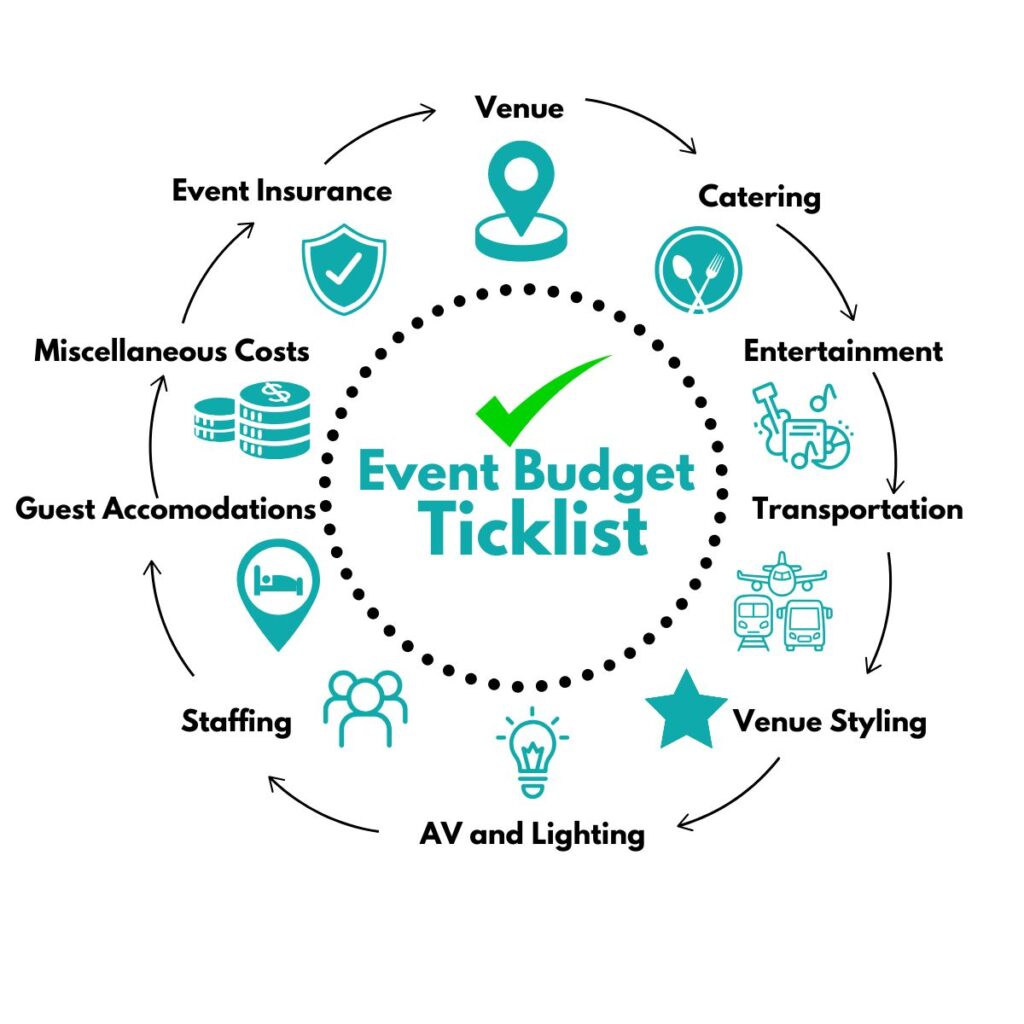
Do your research on every element of your event requirements and ensure they are on your budget list.
Moreover, if you have planned an event previously, then look at the historical spending on these areas. If you do not have historic events to reference, then make sure to get costs from multiple suppliers.
Consider such elements as the extent of your venue styling and technical elements, such as whether you require high-tech branding and entertainment to immerse your guests.
Work From Largest To Smallest
Allocate your largest budget items first. That usually means venue, catering and production. Then work down to lower-priority lines.
These priorities shift depending on the client and the event. A launch event with a modest guest list may spend more on production than on catering.
Planning the budget properly at this stage is what lets you spot overspending while there is still time to correct it. For a fuller breakdown of where budgets typically slip, see our guide to event budgeting pitfalls and their solutions.
Plan for the Unexpected: Build in Contingency
Venues change. Suppliers cancel. Technology fails. No amount of planning removes that risk, so budget for it. Adapting on the day is far easier when the money to do so already exists.
Common contingency calls include:
- Last-minute venue changes
- Additional staffing
- Weather cover for outdoor elements
- Technical failures and replacement kit
- Supplier drop-outs
Consider allowing a contingency buffer for them, often around 10–15% depending on the event and how much of it is weather-dependent or technically complex.
Event Budget Checklist
- Ask about venue type & location
- VIPs, influencers, entertainment
- Production, décor, theming
- Allocate funds to support vision & ROI
- Research all event elements
- Reference past events or get multiple quotes
- Include immersive experiences & high-tech elements
- Start with largest items (venue, catering) → smaller items
- Adjust based on client priorities
- Monitor early to avoid overspending
- Top-line budget → break down by category (venue, catering, staff, production…)
- Track actual vs estimated costs with a spreadsheet or budget tracker
- Contingencies: venue changes, extra staff, weather, technical problems, supplier issues
- Allow a contingency buffer, often around 10–15%
3. Assemble A Team
A good plan delivered by the wrong team still fails. Whether you are working independently or as part of an agency, agree who is responsible for what. Do it long before anyone arrives on site.
Team size varies enormously. A 60-person internal away day may need three people. A large-scale conference can need dozens, across registration, production, hospitality and floor management.
What matters is not headcount but coverage. Every area of the event needs a named owner.
Before anything else:
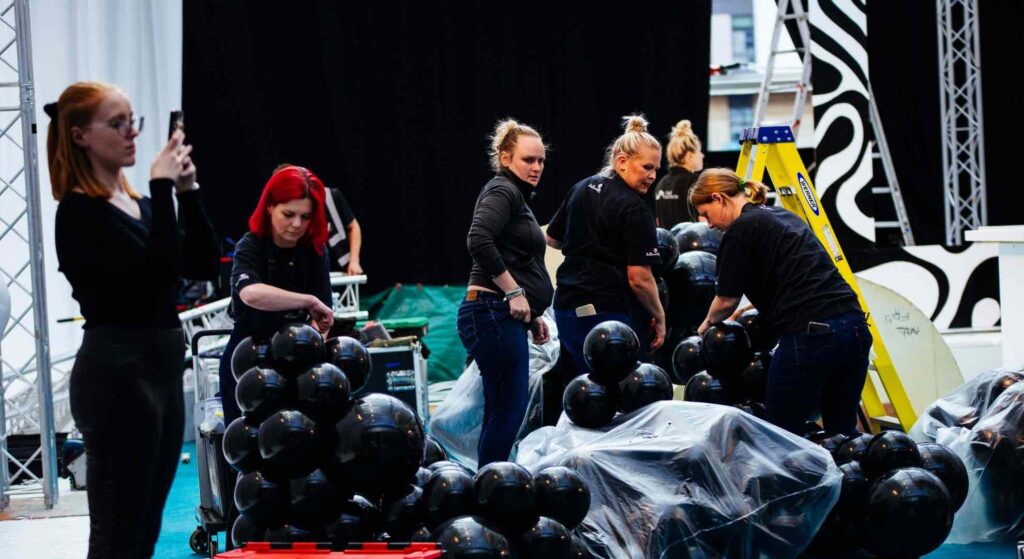
- Create a roles and responsibilities matrix so everyone knows their tasks before, during and after the event.
- Hold a kick-off meeting to align the team on timelines, goals and expectations.
- Use printed lanyards or badges showing names, roles and contact numbers for easy on-site coordination.
Roles worth assigning on most corporate events:
- Project manager or event lead
- Creative concept designer
- Build lead
- Marketing and communications
- Registration and floor staff
- Running order owner
The same principle applies to external parties. Our team works with a network of suppliers we have used for years. On a live event, you are relying on people to solve problems without being asked. That trust is built over multiple events. It is not selected from a search result the week before.
If you are weighing up internal delivery against external support, our guide on why to book an event management company for a corporate event covers the trade-offs in more detail.
4. Choose Date(s) And Venue(s)
Choosing the right date and venue is crucial. A good event manager knows popular venues book up fast.
When event planning, choosing the right date for your event and venue space are two crucial elements.
These two factors will have a major impact on all event planning stages, so get them locked down quickly.
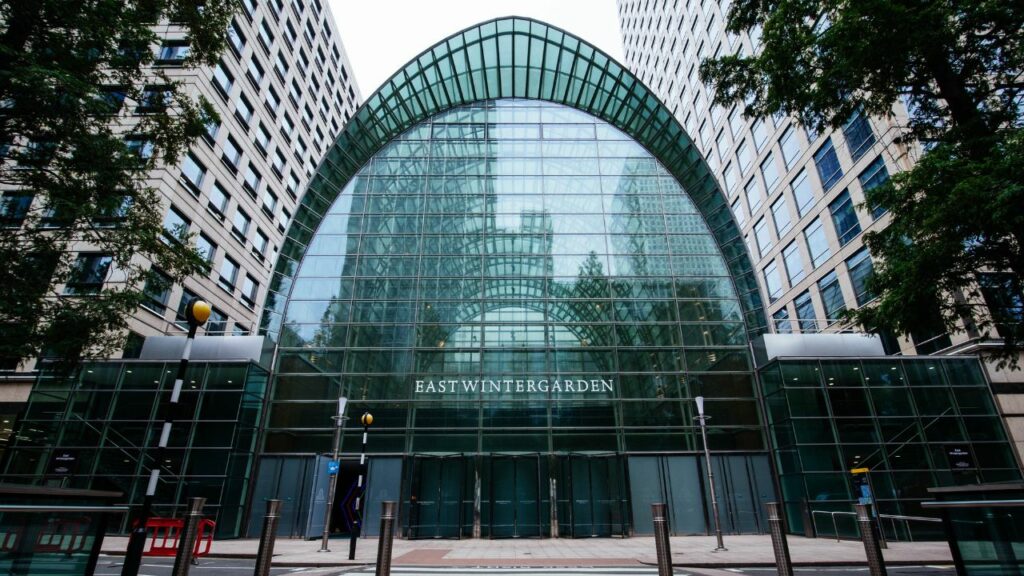
Venue finding is the first thing our team does on a new brief. Good event spaces book up fast. Enquire early. And if you possibly can, keep some flexibility on dates as it is the single biggest lever you have on both availability and price.
Timing to be aware of:
Summer brings competition for outdoor and terrace space. Weather contingency becomes a budget line rather than an afterthought.
November and December book furthest ahead, driven by the festive season. December event bookings frequently happen a year in advance.
January to February and September to October are peak conference periods, so venues with breakout capacity go early.
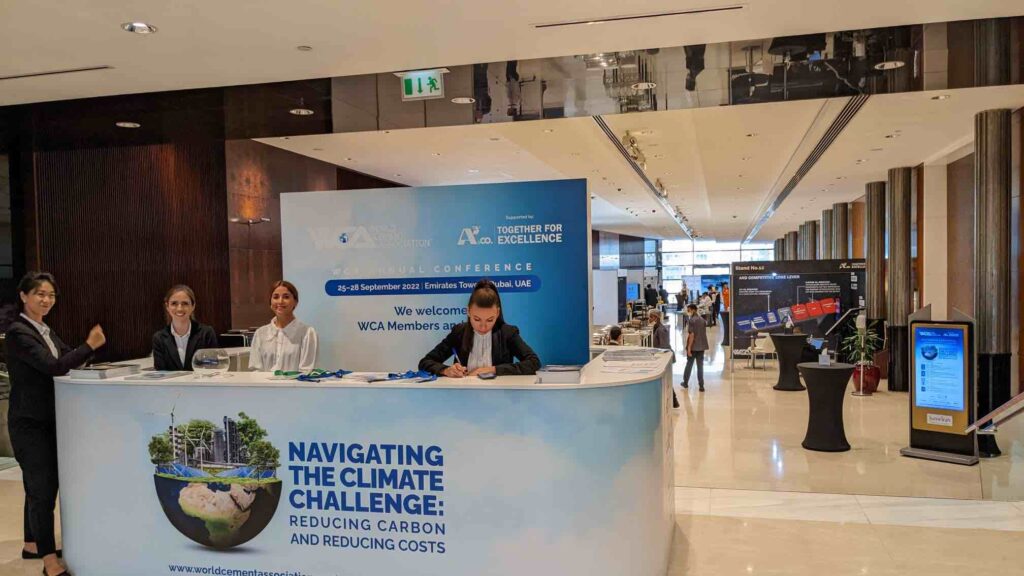
Venue & Logistics Considerations
- If your event runs late, be aware of the venue’s noise restrictions and any limits on how long you can stay.
- If you need staging, consider where it will go and how many power points are available.
- Think about guest transport—will you need coaches or other arrangements to bring everyone to the venue?
- Check if there is space in the car park for larger vehicles like coaches.
- Check load-in access, lift dimensions and whether there are restricted hours for build and derig. Confirm what happens if numbers change after contracting.
Top tip: When venue finding, go with the exact specifications of your event in mind for easy liaising.
Top Questions to Ask the Venue Manager
Be prepared when vetting a potential venue for a client. Check off each item as you go:
- ☐ Is my date available, and what is the hold period?
- ☐ What is the venue capacity?
- ☐ What is included in the rental fee?
- ☐ Are there any restrictions on decorating the venue?
- ☐ Can we install lighting, sound and staging as we please?
- ☐ Does the venue have disability access?
- ☐ What are the parking and transportation options?
- ☐ Do you provide on-site staff or do we need to provide our own?
- ☐ Can we outsource suppliers?
- ☐ What is your cancellation or rescheduling policy?
- ☐ What are the access and derig times?
Sustainable Venue Finding
Sustainability is now a standard requirement on most corporate briefs, not a nice-to-have. Choosing an eco-friendly venue reduces the environmental impact of your event. It can also lower costs in waste and energy.
Key Green Features to Look for in Venues
- ✓ Energy-efficient lighting
- ✓ Waste reduction programs
- ✓ Water saving technologies
- ✓ Green certifications such as ISO 14001
- ✓ Solar panels
- ✓ Prioritisation of locally sourced materials
- ✓ Waste recycling services
Looking to learn more? Check out our guide on how to run a sustainable conference.
5. Select External Suppliers
With a venue and date confirmed, you can brief suppliers properly. You now know the space, the access times, and the technical constraints they need to work within.
Some of the suppliers you may want to consider booking for your event could include:
- Catering
- Staging, Lighting and AV
- Venue Styling
- Entertainment
- Bespoke Builds/ Branded Signage etc
- Guest Speakers
- Event Theming & Prop Hire
External Supplier Checklist
- ✓ Gather at least 3 quotes per supplier type (AV, catering, security, etc.) to compare fairly
- ✓ Request references and photos of previous events to verify quality
- ✓ Document key points of contact for easy communication
- ✓ Confirm arrival and departure times, including setup and breakdown windows
- ✓ Clarify access needs (loading docks, lifts, restricted areas)
- ✓ Verify payment terms and invoicing requirements
- ✓ Check all necessary certificates, licenses, and insurance coverage
- ✓ Confirm any equipment or technical requirements in advance
- ✓ Note cancellation or contingency policies for last-minute changes
Here is one thing most people skip. Put every supplier’s arrival time into a single schedule. Then check it against the venue’s access window. Two suppliers at the same loading bay at the same time is one of the most common build-day problems. It is also one of the most avoidable.
If you would rather not coordinate this yourself, an agency can take on the whole supply chain. That runs from event production and custom builds through to entertainment.
6. Plan Event Marketing
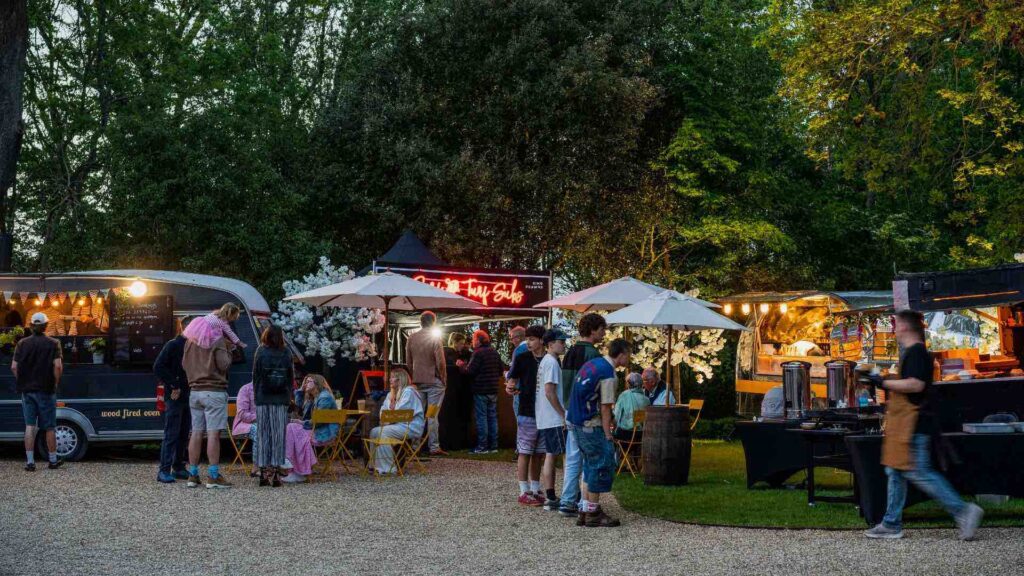
Marketing determines whether the right people are in the room. Plan it in two halves. The build-up that drives attendance, and the on-the-day activity that turns the event into content.
Event Marketing Checklist
- ✓ Define your target audience and key messaging
- ✓ Plan pre-event marketing to build anticipation
- ✓ Develop on-the-day marketing: hashtags, social sharing, live updates
- ✓ Use multiple channels: email campaigns, social media, influencer marketing
- ✓ Consider press, newsletters, and billboard marketing for wider reach
- ✓ Evaluate effectiveness post-event to improve future strategies
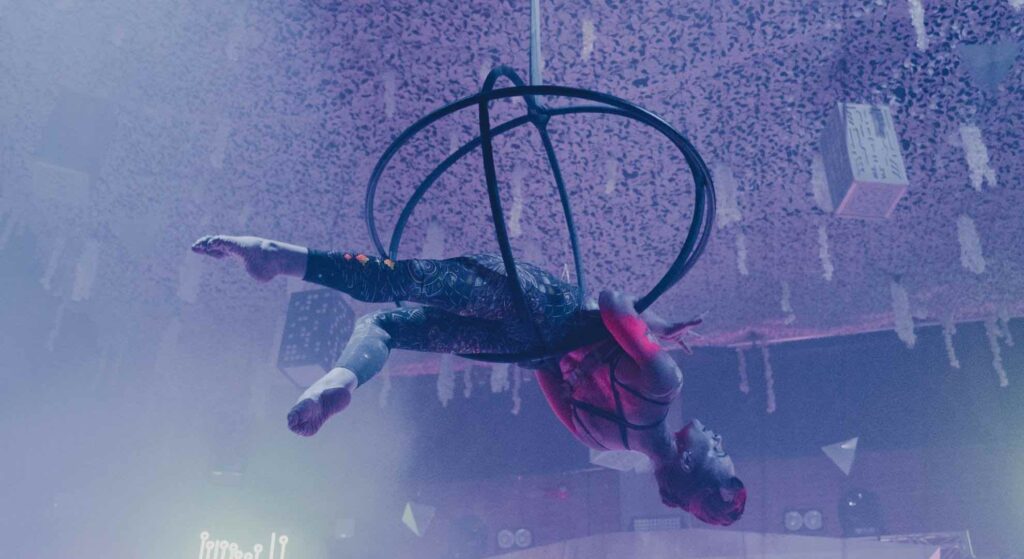
The on-the-day element is often underestimated. Build moments into the event that guests want to photograph and share— a striking entertainment piece, a branded installation, a reveal. The audience then does a meaningful share of your marketing for you.
7. Execute Your Event
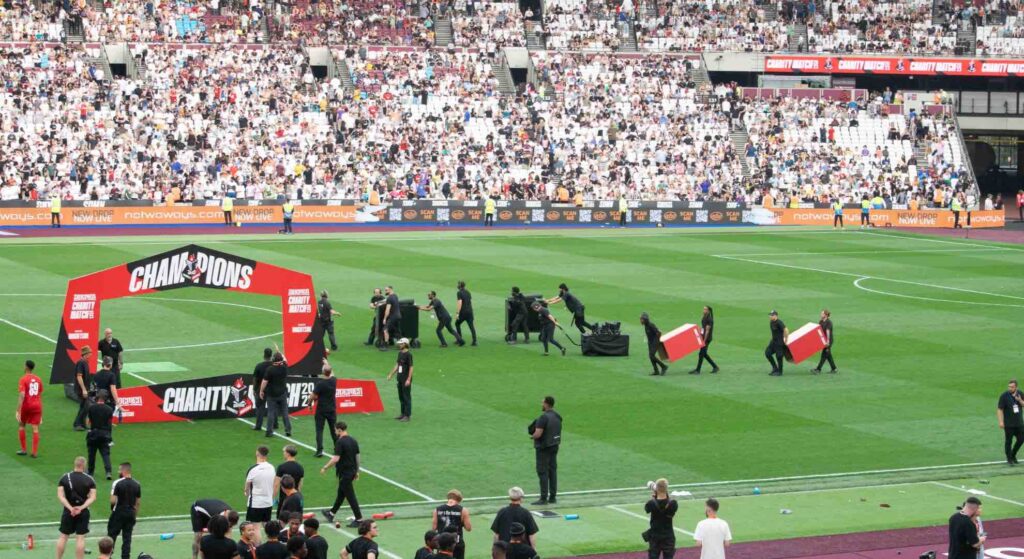
This is where the planning pays off. The goal on the day is simple. Nobody should have to make a decision that could have been made weeks earlier.
The foundation is a minute-by-minute run sheet covering build, live event, and derig. Distribute it to everyone involved. Know who is arriving, when, and what they need on arrival. Build slack into the schedule too, because something will run late.
Day-of Event Checklist
- ✓ Create a minute-by-minute run sheet and distribute to all staff
- ✓ Hold a briefing meeting to review responsibilities and contingency plans
- ✓ Allocate extra time for set builds, tech tests, and rehearsals
- ✓ Prepare a physical event kit (tape, scissors, markers, signage, first aid, snacks)
- ✓ Assign a team member to handle real-time issues like weather or technical delays
- ✓ Ensure all team members understand their roles and expectations
On larger live events, communication is what holds the day together. Make sure everyone can reach one another. Make sure the team knows the key on-site contacts they may need at short notice – venue duty manager, cleaners, first aiders, security.
8. Conduct Post-Event Analysis
Auditing your event is as important as planning it. It shows what worked. It highlights what needs refining. And it gives you the evidence to justify the next budget.
Review performance against the objectives you set in stage one, not a generic list of metrics. If the goal was 50 follow-up meetings, attendance figures alone do not answer the question.
Post-Event Analysis Checklist
- ✓ Review attendance numbers against targets
- ✓ Measure social media engagement and hashtag usage
- ✓ Track food and beverage consumption
- ✓ Analyse technology data (e.g., QR code scans, app interactions)
- ✓ Evaluate website traffic driven by the event
- ✓ Assess attendee dwell time in different areas of the event
- ✓ Gather guest feedback while the event is fresh – within 48 hours
- ✓ Debrief the team and suppliers on what to change next time
- ✓ Record final costs against budget for future planning
Capture it all in one place. Two events in, that record becomes the most useful measure of how your events are performing that you have.
When Should You Hire a Professional Event Planning Company?
Hire a professional event planning company when the event carries commercial risk, involves multiple suppliers or requires technical production. The same applies when it has to be delivered alongside a team’s existing full-time job.
More specifically, it is usually worth outsourcing when:
- The guest list includes clients, press or senior stakeholders and the event has to land
- You need staging, lighting, AV or a custom build
- The event runs across multiple days, sites or countries
- Nobody internally has time to manage suppliers alongside their day job
- Something has gone wrong at a previous event, and the format needs rethinking
What an agency adds is not simply extra hands. It is a supplier network with tested pricing. It is technical judgement about what a space can take. And it is the experience to spot a problem in the plan before it becomes a problem on site.
Our event management team can take on the entire process. That covers planning, creative, venue finding, suppliers, production, delivery and post-event reporting. Or we work alongside your team on the parts you need covered. You can see the range of work in our case studies.
With a range of exceptional services, we’re here to help you put on an amazing event from planning to production to management.
Event Planning in 2026: Challenges and Trends
The eight stages do not change from year to year. What changes is the environment you are planning in. These are the pressures worth accounting for at the budget and briefing stage.
The Challenges Shaping Event Planning in 2026
- Budget pressure: EventsAir surveyed over 380 event professionals for its 2026 industry report. 61.9% named budget constraints among their top challenges, and close to 60% expect flat or reduced budgets. In practice, that means fewer, more focused events rather than smaller versions of the same thing.
- Engagement: The same research found 39% of planners still cite attendee engagement as a top challenge – a reminder that passive formats and long keynote blocks no longer hold a room.
- Staffing and workload: Leaner teams are absorbing more scope. That makes stage three – clear roles and responsibilities – more important, not less.
- Technology reliability: Events now depend on registration platforms, apps and event technology. Your contingency plan needs to cover what happens when one of them fails.
- Sustainability expectations: Waste reduction, recyclable materials and eco-certified venues are now standard requirements on corporate briefs rather than differentiators.
Event Planning Trends to Build Into Your Plan
- Hybrid and inclusive formats are used deliberately – to extend reach or content life – rather than by default.
- Personalisation is expected, from tailored agendas to smart badging and data-led content.
- Wellness provision – quiet zones, better menus, movement built into long agendas – is increasingly standard on multi-day events.
- Sustainable delivery through zero-waste initiatives, carbon tracking and reusable set elements.
- Outdoor and smaller-scale events continue to grow. Experiential micro-events deliver strong returns on modest budgets.
- AI and emerging technology in planning, personalisation and entertainment. The strongest results come where it supports the experience rather than becoming it.
For a longer view on where conference formats are heading, see our guide to the future of conferences.
Book Your Expert Event Planner
Event planning rewards structure. Work through the eight stages in order: goals, budget, team, venue, suppliers, marketing, delivery, analysis.
Do that, and you give yourself the best possible chance of an event that achieves what it set out to, on budget and without last-minute compromise.
If you would rather hand that process to a team who does it every week, we can help. Julia Charles Event Management is a Milton Keynes-based event management company planning and delivering corporate events across the UK and internationally. That runs from conferences and gala dinners to brand activations and large-scale productions. All backed by a supplier network built over nearly two decades.
Tell us what you are planning, and we will tell you what it takes.
Get In Touch With Our Event Planning Team
Related Services:
Related Readings:
- What Does An Event Manager Do?
- How To Host An Event: Top Tips
- Challenges Event Planners Face And How To Avoid Them
- Why Book An Events Agency?
- The Differences Between Event Management and Event Production
- What Is The Role Of Event Management Companies?
- How To Manage Multi-Location Events
- Why Book An Event Management Company For Your Corporate Event
Get In Touch With Us Today.
With nearly 20 years of Event Management insight, working with world-renowned Clients we'll help you create your Dream Event.
Get in Touch