How to Simplify Corporate Event Procurement with a Full-Service Event Agency

Planning a corporate event is challenging enough without spending days raising purchase orders, chasing invoices and coordinating a dozen different suppliers. If your procurement process feels like it’s taking over your event planning, you’re not alone.
Procurement processes exist for good reason. They protect budgets, manage risks and keep the expenditure accountable. Nobody is arguing with that. But when a single conference needs ten separate suppliers, those sensible rules multiply into something that swallows your working week.
The good news? There’s a simpler way to manage complex events without compromising on quality or control. In this guide, we’ll look at why event procurement gets so complicated, what it really costs you, and how a full-service event agency turns ten supplier relationships into one.
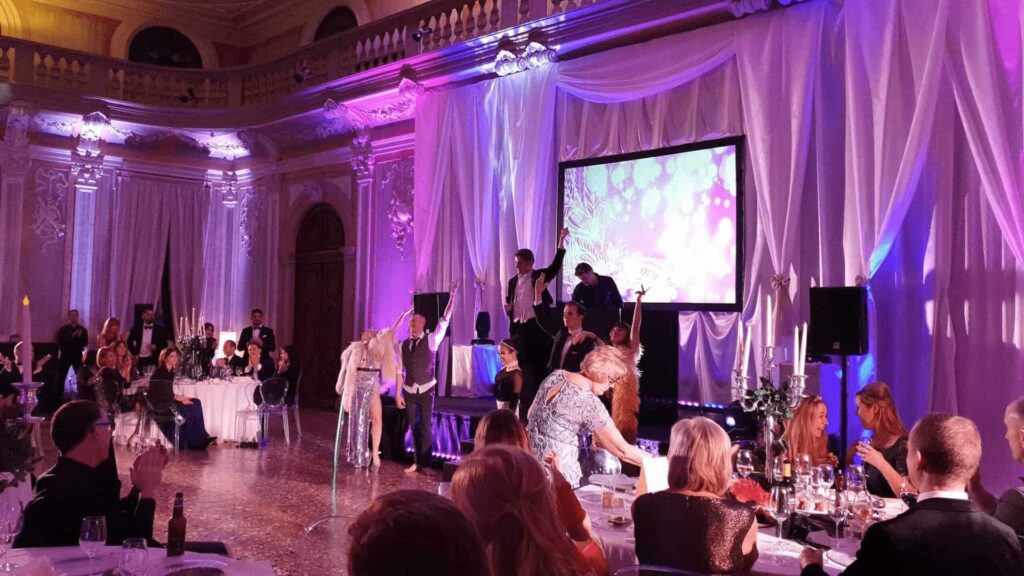
Table of contents
- Why Does Corporate Event Procurement Get So Complicated?
- The Hidden Cost of Event Admin Isn’t Just Money
- How Does a Full-Service Event Agency Simplify Procurement?
- What Does Working With One Agency Actually Look Like?
- Is a Full-Service Agency Right for Every Event?
- Focus on the Event, Not the Paperwork
- Corporate Event Procurement: Frequently Asked Questions
Why Does Corporate Event Procurement Get So Complicated?
Corporate event procurement gets complicated because procurement processes often require a separate purchase order for each directly contracted supplier. And a typical corporate event involves far more suppliers than most people realise.
Count them for an average conference or awards dinner:
- Venue hire
- Furniture hire
- Catering
- AV and Lighting
- Production
- Photography and videography
- Entertainment
- Registration and guest management
- Transport
- Accommodation
That’s ten suppliers before you’ve booked a florist. And each one triggers the full procurement cycle: a new supplier onboarding form, an approved supplier list application, insurance documents, bank detail verification, a purchase order request, budget-holder sign-off, and eventually an invoice that needs matching back to the right PO.
Now consider how those suppliers invoice. Many ask for a deposit up front and a balance after delivery. Across ten suppliers, that can mean around twenty invoices. Each arrives on its own payment terms, spread over a four-month planning window.
Here’s the part that rarely gets said out loud: many of the best event suppliers (particularly entertainers and specialist acts) are small businesses or sole traders. Smaller suppliers and sole traders may be less accustomed to enterprise onboarding systems. The internal event team often ends up supporting the process.

The Hidden Cost of Event Admin Isn’t Just Money
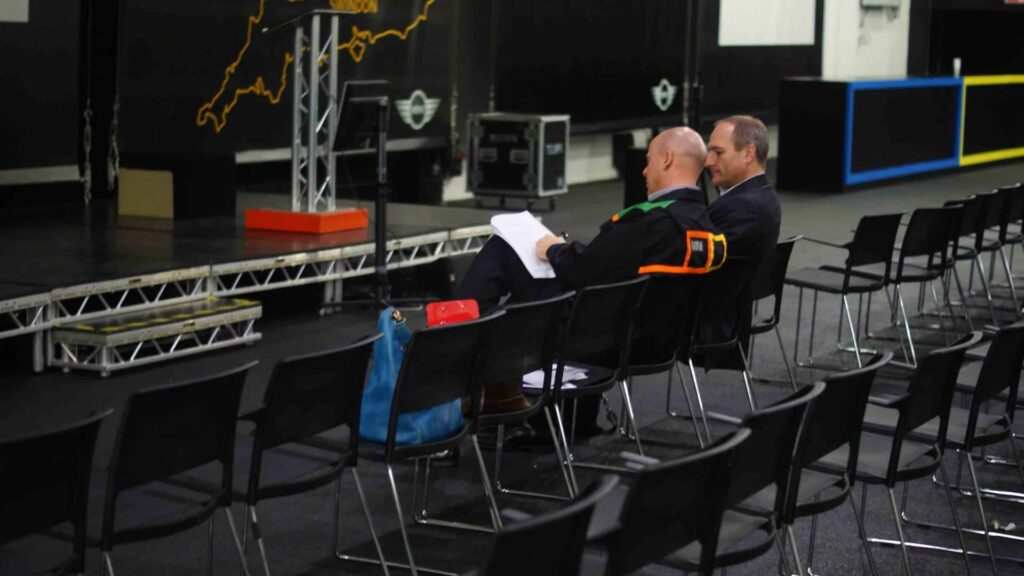
The hidden cost of event administration isn’t just money, but it’s your time, your focus, and occasionally, your event itself.
According to the CIPS Global State of Procurement & Supply 2026, the UK and Ireland have adopted procurement automation less than any other region surveyed. In practice, that means much of the paperwork behind your event is still being handled by people, one form and one approval at a time. Multiply that by twenty supplier invoices across a four-month planning window and the arithmetic gets uncomfortable. The person absorbing most of it is usually you.
But the calendar is only part of it. Consider what else stacks up:
You Become an Unpaid Accounts Administrator
Chasing PO numbers, forwarding remittances, and explaining to finance why the AV quote changed is not what event managers are hired to do. To know more, read about the challenges faced by event managers around the globe.
Suppliers Chase You, Not Finance
When a deposit sits unpaid for three weeks, it’s your phone that rings. And it’s your relationship with that supplier (the one you’ll rely on at 7 am on event day) that takes the strain.
Unpaid Deposits Put Bookings at Risk
In-demand venues and acts won’t hold a date indefinitely. A PO stuck in an approval chain can quietly cost you your first-choice supplier.
Every Change Multiplies
Guest numbers shift, and suddenly the catering, furniture, transport and venue POs all need amending, each through its own approval loop.
Errors Creep in
Twenty invoices against ten POs on differing terms is exactly the environment where duplicates, mismatches and missed payments happen.
The result is a strange inversion: planning the event becomes secondary to managing the paperwork about the event.
How Does a Full-Service Event Agency Simplify Procurement?
A full-service event agency simplifies procurement by acting as a single supplier. Instead of onboarding, instructing and paying ten or twenty separate vendors, your organisation deals with one experienced partner. Depending on your procurement structure, this can reduce the process to one quotation, one purchase order and one point of contact. In many cases, it also means a single consolidated invoice.
Everything your event needs still happens. The venue is still booked, the production is still built, the entertainment is still show-stopping. What changes is who carries the administrative weight.
One Quotation and One Purchase Order
You receive a single itemised quotation covering every element of the event. Your procurement team raises one PO against one approved supplier. One onboarding process. One set of insurance documents. One approval chain, instead of ten running in parallel.
One Project Manager and One Point of Contact
Rather than fielding calls from a dozen vendors, you speak to one dedicated project manager who coordinates all of them. Questions, changes and problems flow through a single person who already knows your event inside out.
Consolidated Logistics and Coordination
Load-in schedules, site visits, supplier contracts, insurance and compliance checks – the agency manages the vendor chain behind the scenes. When your guest numbers change, you make one phone call, not six.
Clear Accountability
With multiple suppliers, problems fall into the gaps between them. The caterer blames the venue’s kitchen; the AV company blames the venue’s power supply. With one agency, there is clearer accountability. One partner is responsible for the event as a whole, and for resolving anything that goes wrong. It’s worth asking exactly where that accountability sits when you’re choosing an event agency.

What Does Working With One Agency Actually Look Like?
Working with one full-service agency can follow a much shorter procurement path. Depending on how your organisation contracts the work, the process from your side of the desk can look like this:
- One brief – you share your objectives, audience, budget and dates once, not ten times to ten vendors.
- One quotation through procurement – the agency returns a single itemised proposal your finance team can review, question and approve as one document.
- One supplier onboarding – the agency joins your approved supplier list once, with one set of due-diligence documents.
- One PO, one approval chain – a single purchase order can cover the event. Deposits and balances then follow one agreed payment schedule.
- The agency manages the vendor chain – sub-suppliers are contracted, instructed, scheduled and paid by the agency. Your internal team does not manage each supplier relationship individually.
- One point of reporting – budget updates, change confirmations and the post-event reconciliation arrive from one source, in one format.
Nothing is lost along the way. Your finance team keeps the same control, the same audit trail and the same oversight, delivered through one supplier relationship rather than ten.
Is a Full-Service Agency Right for Every Event?
No. A full-service agency isn’t necessary for every event.
A small internal meeting with a room booking and a lunch order involves one or two suppliers. Your existing process handles that perfectly well, and adding an agency would introduce a layer you don’t need.
The value of consolidated delivery grows with complexity. The events that benefit most are the ones where the supplier count climbs:
- Conferences and multi-day corporate events
- Exhibitions and trade show activations
- Awards dinners and gala evenings
- Christmas parties and large seasonal events
- Product launches and brand experiences with full production
Our Xero company conference shows what that looks like at scale. One brief covered the lot: venue finding, accommodation and worldwide travel for 300+ staff, zero-waste catering, staging, lighting and AV, venue dressing, delegate management, a guest speaker, team building and photography. Sourced individually, that’s ten supplier relationships and ten purchase orders. Xero briefed one team.
Focus on the Event, Not the Paperwork
Your procurement process isn’t the enemy. It’s there to protect your organisation, and at Julia Charles Event Management, we work with it rather than around it.
What changes is where your hours go. No more raising purchase orders, onboarding sole traders or chasing invoice queries. Your team gets to focus on the things that actually determine whether an event succeeds: attendee experience, stakeholder engagement and your event objectives.
One supplier relationship. One point of contact. One team accountable for the whole event. And one event your guests will remember for the right reasons.
Ready to simplify your next event? Talk to our team about consolidated, full-service event delivery, or read more about our corporate event management service.


Related Services
- Event Production
- Event Lighting and AV
- Corporate Event Management
- Venue Finding
- Conference Organisers
- Company Fun Days
- Corporate Event Entertainment
Related Readings
- Top 10 Questions To Ask Your Events Agency Before Booking a Conference
- Opus Energy Conference (case study)
- WCA Conference Dubai (case study)
- How To Choose The Perfect Corporate Stage Setup
- Why Book An Event Management Company For Your Corporate Event
- What Is The Role Of Event Management Companies?
Corporate Event Procurement: Frequently Asked Questions
Not necessarily on supplier cost alone. An agency’s management fee is visible. The cost of your team’s time spent on supplier admin usually isn’t. The value more often comes from reduced administration, consolidated management and internal time saved. Compare on total cost rather than headline price.
A genuine full-service agency can deliver every element of a corporate event: venue finding, production, AV, catering coordination, entertainment, theming, photography, transport and guest management under a single contract.
Procurement teams typically onboard the agency as a single approved supplier, then raise one purchase order per event against an itemised quotation.
The easiest way to organise a corporate event is to reduce the number of moving parts you personally manage. Define clear objectives, set a realistic budget, and appoint a single full-service partner to coordinate suppliers, logistics and production.
Event procurement is time-consuming because each supplier multiplies the administration: separate onboarding, separate purchase orders, separate invoices on separate payment terms, and separate approval chains.
Reduce the number of suppliers you contract directly. Consolidating delivery through one agency means a single brief, a single quotation and a single approval chain. You avoid repeating onboarding, purchase orders and invoice queries for every supplier involved
Get In Touch With Us Today.
With nearly 20 years of Event Management insight, working with world-renowned Clients we'll help you create your Dream Event.
Get in Touch