Bespoke Venue Styling: How to Transform a Venue Around Your Event
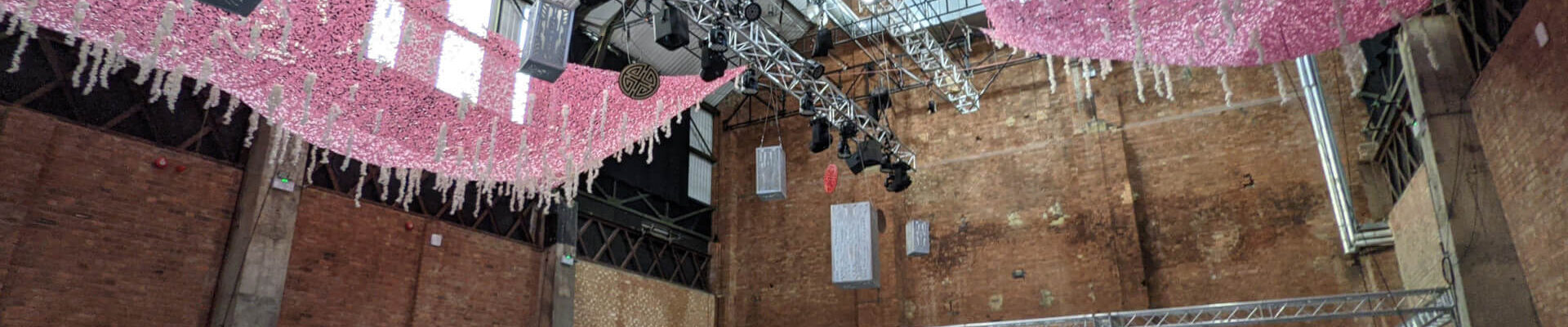
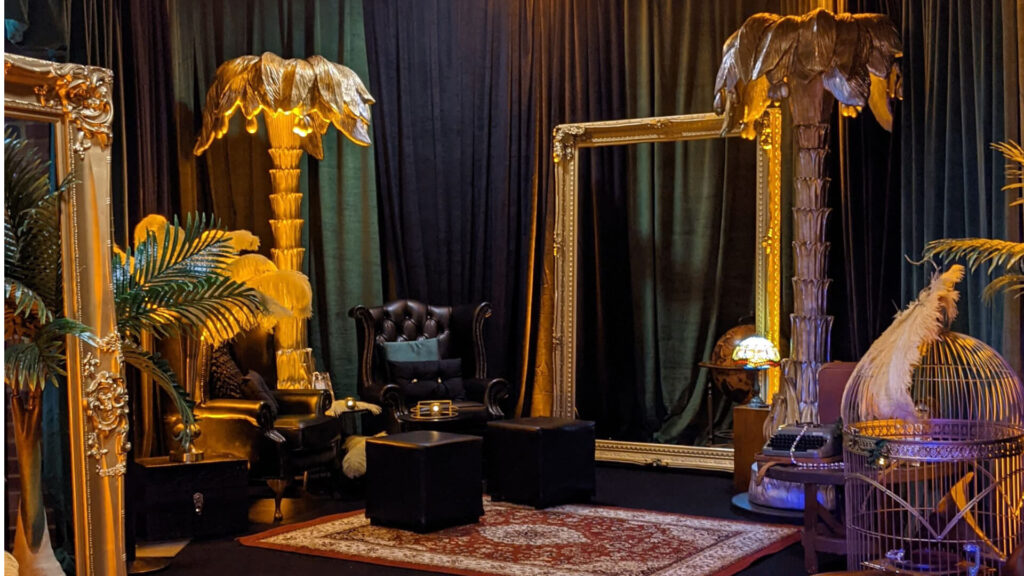
Bespoke venue styling is the design of a venue around one specific event, rather than dressing it from ready-made décor packages or a list of hire items.
It can cover colour, furniture and centrepieces. It can also stretch to custom sets, structures, lighting, staging, immersive installations and entertainment.
Two rooms can use the same chairs and feel nothing alike. One has been decorated. The other has been designed.
This guide covers what bespoke venue styling involves, how it differs from décor hire, and how a bespoke venue transformation comes together from the first brief to the final install.
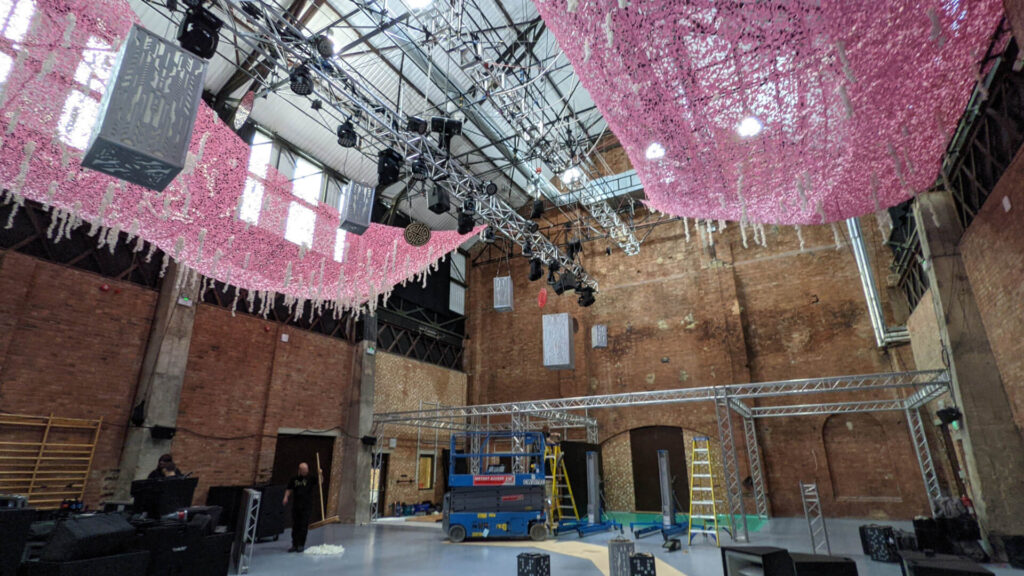
Table of contents
- What Is Bespoke Venue Styling?
- What Is the Difference Between Venue Styling and Venue Dressing?
- What Can Be Customised When Styling a Venue?
- How Do You Transform a Venue Around an Event Theme?
- Can Venue Styling Be Designed Around a Brand?
- Can Entertainment Be Designed to Match the Venue?
- What Types of Events Benefit From Bespoke Venue Styling?
- Why Use an Event Management Company for Bespoke Venue Styling?
- How Does a Bespoke Venue Transformation Come Together?
- Creating a Bespoke Venue With Julia Charles Event Management
- Related Blogs
- Bespoke Venue Styling FAQs
What Is Bespoke Venue Styling?
Bespoke venue styling is the design of a venue’s look, layout and atmosphere around one specific event, rather than a set of ready-made décor packages. It begins with the experience the event needs to create, then works out how the whole space should look, feel and function, from colour and furniture to custom sets, lighting and entertainment.
That starting point is the real difference. A décor list begins with items. A bespoke brief begins with how the room should feel.
Custom venue styling works backwards from that feeling. The entrance, the layout, the ceiling and the lighting each get tested against the concept before anything is ordered.
Professional venue styling also has to work in the actual building. Access routes, power, ceiling height and guest flow all limit what’s possible, so the venue gets assessed before the design is fixed.
At Julia Charles Event Management, bespoke event design and venue styling run as one process. Our in-house event design team develops the concept, and the same plan carries it through styling, build and installation.
Bespoke event design establishes the creative direction, venue styling brings it into the space, and event production delivers the finished transformation.
What Is the Difference Between Venue Styling and Venue Dressing?
Venue dressing selects decorative elements for an existing space. Venue styling coordinates those elements into one visual concept. A bespoke venue transformation designs the whole environment around a specific idea, using custom fabrication, sets, structures, production, lighting and entertainment.
| Approach | What it involves | Suits an event when |
| Venue dressing (décor hire) | Selecting decorative elements for an existing space, such as draping, furniture or centrepieces | The room is already right and just needs dressing |
| Venue styling | Coordinating several elements into one consistent visual concept | The event needs a clear, unified look |
| Bespoke venue transformation | Designing the environment around a concept, with custom fabrication, sets, structures, production, lighting and entertainment | The room itself should become part of the story |
None of the three is better than the others. They answer different briefs.
A summer drinks reception may only need good draping and a handful of well-chosen pieces. A themed party for 190 guests needs something much bigger.
Corporate events often sit in the middle, with a coordinated look and a few subtle installations rather than a full theme. That’s venue styling doing its job.
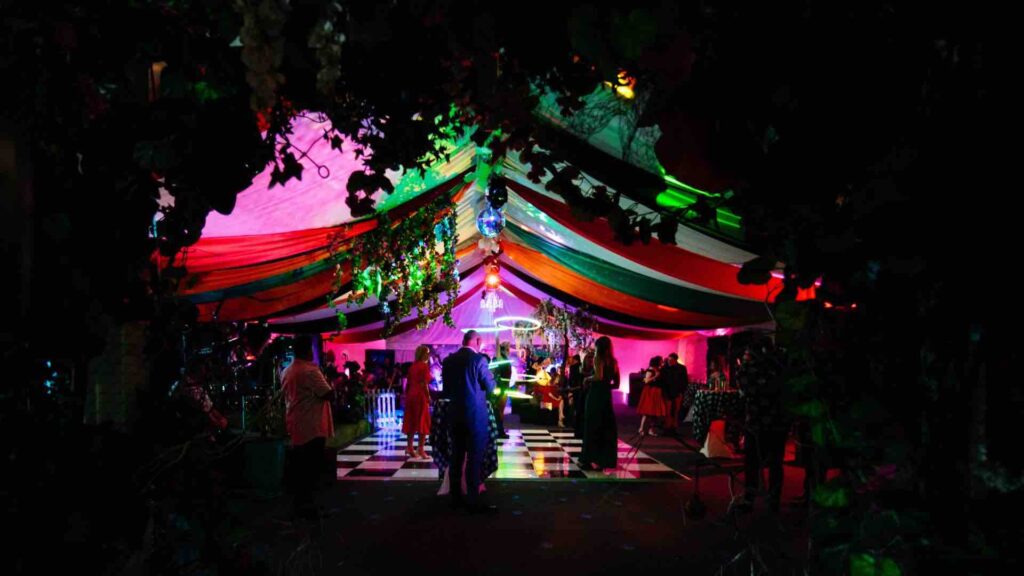
Our Twisted Alice in Wonderland party at the Conrad Hotel sat at the far end of the spectrum. We created the concept from scratch for 190 guests, built a custom tunnel entrance, and delivered the full set design, AV and themed entertainment.
The team arrived at 8am to build the set and finish the transformation. It was a complex build in an awkward, logistically tricky space, which is where planning earns its keep.
For more on how far a single room can be pushed, see our guides to creative event space ideas and transforming nightclubs for Halloween.
What Can Be Customised When Styling a Venue?
Almost everything guests see, hear or walk through can be customised, as long as it’s designed as one environment rather than bought as a list. Our venue styling pages cover the building blocks.
What can be customised at the entrance and arrival?
Arrival is the first thing guests judge. A custom tunnel, scenic arch or reveal moment tells them what kind of event they’ve walked into before anyone has handed them a drink.
Signage and branding belong here too. They work best designed into the entrance rather than stuck beside it.
Which sets, staging and installations can be built to order?
Custom sets and scenic elements carry the concept into the room. We draw them up in CAD first, so the design is settled before the build starts.
Staging gets the same treatment, designed around the event instead of hired in as a generic platform. Installations work the same way. Fully immersive environments, where scenery, sound and performers surround guests, sit at the far end of the range.
How far can furniture, bars, tables and draping go?
Furniture, bars and table centrepieces can all be specified to match the concept. They’re the elements guests interact with most directly, so they matter more than they look on a plan.
Draping changes a room’s proportions as well as its colour. Our venue draping guide shows what’s possible.
What do lighting and ceilings add?
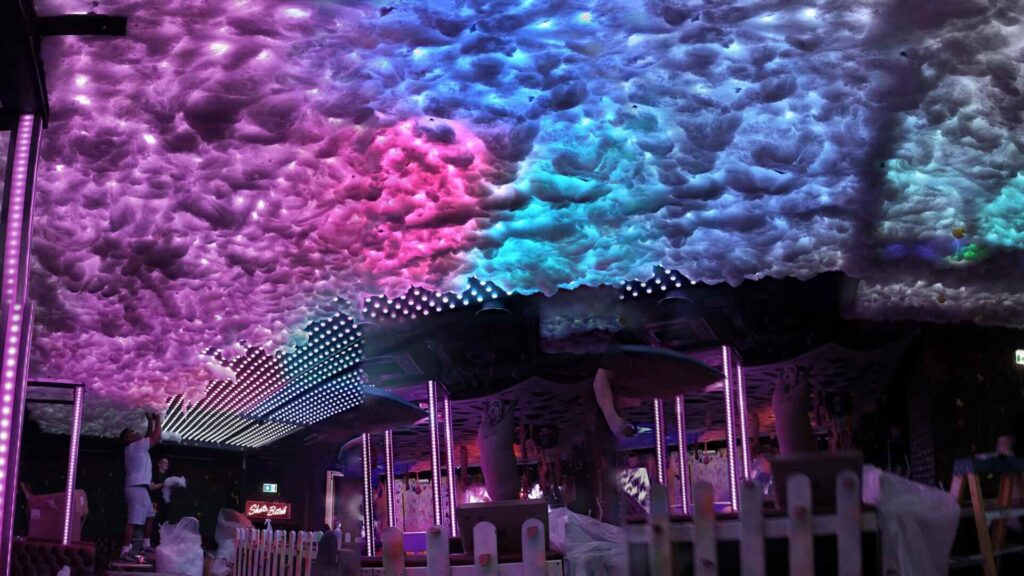
Lighting and AV do more than light the room. Custom branded gobos, haze, lasers, projection mapping and synchronised programming shape the atmosphere, which is why a venue transformation reaches well beyond physical décor.
Ceilings get overlooked in a lot of venues. Fabric or hanging pieces overhead can change how a room feels without touching a wall, and our guide to creative ceiling design has ideas.
Where do photo areas, immersive environments and entertainment fit?
Photo and content areas work best when they’re designed into the room from the start. Add them late and they look added late.
Combine those pieces with entertainment and you get immersive venue styling: a space guests move through rather than one they look at. For more to borrow from, try our event planning ideas guide.
How Do You Transform a Venue Around an Event Theme?
With custom event theming, you start from the concept, not the props, and let it shape the whole guest environment and every step of the guest journey.
A theme isn’t a pile of themed props. It’s a set of decisions that runs from the first sight of the venue to the last thing guests pass on the way out.
What does the process look like?
Custom event theming usually moves through ten stages, though how much weight each one carries depends on the event:
- Brief: what the event has to achieve
- Concept: the idea everything answers to
- Visual direction: colour, texture and mood
- Space planning: layout and guest flow
- Styling: the look of every surface
- Custom production: the pieces made for this event
- Lighting and technical design: atmosphere and AV
- Entertainment: performers matched to the concept
- Installation: the build itself
- Final environment: everything working together
Overlooking these stages can create gaps between the creative concept and the finished environment. A theme with no space planning can end up with props in the way, and one with no lighting design can look flat in photos.
That’s the difference between bespoke event theming and picking a theme off a shelf.
How do you stop a theme turning into a pile of props?
Four habits help:
- Pick one idea and commit to it, rather than blending three half-ideas
- Repeat motifs at different scales, from the entrance structure down to the table settings
- Let lighting carry the colour, so the room reads properly in photos and in person
- Walk the guest path from the door, and check what people see first, second and last
Custom venue theming applies those habits to one specific room, which is why the same theme rarely looks quite the same twice.
What does custom venue theming look like in practice?
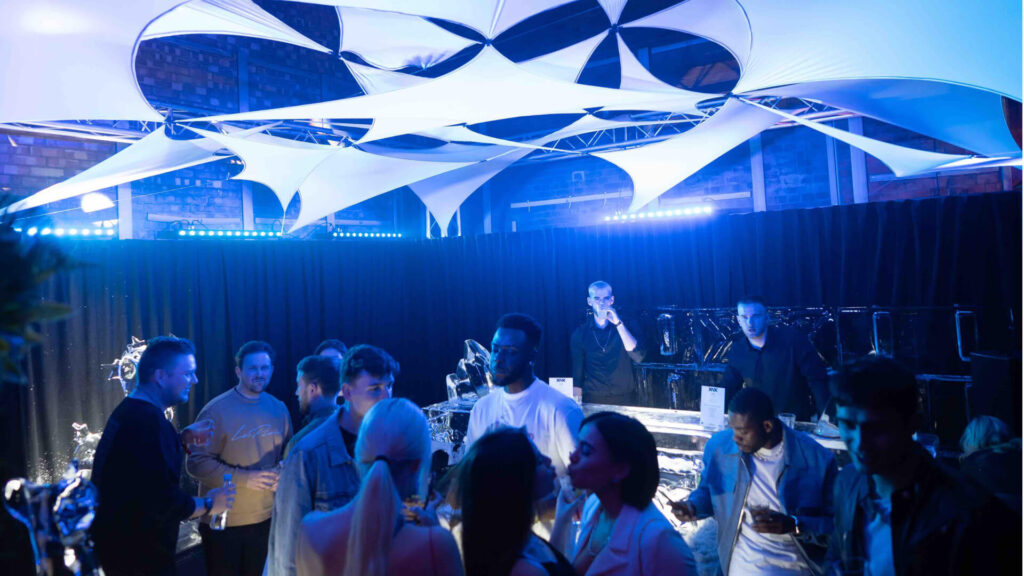
The Sidemen turn 8 party and XIX Vodka launch at Electric Light Station in Shoreditch used four themed zones: Black & White, 1920s, Futuristic Tokyo and Winter Wonderland. A giant ice bar was built around the vodka, a Kabuki drop revealed the entrance, and an outdoor marquee extended the space.
The whole build came together in eight weeks. You can read the full Sidemen case study.
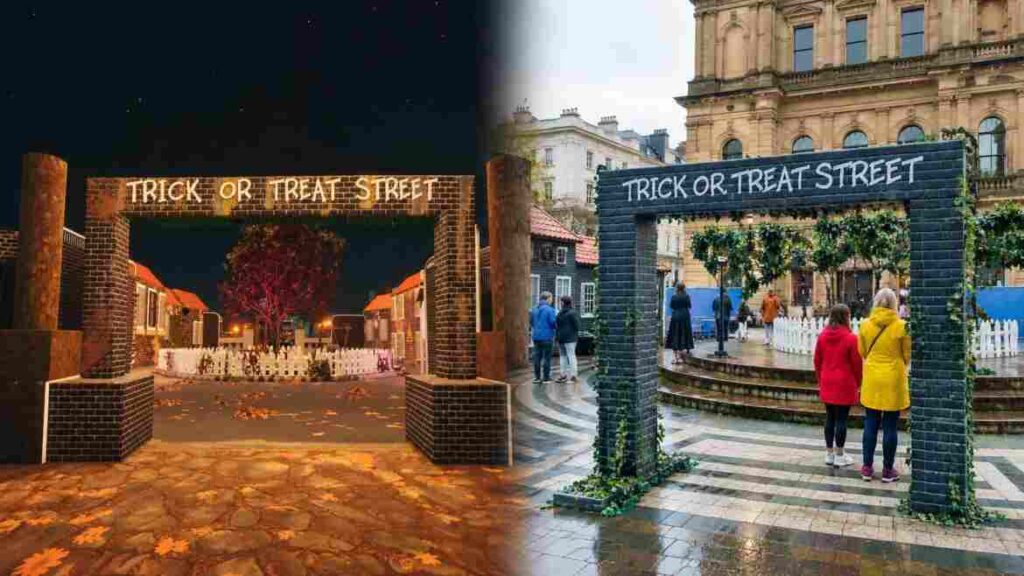
We also transformed REIGN nightclub in London with an Egyptian-themed Halloween design, and its sister venue TABU with an Asylum one. We planned and managed a Fresha Christmas party in three weeks too. Each started from a different idea and ended up as a different room.
If you’d rather start from an existing idea, our themed events page shows the themes we can adapt, or we can build one from scratch. Key venue styling areas covers where a theme should show up first.
Can Venue Styling Be Designed Around a Brand?
Yes. It works best when the brand shapes the design instead of being added on top of generic décor.
Here’s what can be built into a venue:
- Brand colours carried through furniture, drapery and lighting
- Custom structures shaped around the brand or product
- Logos worked into scenery and installations, not just signage
- Messaging placed where guests will actually stop to read it
- Product integration, so the product is part of the room
- Branded installations made for the event
- Content and photo opportunities designed to be shared
- Lighting, including custom gobos with branded designs
- The guest journey, so the brand appears in the right order
We build branding into the design, including logos, messages and colours. Corporate events don’t always want a full theme, and a few subtle installations often do the job.
Our Mongraal livestream set shows the idea in practice. It had three integrated LED screens, programmable lighting and illuminated scenic elements that changed the look of the space during the broadcast.
Our guides to event branding ideas, event design ideas and branded event themes go further.
Can Entertainment Be Designed to Match the Venue?
Yes. Entertainment can follow the same creative direction as the room, so venue design, event production and performers read as one guest experience.
That can mean costumes and characters, choreography, walkabout acts, performance styling, technology or a fully bespoke show.
At the Red Mix launch at Tobacco Dock, the opening singer wore a dress that doubled as a 3D projection surface. Guests also kicked smoke across an interactive digital floor to reveal the Red Mix logo.
At the Sidemen turn 8 party, the entertainment ran alongside the themed zones. Next to DJ Nathan Dawe, the line-up included aerialists, roller skaters, geisha performers and hula hoopers.
For the University of East London’s Summer Festival 2026, we produced a bespoke show built around an aerial pianist and a gospel choir. At the Twisted Alice party, the themed entertainment worked inside the same set as the design.
Characters can be matched to a room too. Our Alice in Wonderland characters include a Queen of Hearts on stilts and a unicycling Mad Hatter.
Plan venue design, event production and entertainment together and guests get one cohesive experience instead of three separate ones. Our bespoke show ideas show the range.
What Types of Events Benefit From Bespoke Venue Styling?
Bespoke event styling suits any event where the room is part of the message, though not every event needs it.
- Gala dinners and awards: complete room transformations and immersive themes
- Corporate events: environments that reflect the organisation, its purpose or a creative concept
- Product launches: spaces designed around the product and the brand
- Brand experiences: physical spaces built around a campaign identity
- Private celebrations: highly personalised rooms, such as the 40th birthday party we designed from scratch in a client’s garden, bespoke marquee included
A quick networking evening may need nothing more than good lighting and a few well-chosen pieces. Styling earns its place when the setting is part of what the event is trying to say.
Our guides to set design components and corporate event theming help decide how far to take it.
Why Use an Event Management Company for Bespoke Venue Styling?
Because styling touches everything else in an event, and someone has to plan those pieces together.
A styling scheme has to work with the venue, the guest journey, the creative concept, production, lighting, staging, entertainment, suppliers, installation, the live event and the breakdown.
The benefit isn’t having someone decorate the room. It’s having the creative and operational pieces planned together.
What goes wrong when each piece is bought separately?
The problems tend to be small and practical:
- A set that’s wider than the loading door
- Lighting that washes out the colour palette
- Entertainment that clashes with the theme
- Nobody responsible for the breakdown at the end
None of these is dramatic on its own. Together they’re the difference between a room that works and one that almost does.
What changes when it’s planned together?
Buy each element separately and someone has to join them up. That job can end up with the client, late in the process.
With event management, bespoke event design and event production in one plan, the designer knows what the lighting can do and the production team knows what the set needs. The event venue transformation arrives as one design rather than five separate orders.
Our in-house event design team works closely with venue decorators, and builds custom props and scenic finishes. Julia Charles Event Management has been designing, building, installing and managing events for nearly two decades, and that includes taking everything down again afterwards.
Sustainability can be planned in too, from reusable props to lower-impact installations, as part of our sustainable events approach.
Our guides to creative event concepts and designing event spaces explain the thinking.
How Does a Bespoke Venue Transformation Come Together?
In eight stages, each one handing over to the next.
- Event brief and objectives: what the event has to achieve, and for whom
- Venue assessment: access, layout, power and limits, plus venue finding if the room isn’t chosen yet
- Creative concept: the idea the whole design answers to
- Design development: moodboards, 3D renders, walkthroughs and technical drawings
- Styling and production specification: what’s needed, and how it will be built
- Bespoke fabrication where required: custom props and scenic builds from our set and stage design work
- Technical and entertainment integration: lighting and AV and performers joined to the design
- Installation and final styling: the build and the finishing touches before doors open
A good render makes a promise, and installation day is when it gets kept. Our look at event production behind the scenes shows what that day involves.
Creating a Bespoke Venue With Julia Charles Event Management
A venue is only a shell until someone decides how it should feel. Everything in this guide comes down to making that decision early and carrying it through every detail.
At Julia Charles Event Management, bespoke event design comes first. Our team develops the concept, venue styling brings it into the room, custom theming carries it through every detail, and event management keeps the whole build on schedule.
Custom theming carries the concept through every detail, with Set and stage design, lighting and AV and event production planned alongside entertainment.
Our event styling services can cover a full bespoke venue transformation, or individual parts of it alongside your own team. If you’re weighing ready-made themes against something built for your event, start with custom versus existing themes.
To talk through your venue and your idea, get in touch.

Related Blogs
Bespoke Venue Styling FAQs
Bespoke venue styling is the design of a venue’s look, layout and atmosphere around one specific event, instead of choosing from ready-made décor packages. It starts with the experience the event needs to create, then covers everything from colour and furniture to custom sets, lighting and entertainment, so the whole space works as one design.
Venue decoration selects décor for an existing space, such as draping, furniture or centrepieces. Bespoke venue styling designs the whole environment around a concept, coordinating those pieces with custom builds, lighting, production and entertainment, and neither is better, because they suit different events.
Yes, a venue transformation can cover the entrance, the main space, staging, lighting and even the ceiling, within what the building allows. We assess the venue first, because access, power and layout decide what’s practical, then design the transformation around those limits.
Yes, brand colours, logos, messaging and products can be built into the design itself through custom structures, lighting and installations, rather than added to generic décor. Themes work the same way, with the concept shaping the layout, lighting and guest journey instead of just the props on the tables.
A venue styling company designs and delivers the look of an event space, from concept and visual direction through to installation. At Julia Charles Event Management, that sits alongside event design, set and stage design, lighting, production and event management, so the styling is planned with everything else instead of bought as a separate extra.
Get In Touch With Us Today.
With nearly 20 years of Event Management insight, working with world-renowned Clients we'll help you create your Dream Event.
Get in Touch